干旱气象 ›› 2026, Vol. 44 ›› Issue (4): 691-702.DOI: 10.11755/j.issn.1006-7639-2026-04-0691
基于毫米波云雷达的新疆地区云底和云顶高度变化特征及预报
- 1
新疆气象台 新疆 乌鲁木齐 830002
2中国气象局地球系统数值预报中心 北京 10081
3策勒县气象局 新疆 策勒 848300
-
收稿日期:2025-08-20修回日期:2025-12-20出版日期:2026-08-30发布日期:2026-09-16 -
通讯作者:李娜(1986—),女,山东枣庄人,高级工程师,主要从事天气预报和灾害性天气研究。E-mail: lina9861201@163.com。
-
作者简介:窦刚(1996—),男,甘肃白银人,工程师,主要从事天气预报和灾害性天气研究。E-mail: dgbest@live.com。 -
基金资助:新疆维吾尔自治区重点研发项目(2022B03027-1);风云卫星应用先行计划项目(FY-APP-ZX-2023.01);新疆气象局科学研究重点项目(ZD202505)
Variation and forecasting of cloud base and top heights in Xinjiang based on millimeter-wave cloud radar
DOU Gang1( ), LI Na1(), HAI Shangfei2, DANG Pengju3
- 1
Xinjiang Meteorological Observatory Urumqi 830002, China
2CMA Earth System Modeling and Prediction Centre Beijing 100081, China
3Cele County Meteorological Bureau Cele 848300, Xinjiang, China
-
Received:2025-08-20Revised:2025-12-20Online:2026-08-30Published:2026-09-16

摘要:
精确预报云底和云顶高度对保障航空飞行安全、指导人工影响天气作业和开展气候研究具有重要意义。基于2023年3月至2025年4月新疆克拉玛依、阿克苏、民丰和哈密4站毫米波云雷达观测资料,分析云频率、云底和云顶高度等要素的时空分布特征,并结合欧洲中期天气预报中心(European Centre for Medium-Range Weather Forecasts,ECMWF)多要素预报数据,利用LightGBM(Light Gradient Boosting Machine)机器学习方法分别建立4站的晴、云分类预测以及云底、云顶高度预报模型,并分析输入特征的贡献度。结果表明,克拉玛依、阿克苏、民丰和哈密4站云频率均低于40%,民丰站最高(38.62%),哈密站最低(25.01%);民丰和哈密站云频率随高度总体呈单峰分布,克拉玛依和阿克苏站呈双峰分布。各站不同季节均以中云为主,季节变化总体较小,冬季低云频率有所升高。模型检验结果表明,晴、云分类预测准确率均超过90%,云底和云顶高度预报误差分别小于1 000和800 m。ECMWF云覆盖率产品对晴、云分类预测模型的贡献最大,各站点云底和云顶高度预报模型的主要贡献特征均为中高层水汽类产品,不同站点其他特征的贡献存在差异。
中图分类号:
引用本文
窦刚, 李娜, 海尚飞, 党鹏举. 基于毫米波云雷达的新疆地区云底和云顶高度变化特征及预报[J]. 干旱气象, 2026, 44(4): 691-702.
DOU Gang, LI Na, HAI Shangfei, DANG Pengju. Variation and forecasting of cloud base and top heights in Xinjiang based on millimeter-wave cloud radar[J]. Journal of Arid Meteorology, 2026, 44(4): 691-702.

图1 新疆地形(填色,单位:m)及云雷达站点(红色圆点)分布
Fig.1 Topography (the color shaded, Unit: m) and distribution of cloud radar stations (red dots) in Xinjiang
图1 新疆地形(填色,单位:m)及云雷达站点(红色圆点)分布
Fig.1 Topography (the color shaded, Unit: m) and distribution of cloud radar stations (red dots) in Xinjiang
表1 模式产品
Tab.1 Model products
| 要素分类 | 要素名称 | |
|---|---|---|
| 分层 | 模式层 | 云中冰水含量(cloud ice water content,ciwc)、云中液态水含量(cloud liquid water content,clwc) |
| 等压层 | 比湿q、温度t、经向风分量v、纬向风分量u、相对湿度r、位涡(potential vorticity,pv)、垂直速度w | |
| 单层 | 对流有效位能(convective available potential energy,cape)、整层大气含水量(total column water,tcw)、低层云覆盖率(low cloud cover,lcc)、降水类型(precipitation type ,ptype)、零度层高度(level of zero-degree isotherm,deg0l)、2 m露点温度2td、总降水量(total precipitation,tp)、2 m温度2t、对流有效位能切变(convective available potential energy shear,capes)、对流降水(convective precipitation,cp)、预报反照率(forecast albedo,fal)、整层云覆盖率(total cloud cover,tcc)、整层垂直积分水汽(total column water vapour,tcwv)、地面气压(surface pressure,sp) | |
表1 模式产品
Tab.1 Model products
| 要素分类 | 要素名称 | |
|---|---|---|
| 分层 | 模式层 | 云中冰水含量(cloud ice water content,ciwc)、云中液态水含量(cloud liquid water content,clwc) |
| 等压层 | 比湿q、温度t、经向风分量v、纬向风分量u、相对湿度r、位涡(potential vorticity,pv)、垂直速度w | |
| 单层 | 对流有效位能(convective available potential energy,cape)、整层大气含水量(total column water,tcw)、低层云覆盖率(low cloud cover,lcc)、降水类型(precipitation type ,ptype)、零度层高度(level of zero-degree isotherm,deg0l)、2 m露点温度2td、总降水量(total precipitation,tp)、2 m温度2t、对流有效位能切变(convective available potential energy shear,capes)、对流降水(convective precipitation,cp)、预报反照率(forecast albedo,fal)、整层云覆盖率(total cloud cover,tcc)、整层垂直积分水汽(total column water vapour,tcwv)、地面气压(surface pressure,sp) | |
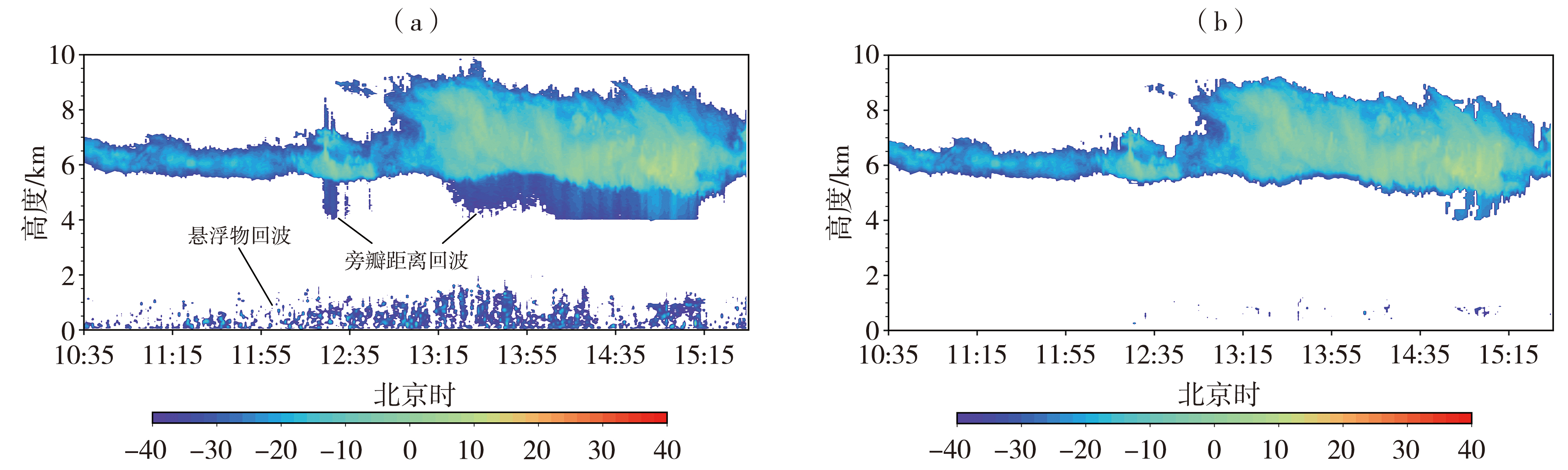
图2 2025年4月8日10:35—15:35克拉玛依站云雷达反射率因子质控前(a)、后(b)对比(单位:dBZ)
Fig. 2 Comparison of cloud radar reflectivity factor before (a) and after (b) quality control at Karamay Station from 10:35 to 15:35 on 8 April 2025 (Unit: dBZ)
图2 2025年4月8日10:35—15:35克拉玛依站云雷达反射率因子质控前(a)、后(b)对比(单位:dBZ)
Fig. 2 Comparison of cloud radar reflectivity factor before (a) and after (b) quality control at Karamay Station from 10:35 to 15:35 on 8 April 2025 (Unit: dBZ)
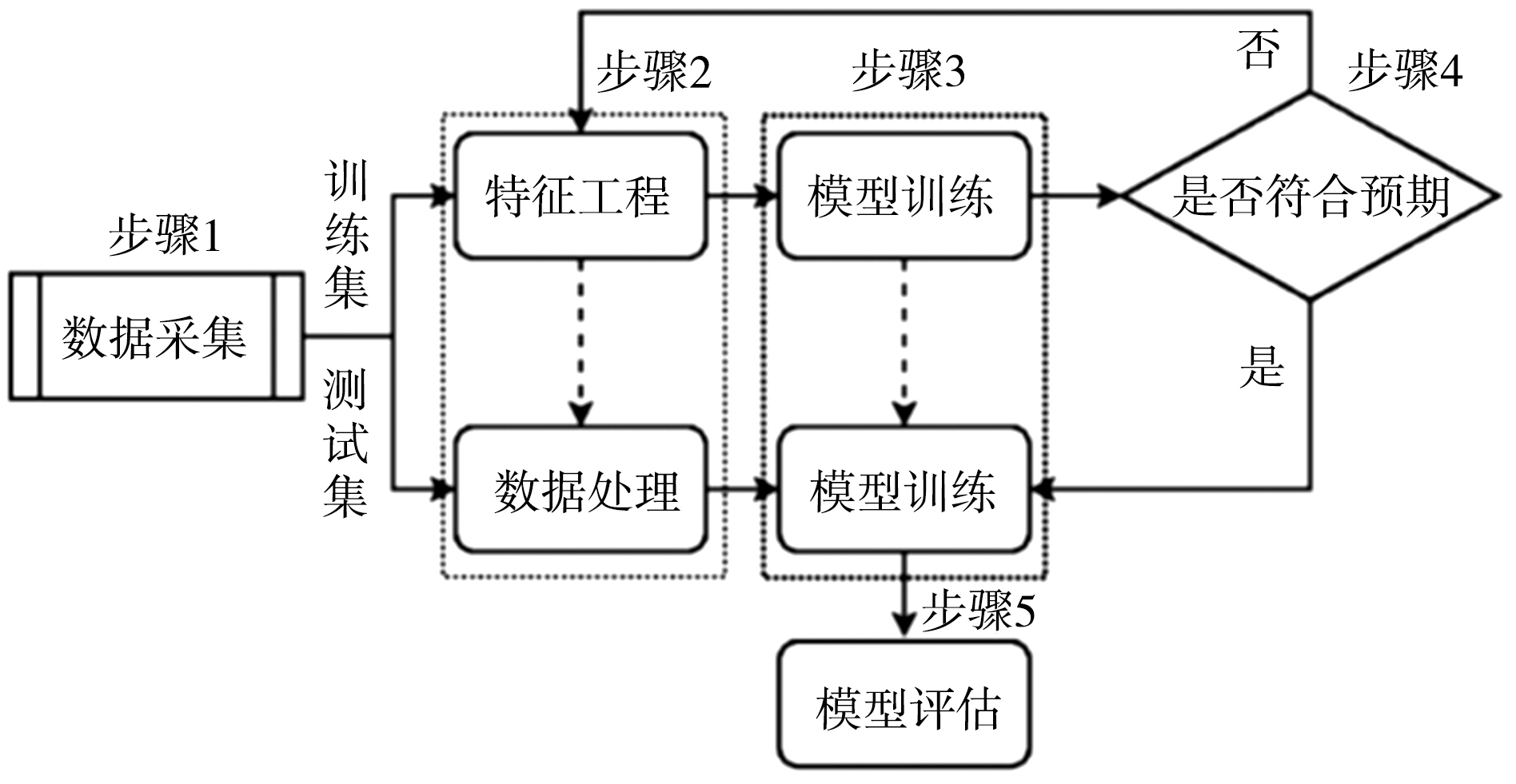
图3 LightGBM建模流程(刘新伟等,2021)
Fig.3 Flow of the LightGBM model
图3 LightGBM建模流程(刘新伟等,2021)
Fig.3 Flow of the LightGBM model
表2 各站云雷达样本数及云频率
Tab.2 Number of cloud radar samples and cloud frequency at each station
| 站点 | 有效观测样本总数 | 云频率/% | 低云 频率/% | 中云 频率/% | 高云 频率/% |
|---|---|---|---|---|---|
| 克拉玛依 | 525 411 | 33.63 | 8.53 | 16.99 | 8.10 |
| 阿克苏 | 526 132 | 33.28 | 7.37 | 18.05 | 7.86 |
| 民丰 | 513 278 | 38.62 | 5.19 | 25.39 | 8.04 |
| 哈密 | 521 503 | 25.01 | 3.94 | 13.88 | 7.19 |
表2 各站云雷达样本数及云频率
Tab.2 Number of cloud radar samples and cloud frequency at each station
| 站点 | 有效观测样本总数 | 云频率/% | 低云 频率/% | 中云 频率/% | 高云 频率/% |
|---|---|---|---|---|---|
| 克拉玛依 | 525 411 | 33.63 | 8.53 | 16.99 | 8.10 |
| 阿克苏 | 526 132 | 33.28 | 7.37 | 18.05 | 7.86 |
| 民丰 | 513 278 | 38.62 | 5.19 | 25.39 | 8.04 |
| 哈密 | 521 503 | 25.01 | 3.94 | 13.88 | 7.19 |
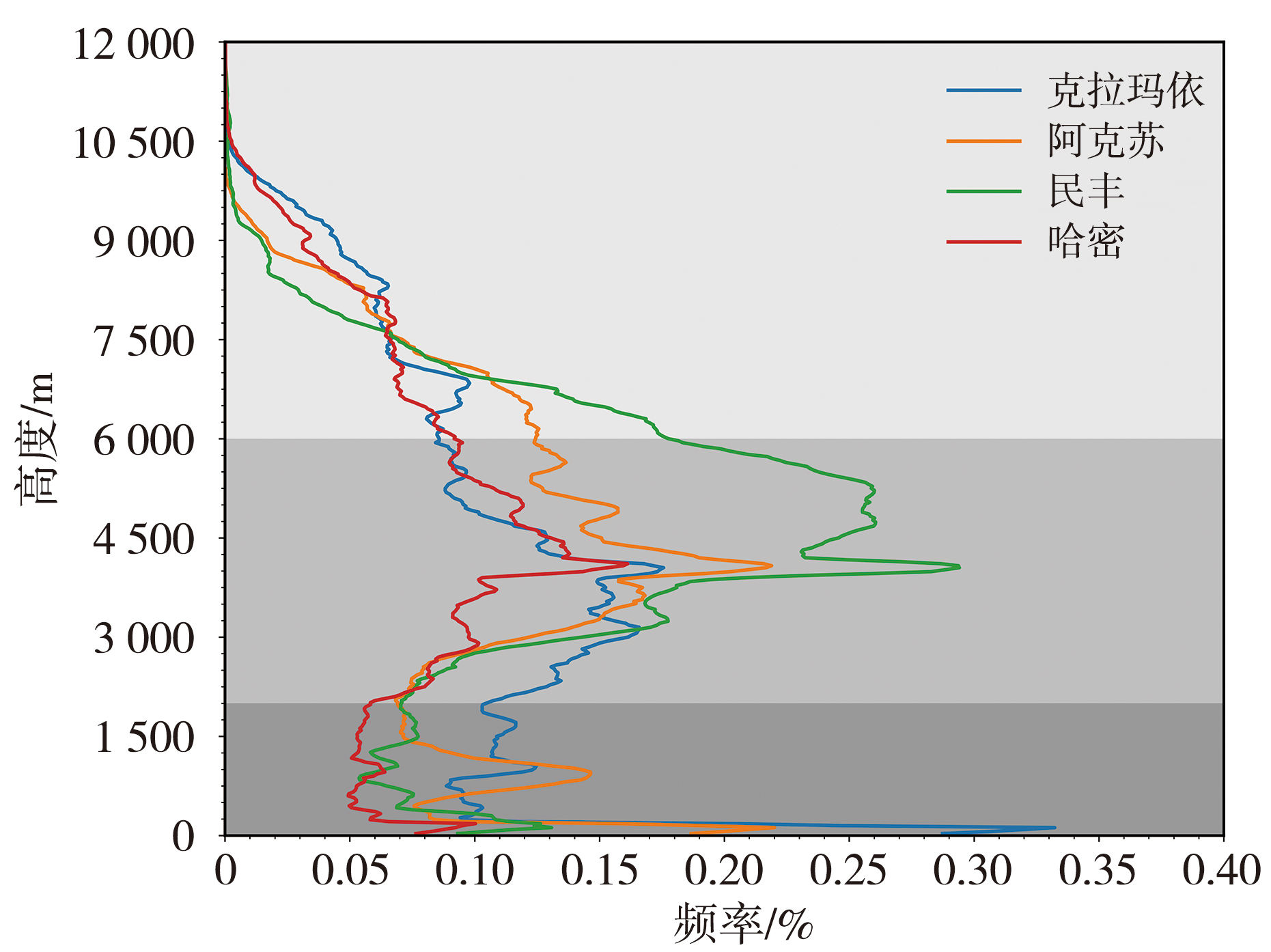
图4 2024年克拉玛依、阿克苏、民丰和哈密站不同高度的云频率 (深灰色、灰色和浅灰色背景分别对应低云、中云和高云;曲线经5点滑动平均平滑处理)
Fig.4 Cloud frequency at different heights at Karamay, Aksu, Minfeng, and Hami stations during 2024 (The dark gray, gray, and light gray backgrounds correspond to low, mid-, and high-level clouds, respectively; the curves are smoothed using a 5-point moving average)
图4 2024年克拉玛依、阿克苏、民丰和哈密站不同高度的云频率 (深灰色、灰色和浅灰色背景分别对应低云、中云和高云;曲线经5点滑动平均平滑处理)
Fig.4 Cloud frequency at different heights at Karamay, Aksu, Minfeng, and Hami stations during 2024 (The dark gray, gray, and light gray backgrounds correspond to low, mid-, and high-level clouds, respectively; the curves are smoothed using a 5-point moving average)
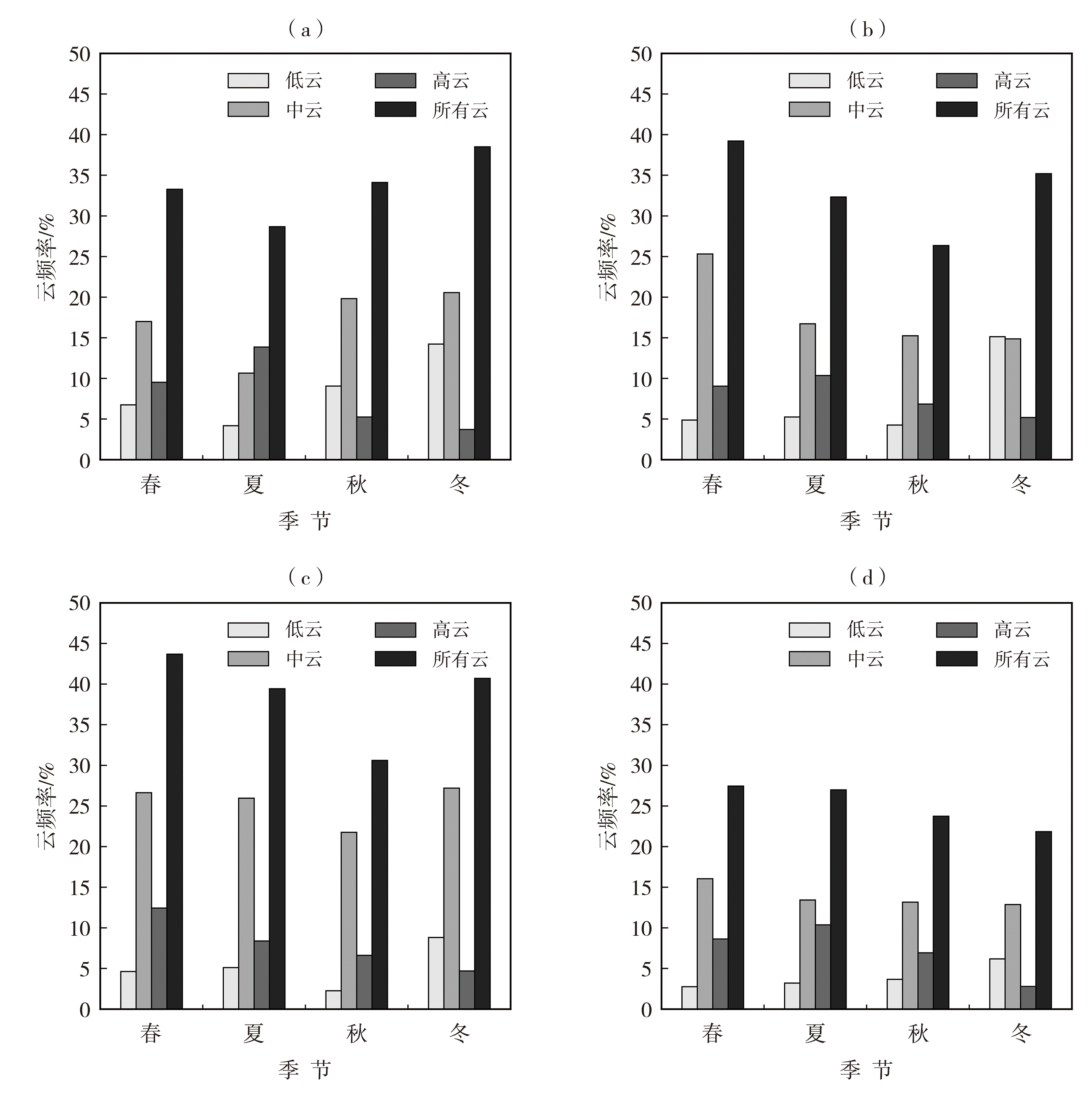
图5 2024年克拉玛依(a)、阿克苏(b)、民丰(c)、哈密(d)站云频率季节分布
Fig. 5 Seasonal distribution of cloud frequency at Karamay (a), Aksu (b), Minfeng (c), and Hami (d) stations during 2024
图5 2024年克拉玛依(a)、阿克苏(b)、民丰(c)、哈密(d)站云频率季节分布
Fig. 5 Seasonal distribution of cloud frequency at Karamay (a), Aksu (b), Minfeng (c), and Hami (d) stations during 2024

图6 2024年克拉玛依(a)、阿克苏(b)、民丰(c)、哈密(d)站云底高度季节分布小提琴图 (曲线表示概率密度,黑箱表示第25%~75%分位数,白点表示中位数,下同)
Fig. 6 Seasonal distribution violin plot of cloud base height at Karamay (a), Aksu (b), Minfeng (c), and Hami (d) stations during 2024 (The violin plot contours represent probability density, the black boxes show the 25th-75th percentiles, and the white dots indicate the median, the same as below)
图6 2024年克拉玛依(a)、阿克苏(b)、民丰(c)、哈密(d)站云底高度季节分布小提琴图 (曲线表示概率密度,黑箱表示第25%~75%分位数,白点表示中位数,下同)
Fig. 6 Seasonal distribution violin plot of cloud base height at Karamay (a), Aksu (b), Minfeng (c), and Hami (d) stations during 2024 (The violin plot contours represent probability density, the black boxes show the 25th-75th percentiles, and the white dots indicate the median, the same as below)
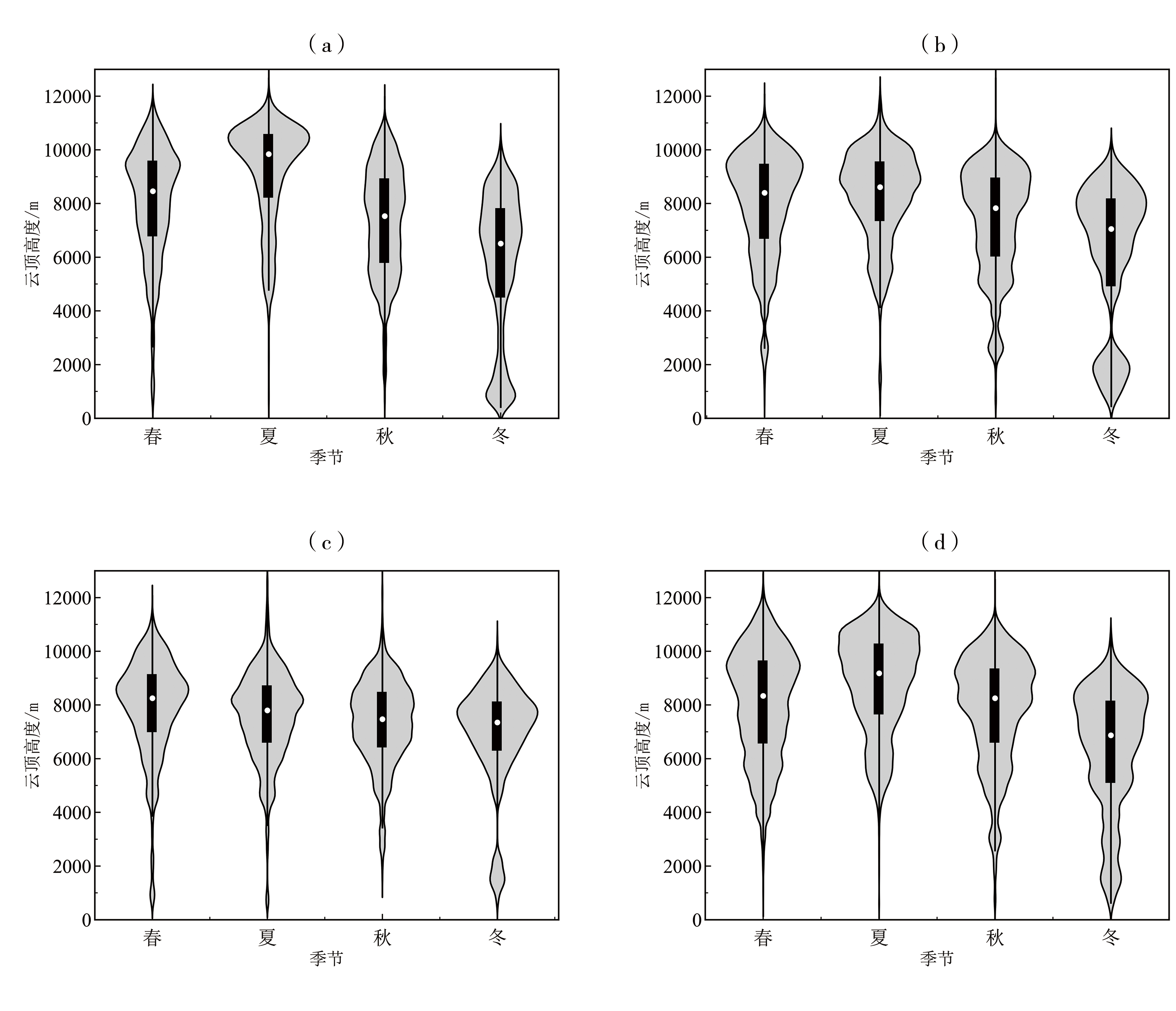
图7 2024年克拉玛依(a)、阿克苏(b)、民丰(c)、哈密(d)站云顶高度季节分布小提琴图
Fig. 7 Seasonal distribution violin plot of cloud top height at Karamay (a), Aksu (b), Minfeng (c), and Hami (d) stations during 2024
图7 2024年克拉玛依(a)、阿克苏(b)、民丰(c)、哈密(d)站云顶高度季节分布小提琴图
Fig. 7 Seasonal distribution violin plot of cloud top height at Karamay (a), Aksu (b), Minfeng (c), and Hami (d) stations during 2024
表3 晴、云分类及云底高度、云顶高度预报训练参数
Tab.3 Training parameters for clear/cloudy sky classification and forecasts of cloud base and top heights
| 参数 | 晴、云分类 | 云底、云顶高度 |
|---|---|---|
| 学习率 | 0.1 | 0.08 |
| 最大数深度 | 6 | 6 |
| 叶子节点个数 | 31 | 31 |
| L1正则化 | 0.1 | 0.1 |
| L2正则化 | 2 | 2 |
| 特征选取百分比 | 0.9 | — |
表3 晴、云分类及云底高度、云顶高度预报训练参数
Tab.3 Training parameters for clear/cloudy sky classification and forecasts of cloud base and top heights
| 参数 | 晴、云分类 | 云底、云顶高度 |
|---|---|---|
| 学习率 | 0.1 | 0.08 |
| 最大数深度 | 6 | 6 |
| 叶子节点个数 | 31 | 31 |
| L1正则化 | 0.1 | 0.1 |
| L2正则化 | 2 | 2 |
| 特征选取百分比 | 0.9 | — |
表4 晴、云分类预报训练样本数、迭代次数及结果
Tab.4 Training sample sizes, epochs and results for clear/cloudy sky classification forecasts
| 站点 | 总样本数 | 晴、云样本数比 | 迭代次数 | 晴、云预测准确率/% |
|---|---|---|---|---|
| 克拉玛依 | 33 087 | 1.4 | 810 | 92.02 |
| 阿克苏 | 34 560 | 1.7 | 1 007 | 91.87 |
| 民丰 | 35 871 | 1.2 | 1 132 | 91.97 |
| 哈密 | 25 116 | 2.4 | 679 | 92.63 |
表4 晴、云分类预报训练样本数、迭代次数及结果
Tab.4 Training sample sizes, epochs and results for clear/cloudy sky classification forecasts
| 站点 | 总样本数 | 晴、云样本数比 | 迭代次数 | 晴、云预测准确率/% |
|---|---|---|---|---|
| 克拉玛依 | 33 087 | 1.4 | 810 | 92.02 |
| 阿克苏 | 34 560 | 1.7 | 1 007 | 91.87 |
| 民丰 | 35 871 | 1.2 | 1 132 | 91.97 |
| 哈密 | 25 116 | 2.4 | 679 | 92.63 |
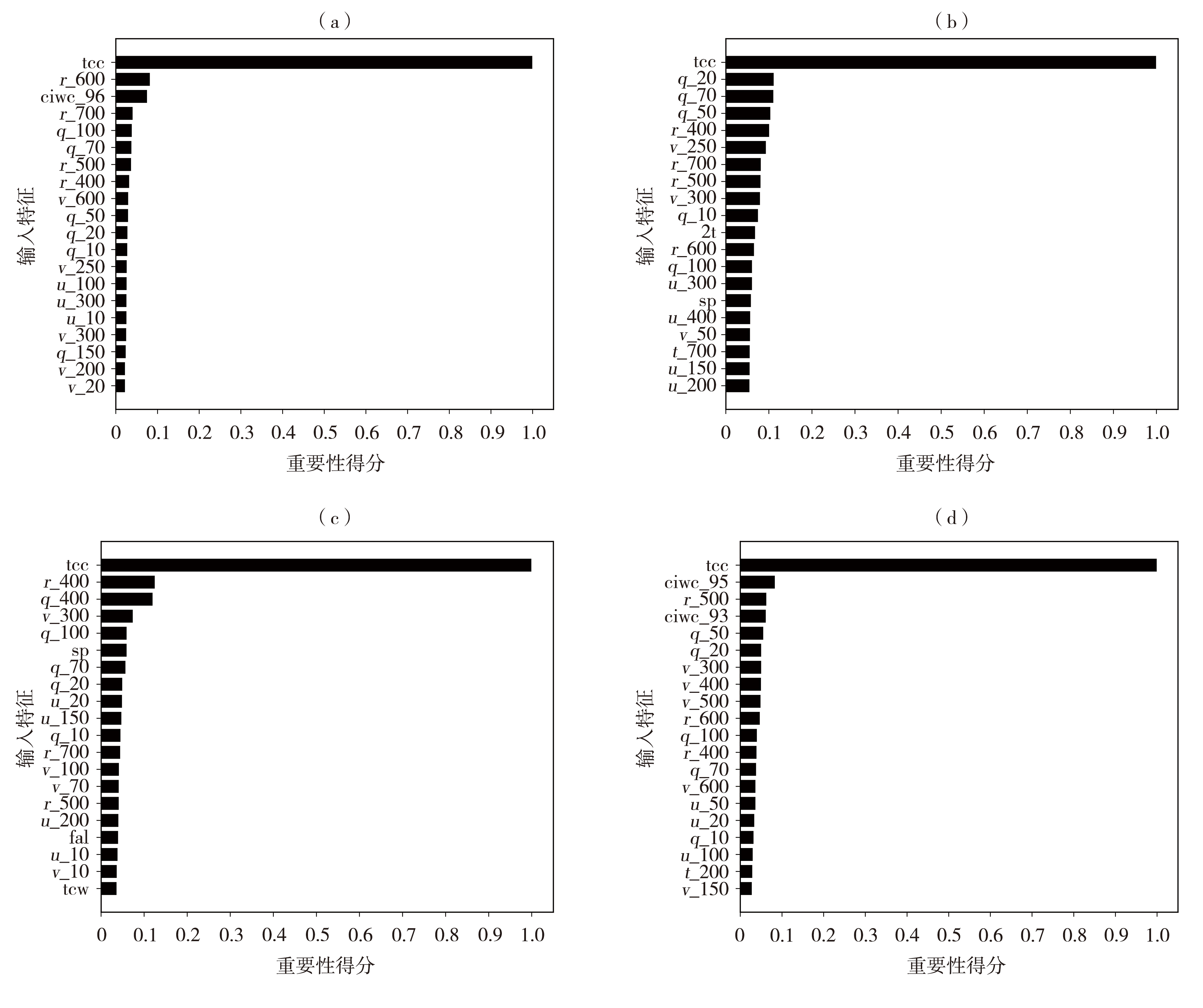
图8 克拉玛依(a)、阿克苏(b)、民丰(c)、哈密(d)站LightGBM晴云预测模型特征重要性排序 (变量后的数字为高度层,下同)
Fig. 8 Feature importance ranking for the LightGBM clear/cloudy sky classification model at Karamay (a), Aksu (b), Minfeng (c), and Hami (d) stations (Numbers after variables denote height level, the same as below)
图8 克拉玛依(a)、阿克苏(b)、民丰(c)、哈密(d)站LightGBM晴云预测模型特征重要性排序 (变量后的数字为高度层,下同)
Fig. 8 Feature importance ranking for the LightGBM clear/cloudy sky classification model at Karamay (a), Aksu (b), Minfeng (c), and Hami (d) stations (Numbers after variables denote height level, the same as below)
表5 云底高度、云顶高度预报训练样本数、迭代次数及结果
Tab.5 Training sample sizes, epochs and results for cloud base and top height forecasts
| 站点 | 总样本数 | 云底高度模型训练迭代次数 | 云顶高度模型训练迭代次数 | 云底高度误差/m | 云顶高度误差/m |
|---|---|---|---|---|---|
| 克拉玛依 | 13 932 | 1 058 | 2 039 | 958 | 775 |
| 阿克苏 | 12 909 | 834 | 1 639 | 904 | 749 |
| 民丰 | 16 344 | 2 005 | 1 393 | 855 | 742 |
| 哈密 | 7 373 | 1 261 | 1 178 | 801 | 667 |
表5 云底高度、云顶高度预报训练样本数、迭代次数及结果
Tab.5 Training sample sizes, epochs and results for cloud base and top height forecasts
| 站点 | 总样本数 | 云底高度模型训练迭代次数 | 云顶高度模型训练迭代次数 | 云底高度误差/m | 云顶高度误差/m |
|---|---|---|---|---|---|
| 克拉玛依 | 13 932 | 1 058 | 2 039 | 958 | 775 |
| 阿克苏 | 12 909 | 834 | 1 639 | 904 | 749 |
| 民丰 | 16 344 | 2 005 | 1 393 | 855 | 742 |
| 哈密 | 7 373 | 1 261 | 1 178 | 801 | 667 |
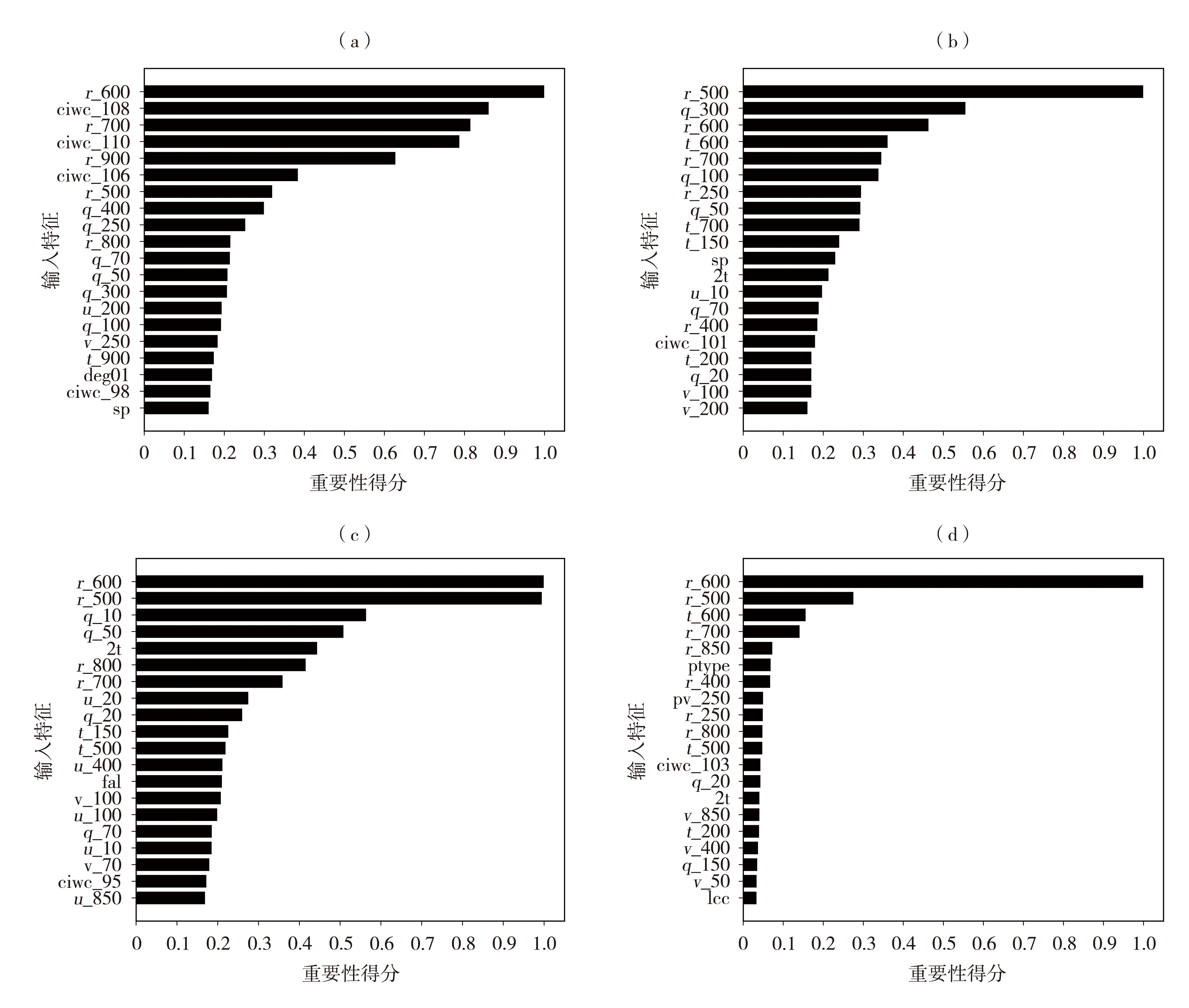
图9 克拉玛依(a)、阿克苏(b)、民丰(c)、哈密(d)站LightGBM云底高度预测模型特征重要性排序
Fig. 9 Feature importance ranking for the LightGBM cloud base height prediction model at Karamay (a), Aksu (b), Minfeng (c), and Hami (d) stations
图9 克拉玛依(a)、阿克苏(b)、民丰(c)、哈密(d)站LightGBM云底高度预测模型特征重要性排序
Fig. 9 Feature importance ranking for the LightGBM cloud base height prediction model at Karamay (a), Aksu (b), Minfeng (c), and Hami (d) stations
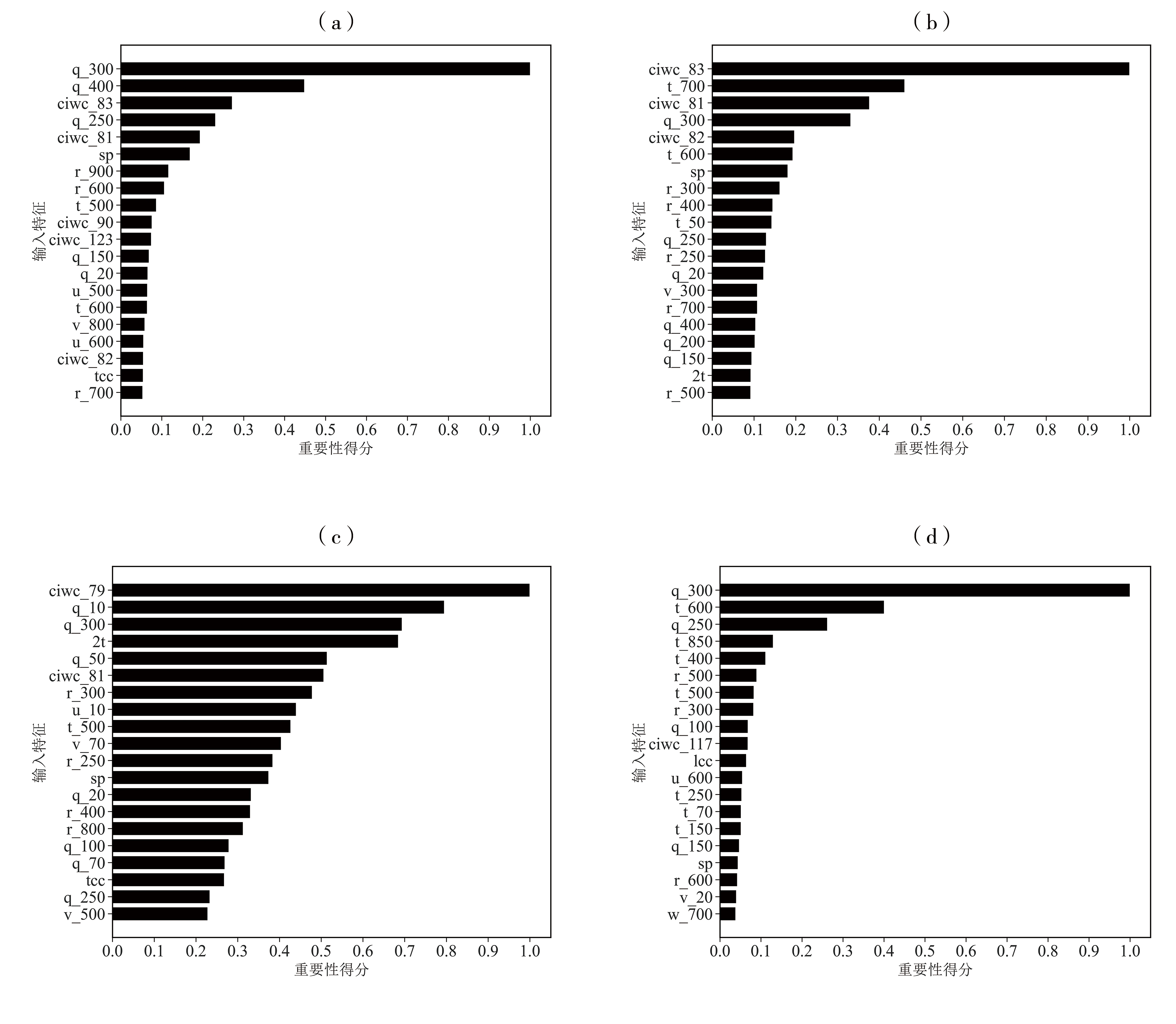
图10 克拉玛依(a)、阿克苏(b)、民丰(c)、哈密(d)站LightGBM云顶高度预测模型特征重要性排序
Fig. 10 Feature importance ranking for the LightGBM cloud top height prediction model at Karamay (a), Aksu (b), Minfeng (c), and Hami (d) stations
图10 克拉玛依(a)、阿克苏(b)、民丰(c)、哈密(d)站LightGBM云顶高度预测模型特征重要性排序
Fig. 10 Feature importance ranking for the LightGBM cloud top height prediction model at Karamay (a), Aksu (b), Minfeng (c), and Hami (d) stations
| [1] | 阿丽亚·拜都热拉, 玉米提·哈力克, 陈勇航, 等, 2013. 基于低层云的新疆城市区域人工增水潜力分析[J]. 水土保持研究, 20(3):278-282. |
| [2] | 陈发虎, 谢亭亭, 杨钰杰, 等, 2023. 我国西北干旱区“暖湿化”问题及其未来趋势讨论[J]. 中国科学:地球科学, 53(6):1246-1 262. |
| [3] | 陈颖, 贾孜拉·拜山, 2019. 新疆冬季气温年际异常的主模态及其成因分析[J]. 干旱区地理, 42(2):223-239. |
| [4] | 杜智涛, 姜明波, 杜晓勇, 等, 2021. 机器学习在气象领域的应用现状与展望[J]. 气象科技, 49(6):930-941. |
| [5] | 樊威伟, 胡泽勇, 荀学义, 等, 2021. 青藏高原季风演变及其气候效应综述[J]. 高原气象, 40(6):1294-1 303. |
| [6] | 顾桃峰, 岳海燕, 伍光胜, 等, 2023. 毫米波云雷达与激光云高仪气象探测性能对比分析[J]. 环境科学学报, 43(1):275-283. |
| [7] | 郭立平, 刘姝, 李敬海, 等, 2024. 毫米波云雷达在高影响天气中的预警应用[J]. 干旱气象, 42(3):465-472. |
| [8] | 郭楠楠, 周玉淑, 邓国, 2019. 中亚低涡背景下阿克苏地区一次强降水天气分析[J]. 气象学报, 77(4):686-700. |
| [9] | 郭学良, 付丹红, 胡朝霞, 2013. 云降水物理与人工影响天气研究进展(2008-2012年)[J]. 大气科学, 37(2):351-363. |
| [10] | 李海花, 李吉州, 刘大锋, 等, 2022. 阿克苏地区早春一次极端降水水汽特征分析[J]. 沙漠与绿洲气象, 16(6):18-24. |
| [11] | 李慧, 郑旭程, 苏立娟, 等, 2023. 基于毫米波云雷达的黄河流域内蒙古段云宏观特征分析[J]. 干旱气象, 41(3):434-441. |
| [12] | 李明, 孙洪泉, 苏志诚, 2021. 中国西北气候干湿变化研究进展[J]. 地理研究, 40(4):1180-1 194. |
| [13] | 刘光普, 黄思源, 梁莺, 等, 2019. 毫米波雷达在港口海雾观测和能见度反演中的应用[J]. 干旱气象, 37(6):993-1 004. |
| [14] | 刘新伟, 黄武斌, 蒋盈沙, 等, 2021. 基于LightGBM算法的强对流天气分类识别研究[J]. 高原气象, 40(4):909-918. |
| [15] | 毛炜峄, 南庆红, 史红政, 2008. 新疆气候变化特征及气候分区方法研究[J]. 气象, 34(10):67-73. |
| [16] | 彭宽军, 陈勇航, 王文彩, 等, 2010. 新疆山区低层云水资源时空分布特征[J]. 水科学进展, 21(5):653-659. |
| [17] | 盛裴轩, 毛节泰, 李建国, 等, 2013. 大气物理学[M]. 2版. 北京: 北京大学出版社. |
| [18] | 史玉光, 孙照渤, 2008. 新疆水汽输送的气候特征及其变化[J]. 高原气象, 27(2):310-319. |
| [19] | 孙彩霞, 张同文, 胡家晖, 等, 2025. 人工智能方法在气象领域的应用综述[J]. 沙漠与绿洲气象, 19(4):60-67. |
| [20] | 孙全德, 焦瑞莉, 夏江江, 等, 2019. 基于机器学习的数值天气预报风速订正研究[J]. 气象, 45(3):426-436. |
| [21] | 王澄海, 张晟宁, 张飞民, 等, 2021. 论全球变暖背景下中国西北地区降水增加问题[J]. 地球科学进展, 36(9):980-989. |
| [22] | 王明, 陈正洪, 陈英英, 等, 2021. 颠簸、积冰、雷暴三种航空气象灾害预报方法综述[J]. 民航学报, 5(4): 90-94. |
| [23] | 王旭, 马禹, 2012. 新疆中尺度对流系统的地理分布和生命史[J]. 干旱区地理, 35(6):857-864. |
| [24] | 王旭, 马禹, 冯志敏, 2002. 新疆雾的时空统计特征[J]. 新疆气象(1):6-8. |
| [25] | 徐德源, 1989. 新疆农业气候资源及区划[M]. 北京: 气象出版社. |
| [26] | 徐路扬, 翟亮, 王媛媛, 等, 2023. 多源遥感数据在北京春季沙尘天气监测中的应用评估[J]. 干旱气象, 41(2):318-327. |
| [27] | 徐祥德, 王寅钧, 魏文寿, 等, 2014. 特殊大地形背景下塔里木盆地夏季降水过程及其大气水分循环结构[J]. 沙漠与绿洲气象, 8(2):1-11. |
| [28] | 杨莲梅, 史玉光, 汤浩, 2010. 新疆北部冬季降水异常成因[J]. 应用气象学报, 21(4):491-499. |
| [29] | 曾正茂, 郑佳锋, 吕巧谊, 等, 2022. 毫米波云雷达距离旁瓣回波质量控制及效果评估[J]. 气象, 48(6):760-772. |
| [30] | 张学文, 1988. 新疆的空中水[J]. 新疆气象(7):1-6. |
| [31] | 张正勇, 何新林, 刘琳, 等, 2015. 中国天山山区降水空间分布模拟及成因分析[J]. 水科学进展, 26(4):500-508. |
| [32] | 郑佳锋, 彭霆威, 刘艺华, 等, 2025. 福建山地地区的云垂直结构和时间变化特征研究[J]. 大气科学, 49(5):1243-1 257. |
| [33] | 周青, 李柏, 张勇, 等, 2023. 基于北京多源资料的云宏观特征判识[J]. 应用气象学报, 34(2):206-219. |
| [34] | BANKERT R L, HADJIMICHAEL M, 2007. Data mining numerical model output for single-station cloud-ceiling forecast algorithms[J]. Weather and Forecasting, 22(5): 1 123-1 131. |
| [35] | BOCHENEK B, USTRNUL Z, 2022. Machine learning in weather prediction and climate analyses: Applications and perspectives[J]. Atmosphere, 13(2): 180. DOI:10.3390/atmos13020180. |
| [36] | KE G L, MENG Q, FINLEY T, et al, 2017. LightGBM: A highly efficient gradient boosting decision tree[C]// Advances in Neural Information Processing Systems 30. Long Beach: Curran Associates: 3 146-3 154. |
| [37] | LEWIS H, BOWYER J, BROAD A L, et al, 2022. Using machine learning to find cloud‐base height: A didactic challenge[J]. Weather, 77(11): 391-395. |
| [38] | LIU L P, ZHENG J F, RUAN Z, et al, 2015. Comprehensive radar observations of clouds and precipitation over the Tibetan Plateau and preliminary analysis of cloud properties[J]. Journal of Meteorological Research, 29(4): 546-561. |
| [39] | LIU L P, DING H, DONG X B, et al, 2019. Applications of QC and merged Doppler spectral density data from Ka-band cloud radar to microphysics retrieval and comparison with airplane in situ observation[J]. Remote Sensing, 11(13): 1 595. DOI:10.3390/rs11131595. |
| [40] | SHYAM R, AYACHIT S S, PATIL V, et al, 2020. Competitive analysis of the top gradient boosting machine learning algorithms[C]// 2020 2nd International Conference on Advances in Computing, Communication Control and Networking (ICACCCN). Greater Noida. IEEE: 191-196. |
| [41] | STUBENRAUCH C J, ROSSOW W B, KINNE S, et al, 2013. Assessment of global cloud datasets from satellites: Project and database initiated by the GEWEX radiation panel[J]. Bulletin of the American Meteorological Society, 94(7): 1 031-1 049. |
| [42] | VANNITSEM S, BREMNES J B, DEMAEYER J, et al, 2021. Statistical postprocessing for weather forecasts: Review, challenges, and avenues in a big data world[J]. Bulletin of the American Meteorological Society, 102(3): E681-E699. |
| [43] | WOLTERS D, SCHMEITS M, WHAN K, 2025. Probabilistic forecasting of cloud-base height and visibility using quantile regression forests, based on NWP and observation features[J]. Weather and Forecasting, 40(4): 543-559. |
| [44] | YANG Q, FU Q, HU Y X, 2010. Radiative impacts of clouds in the tropical tropopause layer[J]. Journal of Geophysical Research: Atmospheres, 115(D4). DOI: 10.1029/2009 JD012393. |
| [45] | ZUIDEMA P, PAINEMAL D, DE SZOEKE S, et al, 2009. Stratocumulus cloud-top height estimates and their climatic implications[J]. Journal of Climate, 22(17): 4 652-4 666. |
| [1] | 李巧媛, 周慧, 许霖. 2025年沙尘入侵湖南省的污染输送分析[J]. 干旱气象, 2026, 44(3): 479-489. |
| [2] | 李倩惠, 谷皓东, 王雪娇, 潘迪, 侯天宇, 李甜, 王志新, 孙玫玲. 天津城区冬季三种道路路面温度异质性与预报模型研究[J]. 干旱气象, 2026, 44(3): 512-523. |
| [3] | 王春晓, 许平平, 苏爱芳, 栗晗, 吴稀稀, 董俊玲, 李朝兴, 崔丽曼. 基于邻域最优百分位的逐时降水预报订正方法[J]. 干旱气象, 2026, 44(2): 325-337. |
| [4] | 姜江, 夏江江, 刘祺, 乔媛. 北京地区能见度变化特征及其临近外推预报研究[J]. 干旱气象, 2026, 44(2): 338-347. |
| [5] | 王倩, 李静, 张青梅, 李金海, 扎西才让, 祁万鹏. 多模式动态融合订正方法在青海省大到暴雨预报中的应用与分析[J]. 干旱气象, 2026, 44(1): 149-158. |
| [6] | 艾润冰, 王璐璐. 远距离热带气旋影响下的驻马店暴雨特征和预报思路[J]. 干旱气象, 2025, 43(6): 891-900. |
| [7] | 辛萍萍, 陈国茜, 周生蓉, 文生祥, 程俊清, 田媛. 基于集成学习技术的青海高原地表温度反演研究[J]. 干旱气象, 2025, 43(6): 997-1005. |
| [8] | 计燕霞, 孙鑫, 姚晓娟, 刘林春, 朱峰, 刘珂, 王雪严. 内蒙古一次大暴雨过程的对流尺度集合预报试验[J]. 干旱气象, 2025, 43(5): 723-732. |
| [9] | 张德玉, 胡树贞, 秦三杰, 张强, 白明, 庞成, 魏荣妮. 基于人工和地基器测数据的AI云识别方法[J]. 干旱气象, 2025, 43(5): 810-819. |
| [10] | 李靖, 李梓铭, 郝翠, 戴翼, 邢楠. 复杂地形下京津冀地区夏季降水特征及其数值模拟评估[J]. 干旱气象, 2025, 43(4): 576-585. |
| [11] | 吕玫霞, 闫昕旸, 何金梅, 程鹏, 王小勇, 李晓琴. 基于随机森林算法的青藏高原东北边坡输电线路覆冰厚度预报模型[J]. 干旱气象, 2025, 43(3): 488-497. |
| [12] | 韩晶, 焦美玲, 曹彦超, 王娟, 贺涛, 徐耕, 周忠文, 金满慧. 基于CRA空间检验技术的甘肃河东汛期降水智能网格预报偏差特征分析[J]. 干旱气象, 2024, 42(6): 976-986. |
| [13] | 吴国栋, 孙涛, 陈学君, 景慧, 闫晓敏, 李遥. 蝗虫优化算法与单一预测模型在干旱区光伏功率预测中的比较研究[J]. 干旱气象, 2024, 42(5): 694-701. |
| [14] | 王璐璐, 谭江红. 基于LightGBM的豫南浓雾客观预报研究[J]. 干旱气象, 2024, 42(5): 702-709. |
| [15] | 赵成先, 罗建华, 王学良, 党志英, 祁进贤, 刘俊峰, 韩春坛. 祁连山西营河流域春季融雪洪峰流量趋势预报方法研究[J]. 干旱气象, 2024, 42(5): 776-783. |
| 阅读次数 | ||||||
|
全文 |
|
|||||
|
摘要 |
|
|||||
