干旱气象 ›› 2026, Vol. 44 ›› Issue (3): 451-460.DOI: 10.11755/j.issn.1006-7639-2026-03-0451

• 论文 • 上一篇    下一篇

阿勒泰地区区域性寒潮过程频数及强度变化特征

博尔楠(), 赵江伟, 桑哈尔, 努尔江, 王红, 李敖   

  1. 阿勒泰地区气象局新疆 阿勒泰 836500
  • 收稿日期:2025-10-13 修回日期:2026-02-06 出版日期:2026-06-30 发布日期:2026-07-16
  • 作者简介:博尔楠(1987—),男,哈萨克族人,高级工程师,从事灾害性天气和气候变化及相关研究工作。E-mail:283715597@qq.com
  • 基金资助:
    新疆气象局科技创新发展基金项目(ZD202404);中国气象局阿克达拉大气本底野外科学试验基地开放基金项目(AKDL202404);中国气象局复盘总结专项(FPZJ2025-154)

Frequency and intensity variation characteristics of regional cold wave processes in Altay region

BO Er’nan(), ZHAO Jiangwei, SANG Ha’er, NU Er’jiang, WANG Hong, LI Ao   

  1. Altay Regional Meteorological BureauAltay 836500, Xinjiang, China
  • Received:2025-10-13 Revised:2026-02-06 Online:2026-06-30 Published:2026-07-16

摘要:

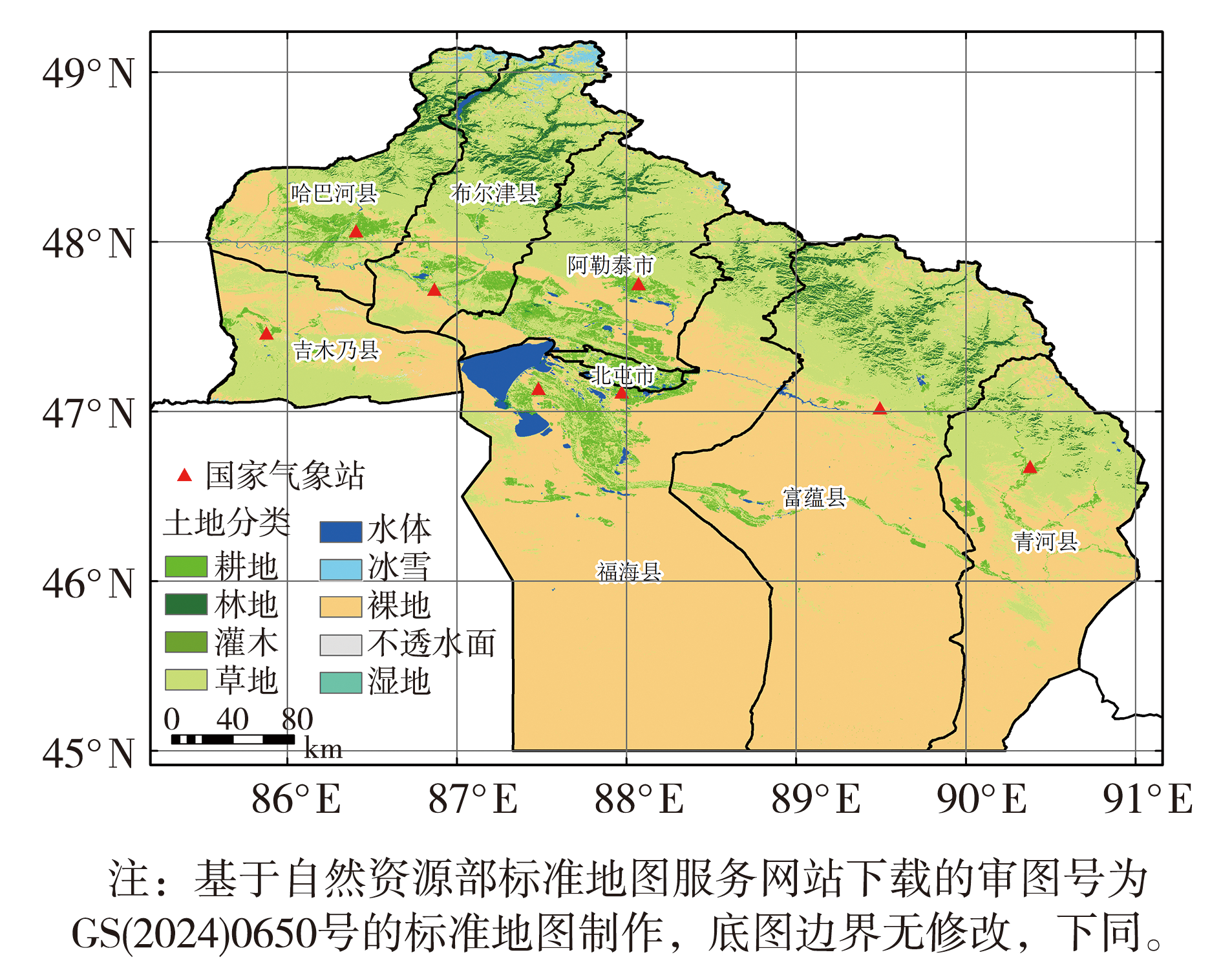
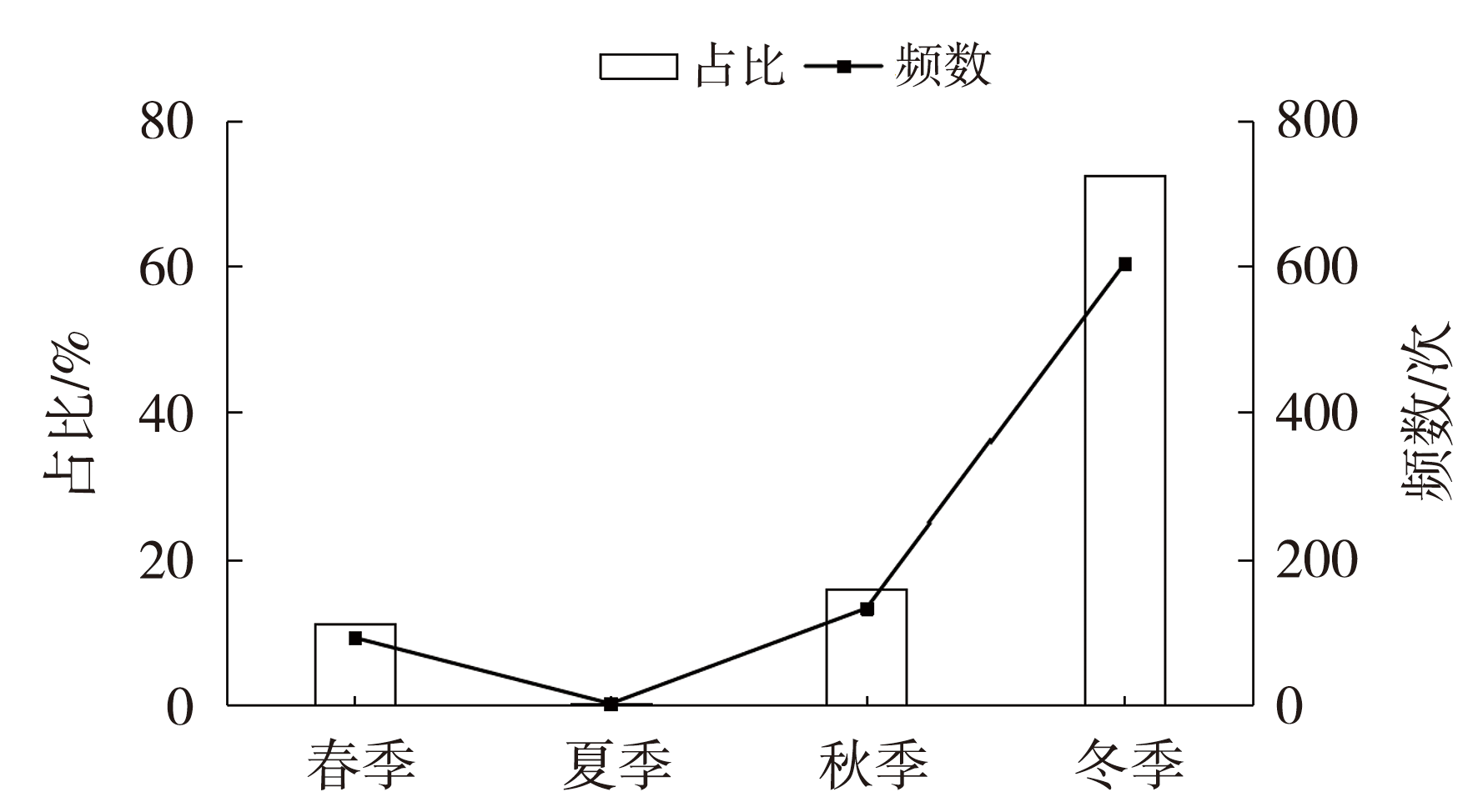
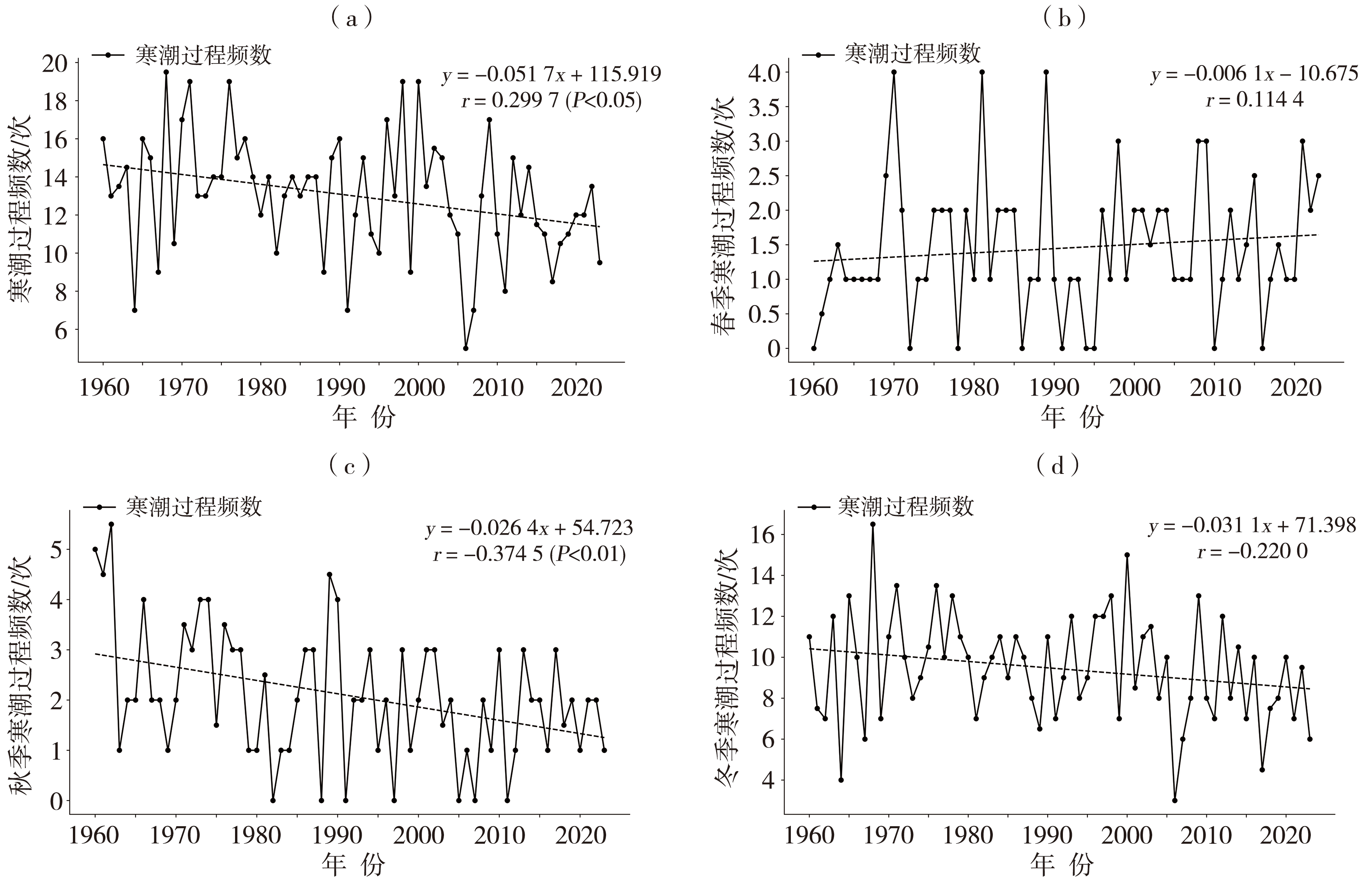
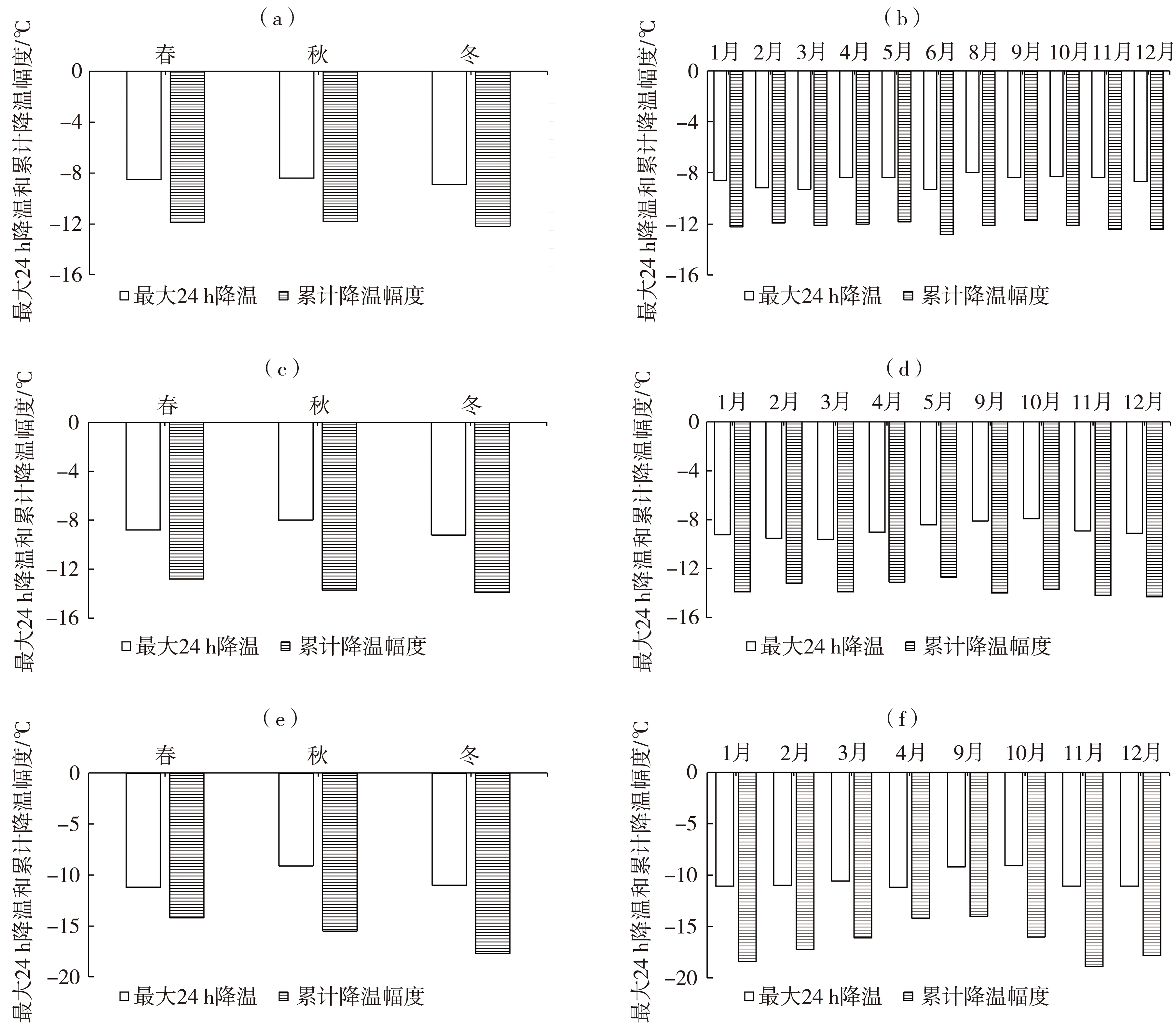
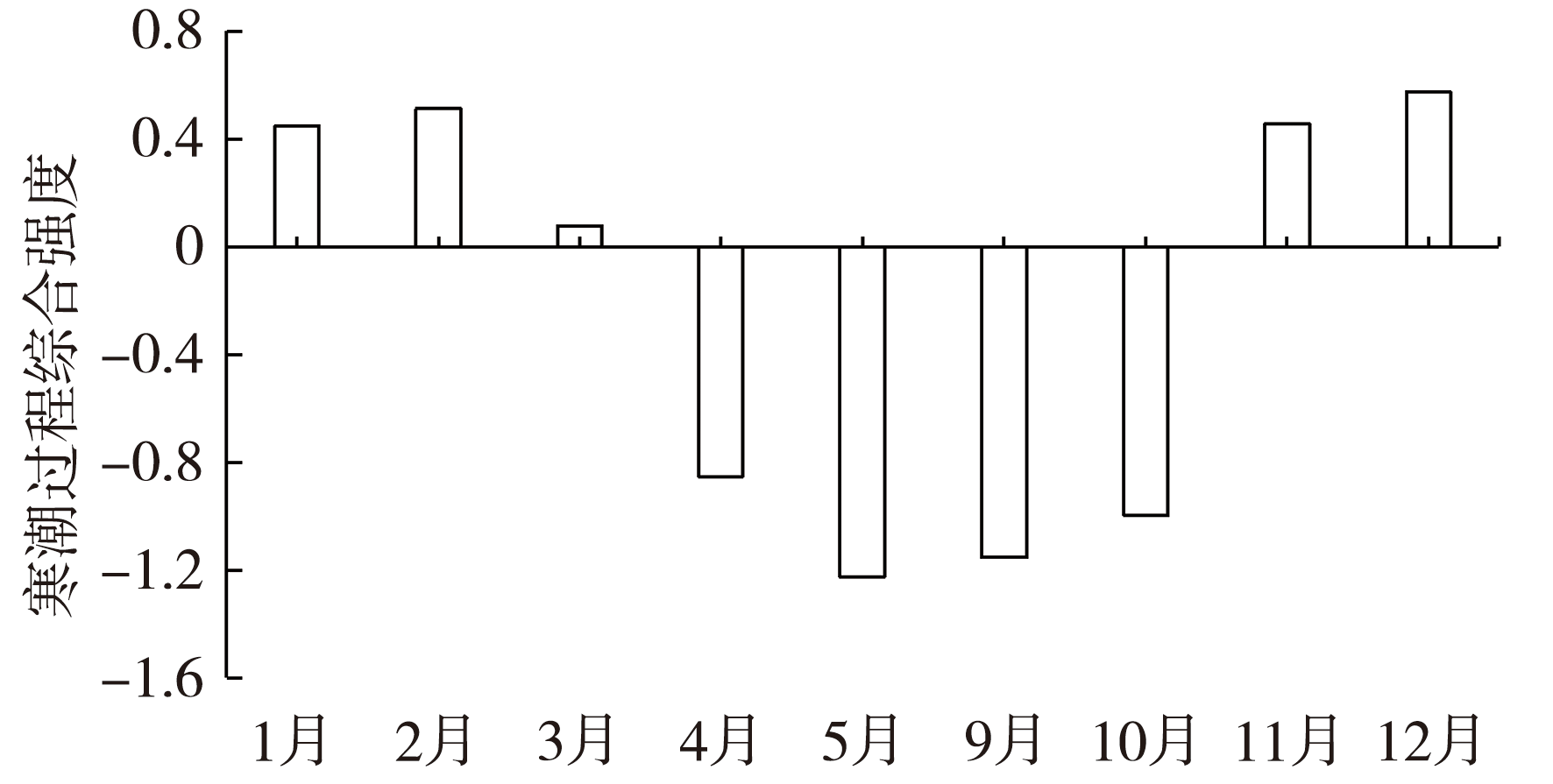
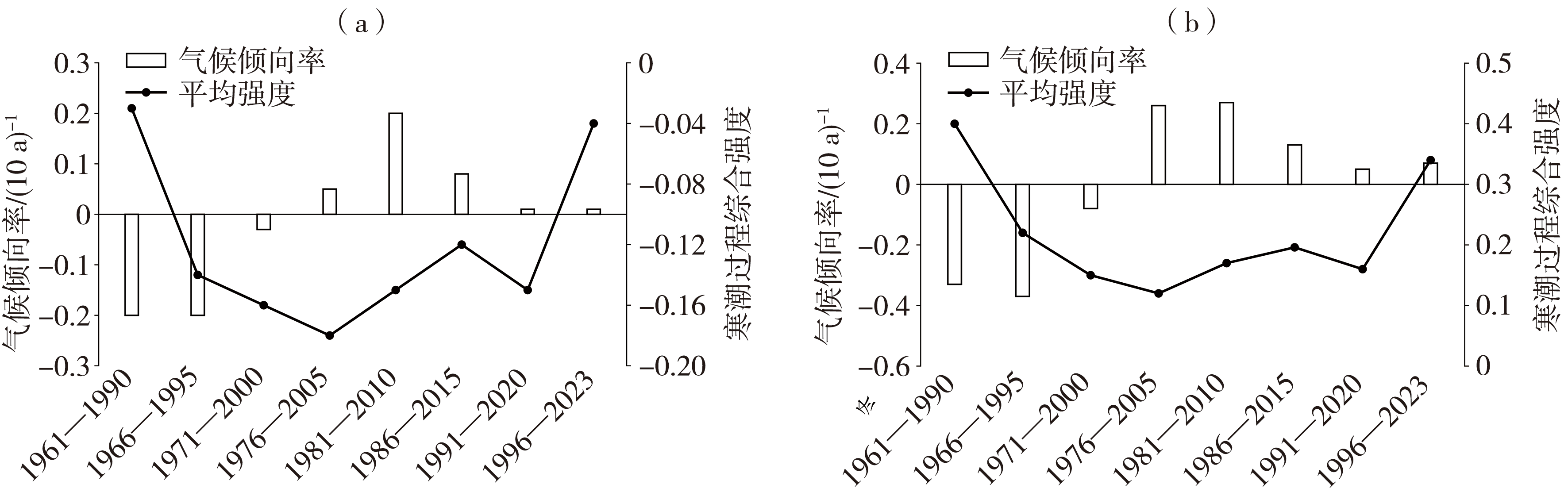
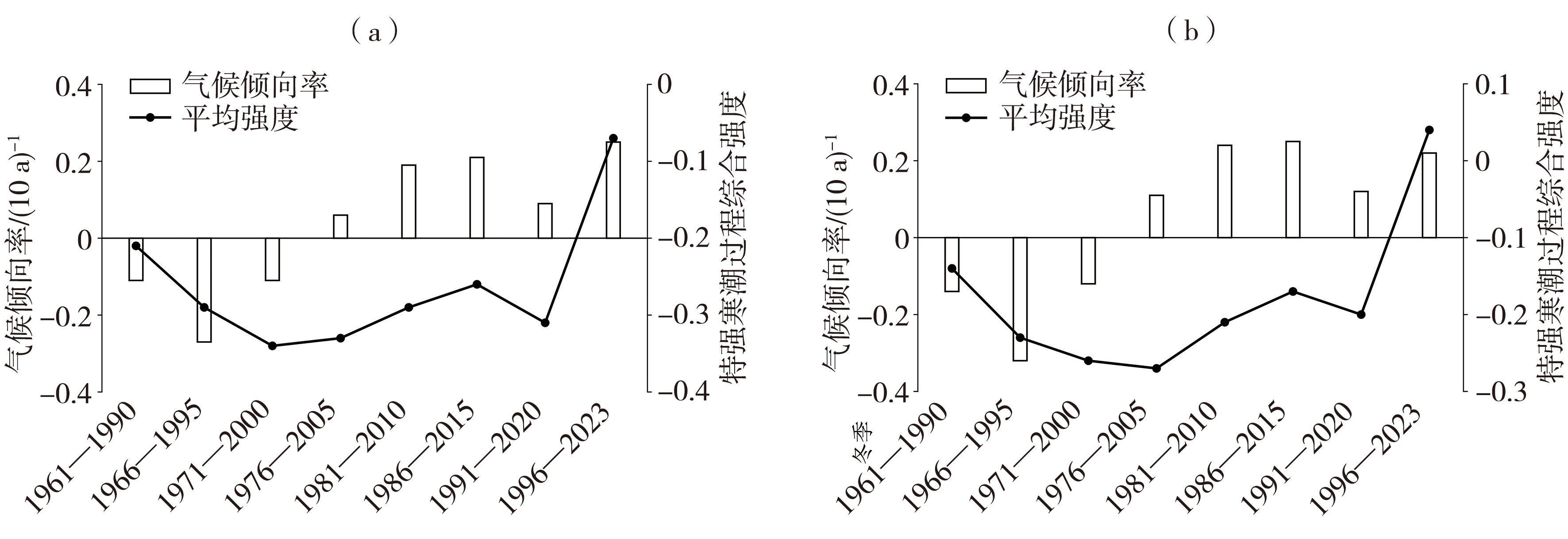
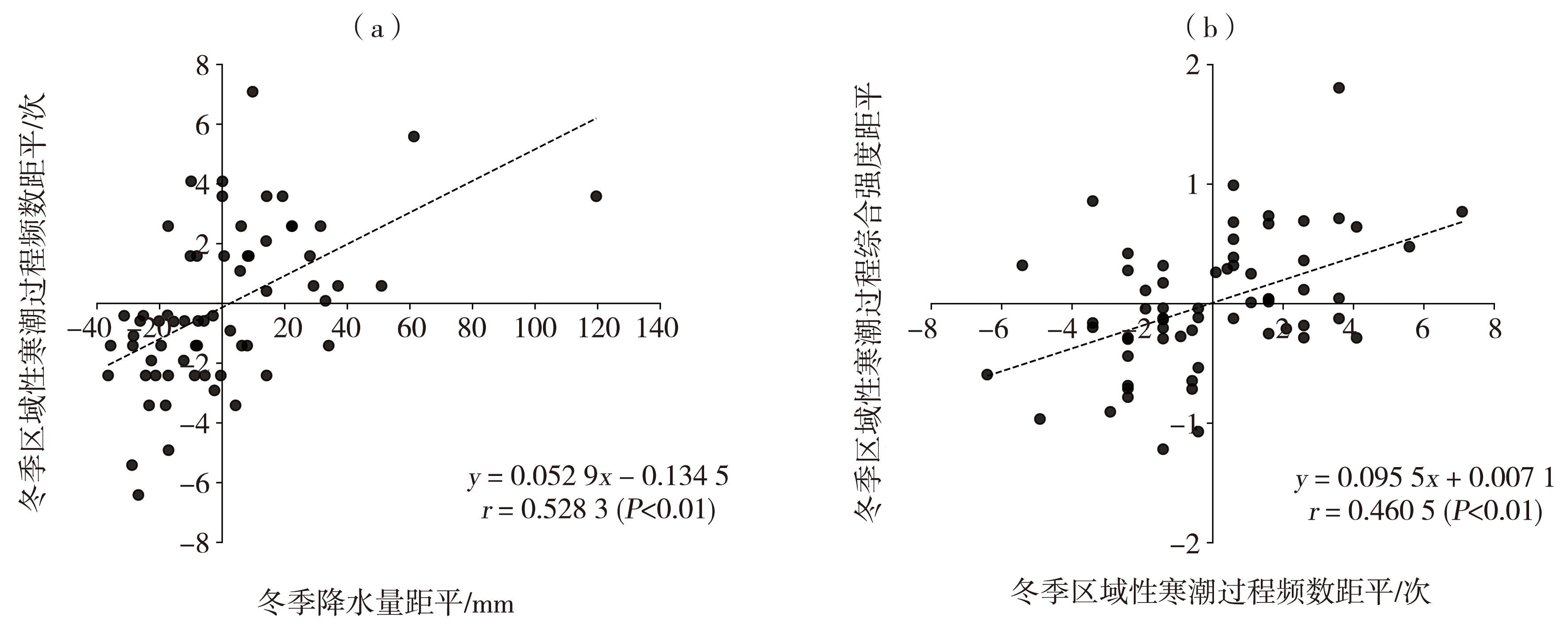
新疆阿勒泰地区是我国寒潮活动高频区,寒潮天气对其冰雪经济造成严重威胁。基于1960—2023年该地区7个国家级气象站逐日最低气温资料,分析区域性寒潮频数、强度及其变化特征,并构建寒潮综合强度指数。结果表明:1)1960—2023年阿勒泰地区共发生区域性寒潮833次,年均13次;冬季(11月—次年3月)区域性寒潮占比达72.5%;区域性寒潮集中在9月下旬至次年3月中旬,占比为84.3%,其中2月中旬区域性特强寒潮占该时段区域性寒潮总数的52.9%,显示强寒潮活动在冬季中后期高度集中。2)区域性寒潮过程呈显著减少趋势[-0.5次·(10 a)-1P<0.05],但1996—2023年区域性特强寒潮增多至每年平均4次,接近1961—1990年峰值,呈现“总量减少、极端性增强”的演变特征。3)寒潮强度具有明显季节分异:冬季以特强寒潮为主(占比40.4%),春、秋季则以一般寒潮为主;区域性特强寒潮最大24 h降温平均达10.9 ℃(极值为18.5 ℃),累计降温幅度平均为17.6 ℃(极值为30.1 ℃),冬季降温幅度明显高于春、秋季。4)冬季寒潮综合强度指数为0.38,明显高于春季(-0.97)和秋季(-1.06);近30 a来区域性特强寒潮强度呈上升趋势,表明极端寒潮的强度近期进一步增加。5)冬季降水量距平与寒潮频数距平的同步性达84.1%(P<0.01),寒潮频数距平与寒潮综合强度距平的同步性达77.7%(P<0.01),表明冬季降雪偏多年往往寒潮过程偏多、强度偏强、致灾风险偏高。

关键词: 阿勒泰, 区域性寒潮, 寒潮综合强度

Abstract:

The Altay region of Xinjiang is a high-frequency area for cold waves in China, and cold wave weather poses a serious threat to its ice and snow economy. Based on the daily minimum temperature data from seven national meteorological stations in the region from 1960 to 2023, the frequency, intensity, and variation characteristics of regional cold waves were analyzed, and a comprehensive cold wave intensity index was constructed. The results show that: 1) A total of 833 regional cold waves occurred in Altay from 1960 to 2023, with an annual average of 13.0 times. The regional cold waves in winter (November to March of the following year) accounted for 72.5%, and regional cold waves were concentrated from late September to mid-March of the following year, accounting for 84.3%. The regional extremely strong cold waves in mid-February accounted for 52.9% of the total number of regional cold waves during this period, indicating that the activity of strong cold waves was highly concentrated in the middle and late winter. 2) The frequency of regional cold waves has shown a significant decreasing trend (-0.5 times·(10 a)-1, P<0.05). However, from 1996 to 2023, the number of regional extremely strong cold waves increased to an average of 4.0 times per year, approaching the peak level during the period from 1961 to 1990, presenting an evolution characteristic of “total reduction and enhanced extremality”. 3) The intensity of cold waves showed significant seasonal variations: in winter, extremely strong cold waves were predominant (accounting for 40.4%), while in spring and autumn, general cold waves were more common. The maximum 24-hour temperature drop of regional extremely strong cold waves averaged 10.9 ℃ (with a maximum of 18.5 ℃), and the cumulative temperature drop averaged 17.6 ℃ (with a maximum of 30.1 ℃). The temperature drop in winter was significantly higher than that in spring and autumn. 4) The comprehensive intensity index of cold waves in winter was 0.38, significantly higher than that in spring (-0.97) and autumn (-1.06). Over the past 30 years, the intensity of regional extremely strong cold waves has shown an upward trend, indicating that the intensity of extremely cold waves has further increased recently. 5) The synchronicity between the anomaly of winter precipitation and the anomaly of cold wave frequency reached 84.1% (P<0.01), and the synchronicity between the anomaly of cold wave frequency and the anomaly of the comprehensive intensity of cold waves reached 77.7% (P<0.01). This indicates that years with more precipitation in winter tend to have more frequent and stronger cold waves and a higher risk of disasters.

Key words: Altay region, regional cold wave, comprehensive intensity

中图分类号: