干旱气象 ›› 2026, Vol. 44 ›› Issue (3): 349-357.DOI: 10.11755/j.issn.1006-7639-2026-03-0349
基于CNN-LSTM模型的西南地区气象干旱时空预测与影响因素分析
- 1
贵州省气象数据中心 贵州 贵阳 550002
2贵州省气象台 贵州 贵阳 550002
-
收稿日期:2025-08-21修回日期:2025-12-12出版日期:2026-06-30发布日期:2026-07-16 -
通讯作者:白滔(1977—),男,四川梓潼人,硕士,主要从事信息网络安全和软件工程工作。E-mail: 4413430@qq.com。
-
作者简介:汤宁(1976—),男,江苏南京人,高级工程师,主要从事信息网络运维和气象数据质控方面的工作。E-mail: 172126478@qq.com。 -
基金资助:贵州省气象局省市联合基金项目(黔气科合SS[2023]10号)
Spatio-temporal prediction of meteorological drought and analysis of influencing factors in Southwest China based on a CNN-LSTM model
TANG Ning1( ), LI Jinne1, SHI Yan2, LI Jue1, BAI Tao1()
- 1
Guizhou Meteorological Data Center Guiyang 550002, China
2Guizhou Meteorological Observatory Guiyang 550002, China
-
Received:2025-08-21Revised:2025-12-12Online:2026-06-30Published:2026-07-16

摘要:
中国西南地区地形复杂、气候差异显著,干旱频发。针对传统干旱预测方法对时空特征刻画能力不足的问题,本文以降水、气温、太阳辐射总量、风速等因子为输入,构建卷积神经网络(Convolutional Neural Networks,CNN)与长短期记忆网络(Long Short-Term Memory,LSTM)耦合模型,对西南地区气象干旱时空演变特征及其驱动机制进行分析,并开展2030年干旱情景预测。结果表明:CNN-LSTM耦合模型能够较好表征干旱时空变化特征,预测结果与观测值具有较高一致性,平均绝对误差约为0.17;降水、气温、风速以及太阳辐射总量等因子共同影响西南地区干旱;2030年西南地区干旱呈向低山丘陵和平原地区扩展的趋势,整体干旱程度进一步增强。
中图分类号:
引用本文
汤宁, 李进讷, 石艳, 李珏, 白滔. 基于CNN-LSTM模型的西南地区气象干旱时空预测与影响因素分析[J]. 干旱气象, 2026, 44(3): 349-357.
TANG Ning, LI Jinne, SHI Yan, LI Jue, BAI Tao. Spatio-temporal prediction of meteorological drought and analysis of influencing factors in Southwest China based on a CNN-LSTM model[J]. Journal of Arid Meteorology, 2026, 44(3): 349-357.
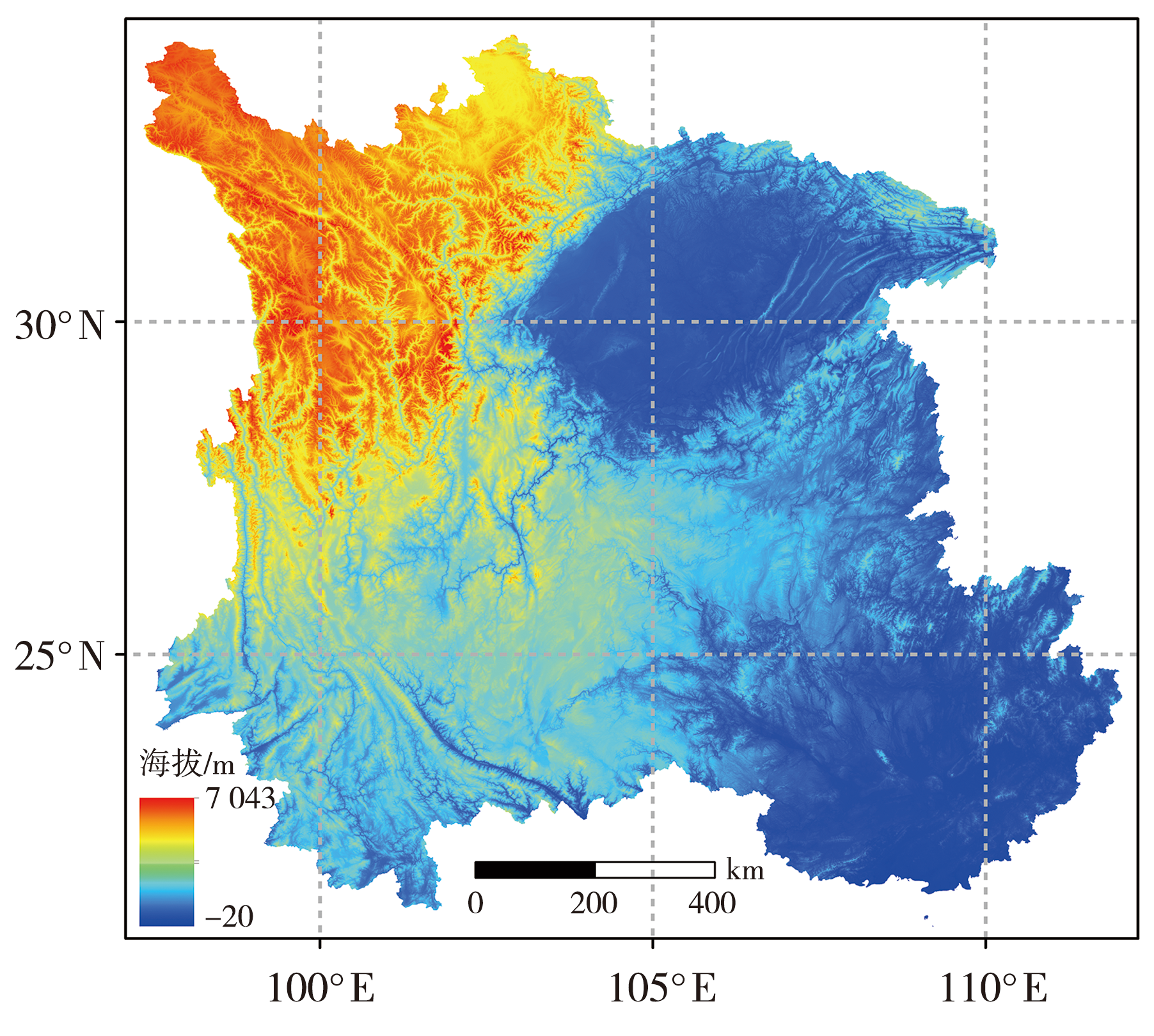
图1 西南地区概况
Fig.1 Overview of Southwest China
图1 西南地区概况
Fig.1 Overview of Southwest China
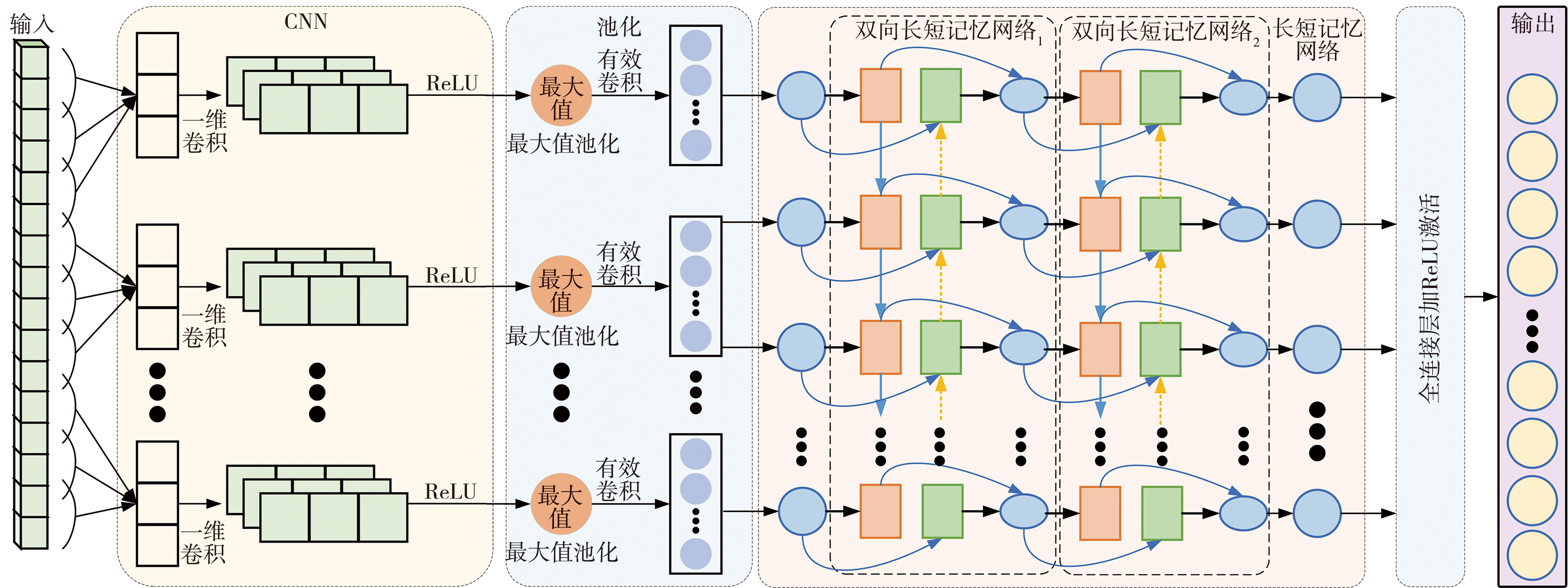
图2 CNN-LSTM模型框架图
Fig.2 The framework diagram of the CNN-LSTM model
图2 CNN-LSTM模型框架图
Fig.2 The framework diagram of the CNN-LSTM model
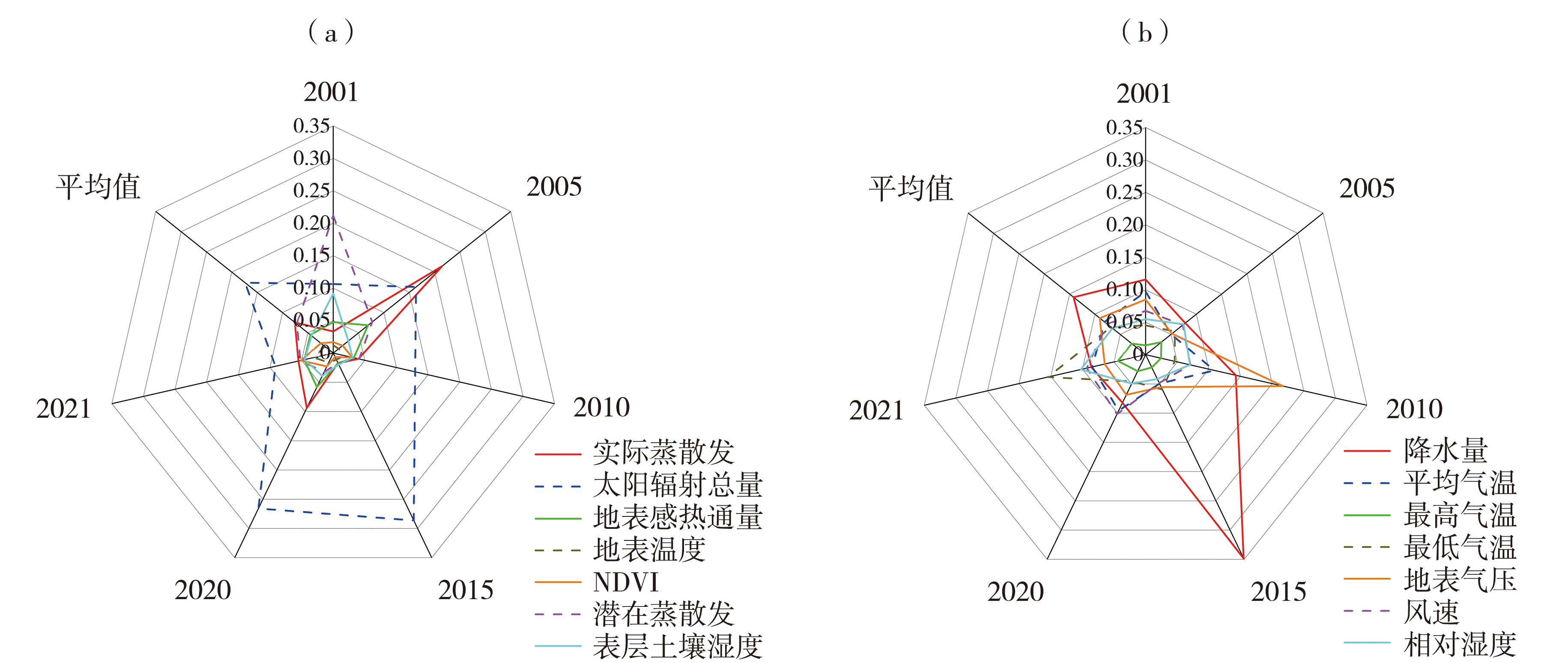
图3 2001—2021年非气象因子(a)、气象因子(b)对西南地区干旱预测的相对贡献度
Fig.3 Relative contribution of non-meteorological factors (a) and meteorological factors (b) to drought prediction in Southwest China from 2001 to 2021
图3 2001—2021年非气象因子(a)、气象因子(b)对西南地区干旱预测的相对贡献度
Fig.3 Relative contribution of non-meteorological factors (a) and meteorological factors (b) to drought prediction in Southwest China from 2001 to 2021
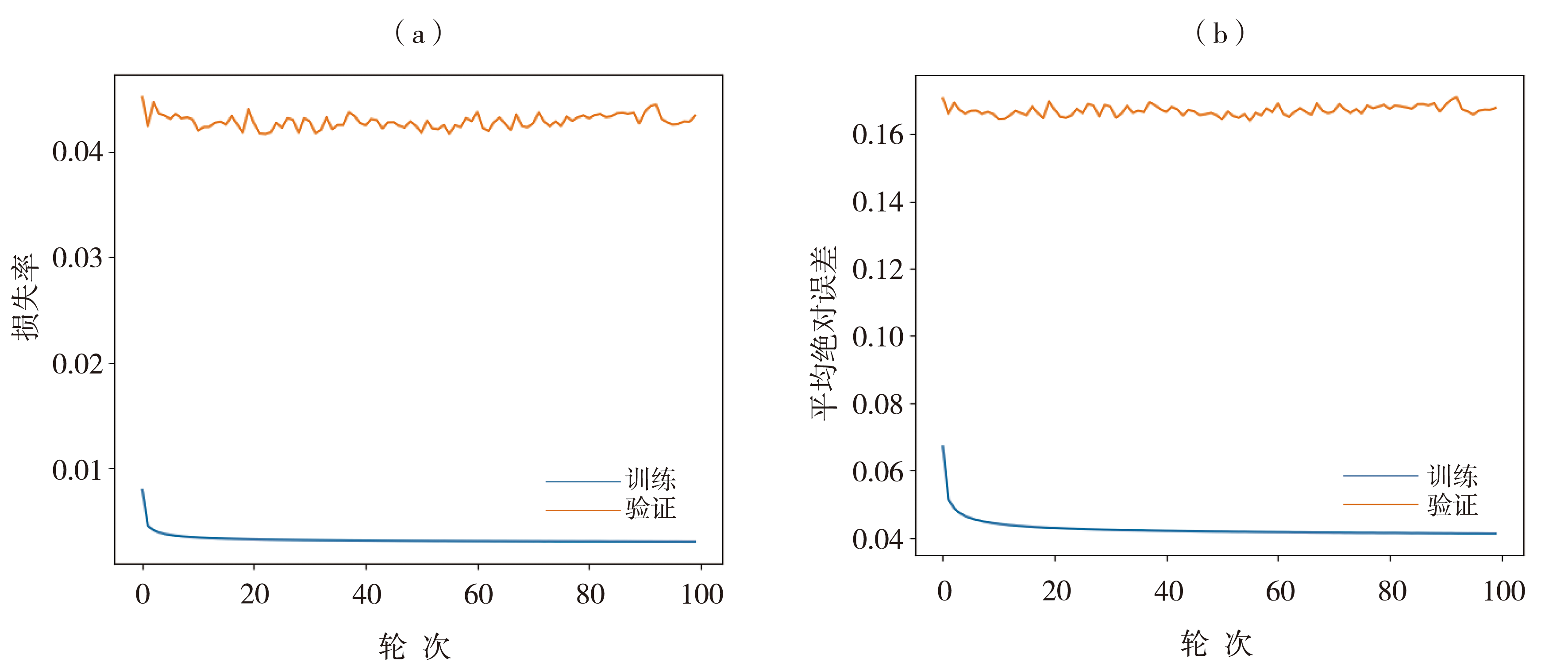
图4 模型训练过程中损失率(a)与平均绝对误差(b)的变化
Fig.4 Loss (a) and MAE (b) variation during model training
图4 模型训练过程中损失率(a)与平均绝对误差(b)的变化
Fig.4 Loss (a) and MAE (b) variation during model training
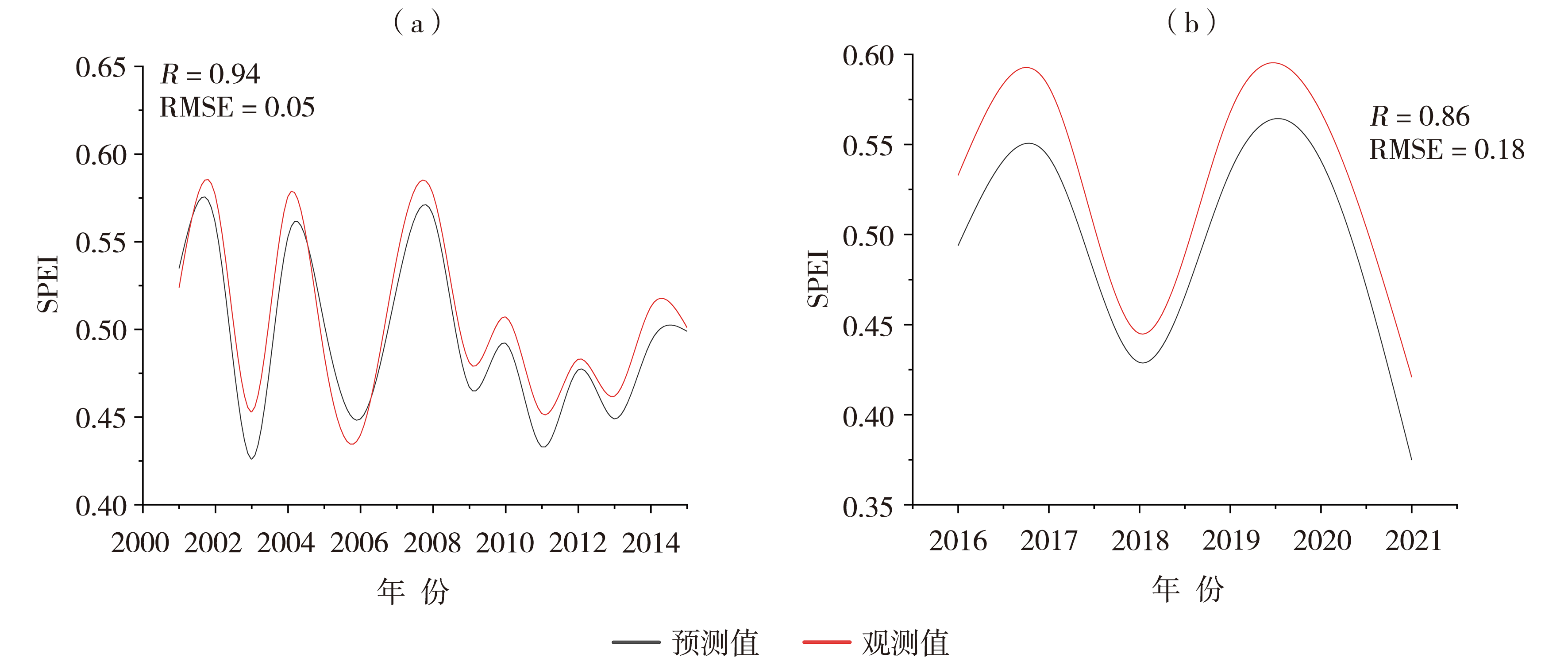
图5 西南地区CNN-LSTM模型训练集(a)和测试集(b)SPEI预测值与观测值随时间的变化
Fig.5 The temporal variations of observed and CNN-LSTM-predicted SPEI in the training set (a) and test set (b) over Southwest China
图5 西南地区CNN-LSTM模型训练集(a)和测试集(b)SPEI预测值与观测值随时间的变化
Fig.5 The temporal variations of observed and CNN-LSTM-predicted SPEI in the training set (a) and test set (b) over Southwest China
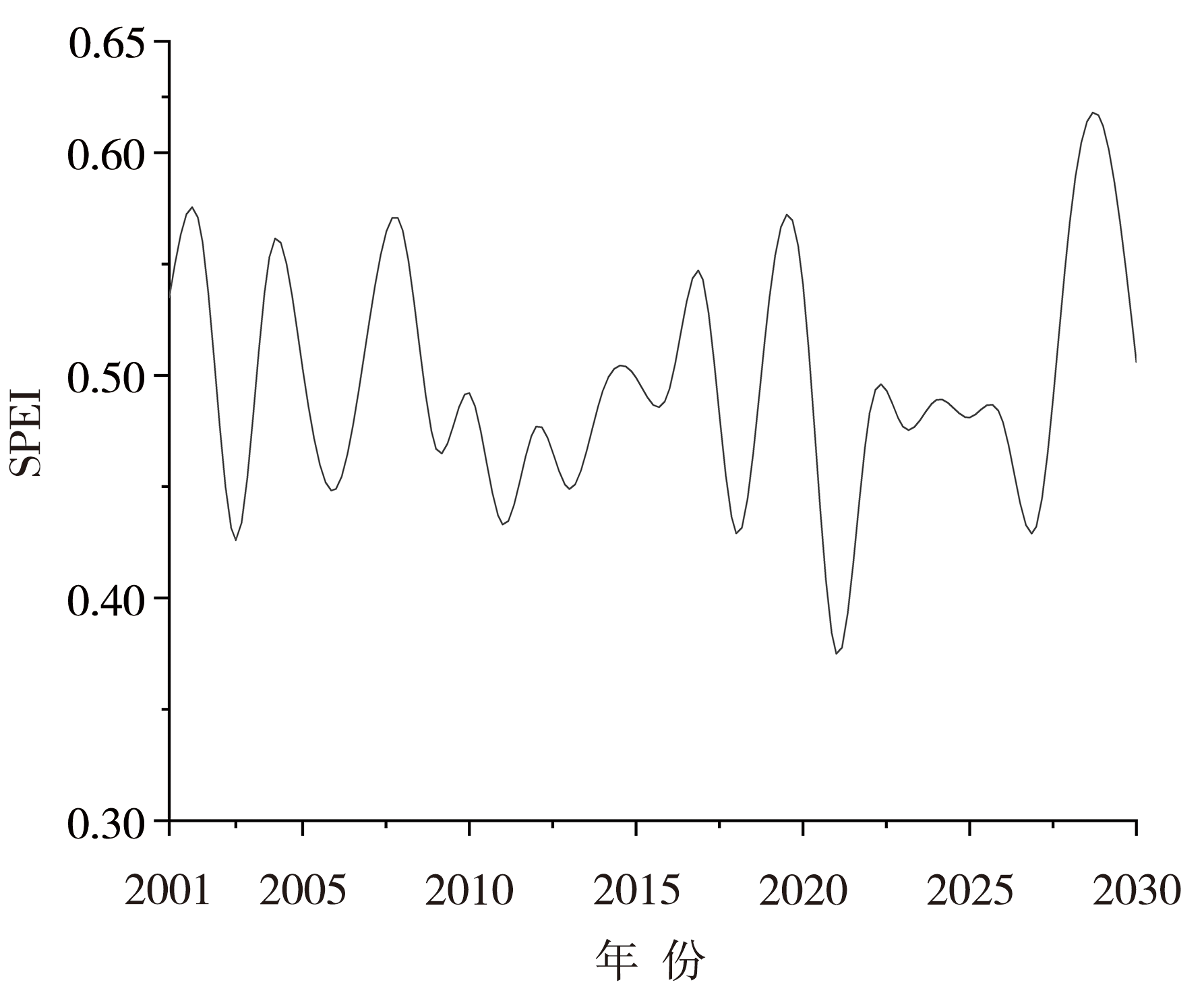
图6 2001—2030年西南地区CNN-LSTM模型模拟SPEI随时间的变化
Fig.6 The temporal variation of CNN-LSTM-predicted SPEI over Southwest China from 2001 to 2030
图6 2001—2030年西南地区CNN-LSTM模型模拟SPEI随时间的变化
Fig.6 The temporal variation of CNN-LSTM-predicted SPEI over Southwest China from 2001 to 2030
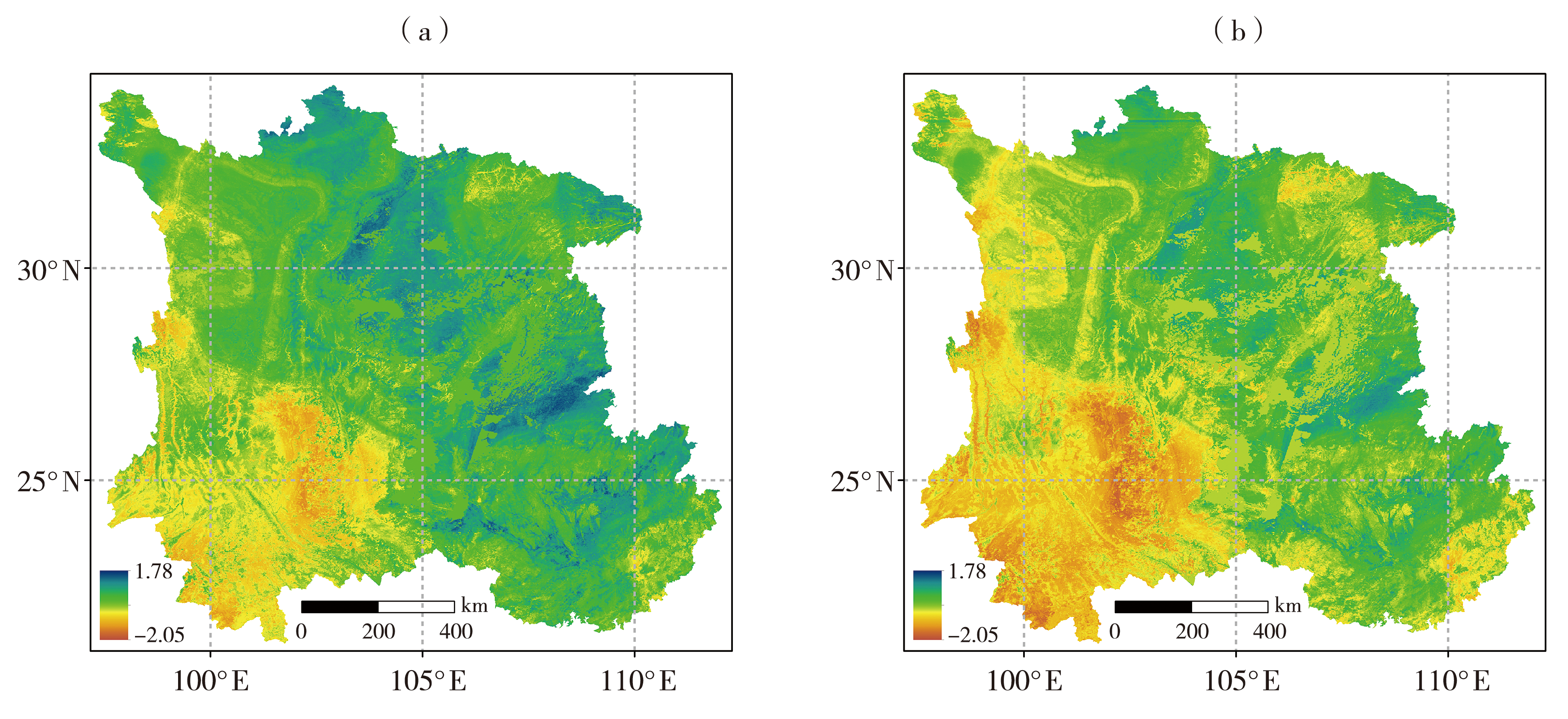
图7 2021年西南地区SPEI观测值(a)与CNN-LSTM模型预测值(b)空间分布
Fig.7 Spatial distributions of observed (a) and CNN-LSTM-predicted (b) SPEI over Southwest China in 2021
图7 2021年西南地区SPEI观测值(a)与CNN-LSTM模型预测值(b)空间分布
Fig.7 Spatial distributions of observed (a) and CNN-LSTM-predicted (b) SPEI over Southwest China in 2021
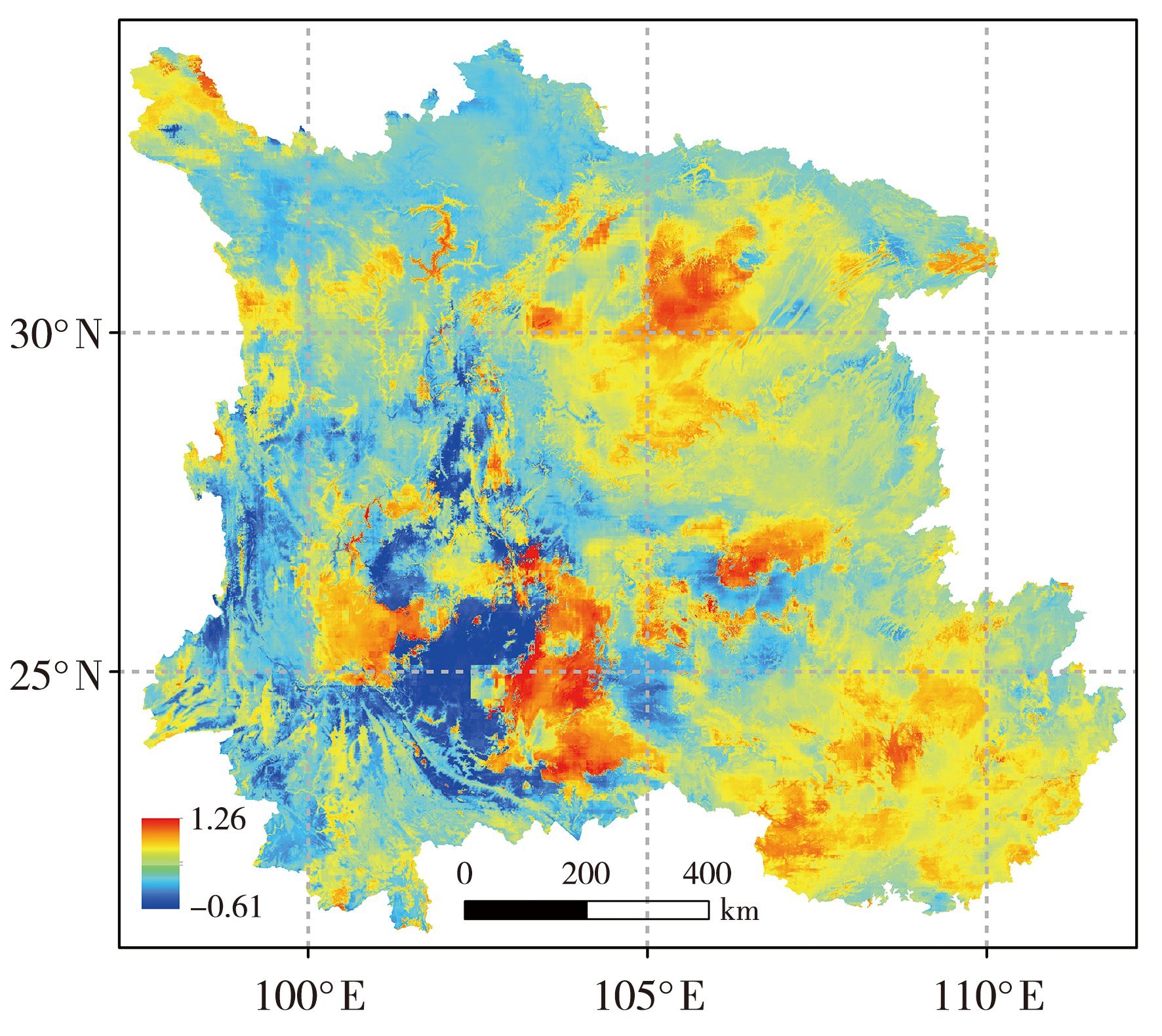
图8 2030年西南地区CNN-LSTM模型预测SPEI空间分布
Fig.8 Spatial distribution of CNN-LSTM-predicted SPEI over Southwest China in 2030
图8 2030年西南地区CNN-LSTM模型预测SPEI空间分布
Fig.8 Spatial distribution of CNN-LSTM-predicted SPEI over Southwest China in 2030
| [1] | 曹红华, 陈友平, 张合理, 等, 2026. 西南地区干旱时空变化及对植被NPP的影响[J]. 沙漠与绿洲气象, 20(1):191-198. |
| [2] | 陈冰锋, 2024. 基于多源遥感数据融合的山丘区干旱监测研究[D]. 重庆: 重庆交通大学. |
| [3] | 池再香, 夏阳, 刘莉娟, 等, 2018. 基于积温干燥度指数的云贵高原东部汛期干湿变化趋势分析[J]. 高原气象, 37(5):1199-1 207. |
| [4] | 高雅, 王晓飞, 高懋芳, 等, 2020. 基于温度植被干旱指数的曲靖市干旱监测研究[J]. 中国农学通报, 36(9):37-45. |
| [5] | 黄瑶, 何军, 甘薇薇, 等, 2023. 基于SPI的金沙江下游气象干旱时空分布特征及预测方法[J]. 高原山地气象研究, 43(2):81-89. |
| [6] | 李强, 王秀明, 周国兵, 等, 2020. 四川盆地西南低涡暴雨过程的短时强降水时空分布特征研究[J]. 高原气象, 39(5):960-972. |
| [7] | 李小根, 刘泓辰, 付景保, 等, 2025. 基于CNN-Attention-LSTM模型的地下水水位预测[J]. 水资源保护, 41(4):228-235. |
| [8] | 马建华, 2010. 西南地区近年特大干旱灾害的启示与对策[J]. 人民长江, 41(24):7-12. |
| [9] | 马献菊, 蔡元刚, 刘皓, 等, 2019. 基于SPEI干旱指数的凉山州干旱特征分析[J]. 高原山地气象研究, 39(3):53-59. |
| [10] | 马艳敏, 郭春明, 李建平, 等, 2019. 卫星遥感技术在吉林旱涝灾害监测与评估中的应用[J]. 干旱气象, 37(1):159-165. |
| [11] | 钱正安, 宋敏红, 吴统文, 等, 2017. 世界干旱气候研究动态及进展综述(Ⅱ):主要研究进展[J]. 高原气象, 36(6):1457-1 476. |
| [12] | 涂玉虹, 方国华, 2025. 基于三维视角的长江流域干旱时空演变特征研究[J]. 人民长江, 56(11):197-205. |
| [13] | 汪福松, 白银萍, 俞世康, 等, 2024. 1950—2023年四川广元烤烟干旱时空特征及影响因素[J]. 西南农业学报, 37(11):2513-2 524. |
| [14] | 王春来, 周宝坤, 朱朝阳, 等, 2026. 真三轴应力状态下花岗岩损伤三维可视化及定量表征[J]. 岩土工程学报, 48(5):895-906. |
| [15] | 王东, 张勃, 安美玲, 等, 2014. 基于SPEI的西南地区近53 a干旱时空特征分析[J]. 自然资源学报, 29(6):1003-1 016. |
| [16] | 王健顺, 2024. 基于机器学习方法的中国北方干旱时空特征及其影响因素研究[D]. 兰州: 兰州大学. |
| [17] | 王劲松, 李耀辉, 王润元, 等, 2012. 我国气象干旱研究进展评述[J]. 干旱气象, 30(4):497-508. |
| [18] | 王林, 陈文, 黄刚, 等, 2024. 中国西南超级干旱的变化特征和多尺度异常叠加效应分析[J]. 中国科学:地球科学, 54(7):2114-2 132. |
| [19] | 王玥彤, 何东坡, 李忠燕, 等, 2024. 贵州省两次气象干旱对比分析及基于机器学习的干旱预测模型建立[J]. 干旱气象, 42(5):671-682. |
| [20] | 王昀, 王丽娟, 陆晓娟, 等, 2023. 2023年上半年我国干旱的特征及其成因分析[J]. 干旱气象, 41(6):884-896. |
| [21] | 韦余鑫, 李巧, 卢春雷, 等, 2025. 基于ICEEMDAN分解的多维时间序列干旱预测模型性能评估[J]. 灌溉排水学报, 44(3):94-103. |
| [22] | 吴小飘, 周忠发, 朱孟, 等, 2023. 典型喀斯特聚集区不同地貌类型干旱时空特征[J]. 水土保持研究, 30(1):336-347. |
| [23] | 谢五三, 张强, 李威, 等, 2021. 干旱指数在中国东北、西南和长江中下游地区适用性分析[J]. 高原气象, 40(5):1136-1 146. |
| [24] | 许继军, 陈桂亚, 杨明智, 等, 2023. 长江流域干旱灾害应对的主要难点及其科技需求[J]. 人民长江, 54(8):25-31. |
| [25] | 闫妍, 莫金宇, 靳佳, 等, 2024. 西南喀斯特地区与非喀斯特地区气象干旱时空特征及其对植被的影响[J]. 地理科学, 44(7):1275-1 285. |
| [26] | 张恒斌, 许德合, 付景保, 2024. 基于多变量LSTM模型的黄河流域气象干旱预测研究[J]. 南阳理工学院学报, 16(2):55-62. |
| [27] | 张玮煊, 刁鹏, 巴音才次克, 等, 2023. 基于SPEI的开都河流域干旱时空演变特征分析[J]. 沙漠与绿洲气象, 17(6):102-110. |
| [28] | 周建琴, 陶云, 符睿, 等, 2024. 云南2020年4—6月区域性气象干旱特征和成因分析[J]. 高原气象, 43(4):1052-1 063. |
| [29] | 祝亚丽, 刘洋, 孔祥慧, 等, 2025. 中国高温、干旱及其复合事件的研究进展和展望[J]. 大气科学学报, 48(1):26-36. |
| [30] | CHEN W, ZHANG R H, WU R G, et al, 2023. Recent advances in understanding multi-scale climate variability of the Asian monsoon[J]. Advances in Atmospheric Sciences, 40(8): 1 429-1 456. |
| [31] | CHEN W, PIAO J L, CHEN S F, et al, 2025. Multi-scale variations and future projections of dry-wet conditions over the monsoon transitional zone in east Asia: A review[J]. Fundamental Research, 5(4): 1 597-1 606. |
| [32] | GRAVES A, MOHAMED A R, HINTON G, 2013. Speech recognition with deep recurrent neural networks[C]// 2013 IEEE International Conference on Acoustics, Speech and Signal Processing. Vancouver, Canada: IEEE: 6 645-6 649. |
| [33] | HAO Z C, YUAN X, XIA Y, et al, 2017. An overview of drought monitoring and prediction systems at regional and global scales[J]. Bulletin of the American Meteorological Society, 98(9): 1 879-1 896. |
| [34] | LIU X X, ZHU Z Y, LIU X M, et al, 2021. Thresholds of key disaster-inducing factors and drought simulation in the Xilinguole Grassland[J]. Ecological Informatics, 64, 101380. DOI:10.1016/j.ecoinf.2021.101380. |
| [35] | LONG J C, XU C C, WANG Y Z, et al, 2024. From meteorological to agricultural drought: Propagation time and influencing factors over diverse underlying surfaces based on CNN-LSTM model[J]. Ecological Informatics, 82, 102681. DOI:10.1016/j.ecoinf.2024.102681. |
| [36] | MA T J, CHEN W, CAI Q Y, et al, 2024. Attribution analysis of the persistent and extreme drought in southwest China during 2022-2023[J]. Environmental Research Letters, 19(11): 114056. DOI: 10.1088/1748-9326/ad8171. |
| [37] | MIRALLES D G, BONTE O, KOPPA A, et al, 2025. GLEAM4: Global land evaporation and soil moisture dataset at 0.1° resolution from 1980 to near present[J]. Scientific Data, 12(1):416.DOI:10.1038/s41597-025-04610-y. |
| [38] | MO H, LUCCA F, MALACARNE J, et al, 2020. Multi-head CNN-LSTM with prediction error analysis for remaining useful life prediction[C]//2020 27th Conference of Open Innovations Association (FRUCT). Trento, Italy: IEEE: 164-171. |
| [39] | POORNIMA S, PUSHPALATHA M, 2019. Drought prediction based on SPI and SPEI with varying timescales using LSTM recurrent neural network[J]. Soft Computing, 23(18): 8 399-8 412. |
| [40] | SHARAFI S, MOHAMMADI GHALENI M, 2023. Enhancing drought monitoring and prediction in diverse climates by using composite drought indices[J]. Stochastic Environmental Research and Risk Assessment, 39(10): 4 295-4 315. |
| [41] | WAMBURA F J, 2025. From meteorological to hydrological drought: A focus on the characterization of hydrological drought with prediction uncertainty[J]. Water Resources Management, 39(8): 3 937-3 951. |
| [42] | WANG T, TU X J, SINGH V P, et al, 2023. Drought prediction: Insights from the fusion of LSTM and multi-source factors[J]. Science of the Total Environment, 902, 166361. DOI: 10.1016/j.scitotenv.2023.166361. |
| [43] | WILHITE D A, 2000. Drought as a natural hazard: Concepts and definitions[M]// WILHITE D A. Drought: A Global Assessment. London: Routledge: 3-18. |
| [44] | WU Z Y, YIN H, HE H, et al, 2022. Dynamic-LSTM hybrid models to improve seasonal drought predictions over China[J]. Journal of Hydrology, 615, 128706. DOI:10.1016/j.jhydrol.2022.128706. |
| [45] | XIA H M, SHA Y T, ZHAO X Y, et al, 2024. HSPEI: A 1-km spatial resolution SPEI dataset across the Chinese mainland from 2001 to 2022[J]. Geoscience Data Journal, 11(4): 479-494. |
| [46] | ZHANG Q, SHI R, SINGH V P, et al, 2022. Droughts across China: Drought factors, prediction and impacts[J]. Science of the Total Environment, 803, 150018. DOI: 10.1016/j.scitotenv.2021.150018. |
| [47] | ZHU G F, YANG L, QIN D H, et al, 2016. Spatial and temporal variation of drought index in a typical steep alpine terrain in Hengduan Mountains[J]. Journal of Mountain Science, 13(7): 1 186-1 199. |
| [1] | 吴遥, 唐红玉, 朱浩楠, 魏麟骁, 何慧根. 基于NCEP CFSv2的西南地区气温和降水订正算法研究[J]. 干旱气象, 2026, 44(3): 499-511. |
| [2] | 姜江, 夏江江, 刘祺, 乔媛. 北京地区能见度变化特征及其临近外推预报研究[J]. 干旱气象, 2026, 44(2): 338-347. |
| [3] | 李家良, 彭丽英, 刘祖任, 余绍荣, 梁家杰. 基于SPEI的粤西近50 a干旱特征分析[J]. 干旱气象, 2026, 44(1): 47-55. |
| [4] | 何慧根, 张驰, 成青燕, 李永华, 甘薇薇, 金燕. 川渝地区夏季气象干旱差异及大气环流成因分析[J]. 干旱气象, 2025, 43(3): 355-365. |
| [5] | 杨晓玲, 孙旭映, 杨金虎, 吴雯, 赵慧华, 陈静. 石羊河流域复合高温干旱事件的识别及其演变特征[J]. 干旱气象, 2024, 42(6): 836-843. |
| [6] | 马敏劲, 陈然, 曹译丹, 张星宇, 李岳彬. 卷积神经网络研究进展及其在大气科学中的应用[J]. 干旱气象, 2024, 42(5): 719-733. |
| [7] | 李春华, 朱飙, 杨金虎, 黄鹏程. 我国干旱半干旱区近60 a气象干旱气候特征分析[J]. 干旱气象, 2024, 42(4): 519-526. |
| [8] | 刘炜, 赵艳丽, 高晶, 李林惠, 王慧敏. 2022年7月内蒙古干旱半干旱区涝—旱转折事件的成因分析[J]. 干旱气象, 2024, 42(1): 11-18. |
| [9] | 罗晓玲, 杨梅, 赵慧华, 李岩瑛, 蒋菊芳, 伏芬琪. 厄尔尼诺事件对甘肃武威温度降水以及气象干旱影响分析[J]. 干旱气象, 2023, 41(6): 849-859. |
| [10] | 马思源, 金燕, 张思, 王楚钦, 马志敏. 厄尔尼诺/南方涛动事件对云南秋季气象干旱的不同影响分析[J]. 干旱气象, 2023, 41(6): 860-872. |
| [11] | 王昀, 王丽娟, 陆晓娟, 张金玉, 王芝兰, 沙莎, 胡蝶, 杨扬, 颜鹏程, 李忆平. 2023年上半年我国干旱的特征及其成因分析[J]. 干旱气象, 2023, 41(6): 884-896. |
| [12] | 赵惠珍, 何涛, 郭瑞霞, 王成福, 张艳荣, 李琪. 基于SPEI的甘南高原气象干旱变化特征[J]. 干旱气象, 2023, 41(5): 688-696. |
| [13] | 盖长松, 曹丽娟, 阳园燕. 三种气温插补方法在中国西南地区的应用分析[J]. 干旱气象, 2023, 41(5): 792-801. |
| [14] | 王莹, 张舒, 徐永清, 阙粼婧, 李新华, 黄英伟, 陈雪, 王蕾. 近50 a黑龙江省5—9月气象干旱及大气环流异常特征[J]. 干旱气象, 2023, 41(4): 540-549. |
| [15] | 姜舒婕, 程莹, 方楠, 周毓荃, 单中华, 张磊. 基于干旱和水位特征构建水库人工增雨需求指数[J]. 干旱气象, 2023, 41(2): 341-349. |
| 阅读次数 | ||||||
|
全文 |
|
|||||
|
摘要 |
|
|||||
