干旱气象 ›› 2026, Vol. 44 ›› Issue (2): 219-230.DOI: 10.11755/j.issn.1006-7639-2026-02-0219

• 论文 • 上一篇    下一篇

1969—2024年青藏高原降雹日数时空变化特征

冯晓莉1,2(), 赵占秀2,3(), 王鹤4, 张红亮5, 张欣1, 管琴2,6, 葛友荣2,7   

  1. 1 青海省气候中心青海 西宁 810001
    2 青海省防灾减灾重点实验室青海 西宁 810001
    3 青海省海北州气象局青海 海晏 812200
    4 青海省海北牧业气象试验站青海 海晏 812200
    5 青海省诺木洪气象站青海 都兰 816102
    6 青海省气象科学研究所青海 西宁 810001
    7 青海省囊谦县气象局青海 囊谦 815200
  • 收稿日期:2025-11-12 修回日期:2026-02-12 出版日期:2026-05-20 发布日期:2026-05-18
  • 通讯作者: 赵占秀(1987—),女,青海湟中人,高级工程师,主要从事天气预报服务及研究工作。E-mail: 15500706549@163.com
  • 作者简介:冯晓莉(1985—),女,青海互助人,高级工程师,主要从事气候与气候变化研究。E-mail: fxl_lxf2008@163.com
  • 基金资助:
    青海省科技厅基础研究计划项目(2025-ZJ-741);青海省气象局重点科研项目(QXZD2026-4);青海省气象局面上科研项目(QXMS2025-30)

Spatiotemporal variations of hail days over the Qinghai-Xizang Plateau from 1969 to 2024

FENG Xiaoli1,2(), ZHAO Zhanxiu2,3(), WANG He4, ZHANG Hongliang5, ZHANG Xin1, GUAN Qin2,6, GE Yourong2,7   

  1. 1 Qinghai Climate CentreXining 810001, China
    2 Key Laboratory of Disaster Prevention and Mitigation of Qinghai ProvinceXining 810001, China
    3 Haibei Meteorological Bureau of Qinghai ProvinceHaiyan 812200, Qinghai, China
    4 Haibei Animal Husbandry Meteorological Testing Station of Qinghai ProvinceHaiyan 812200, Qinghai, China
    5 Nuomuhong Meteorological Station of Qinghai ProvinceDulan 816102, Qinghai, China
    6 Qinghai Meteorological Science InstituteXining 810001, China
    7 Nangqian Meteorological Bureau of Qinghai ProvinceNangqian 815200, Qinghai, China
  • Received:2025-11-12 Revised:2026-02-12 Online:2026-05-20 Published:2026-05-18

摘要:

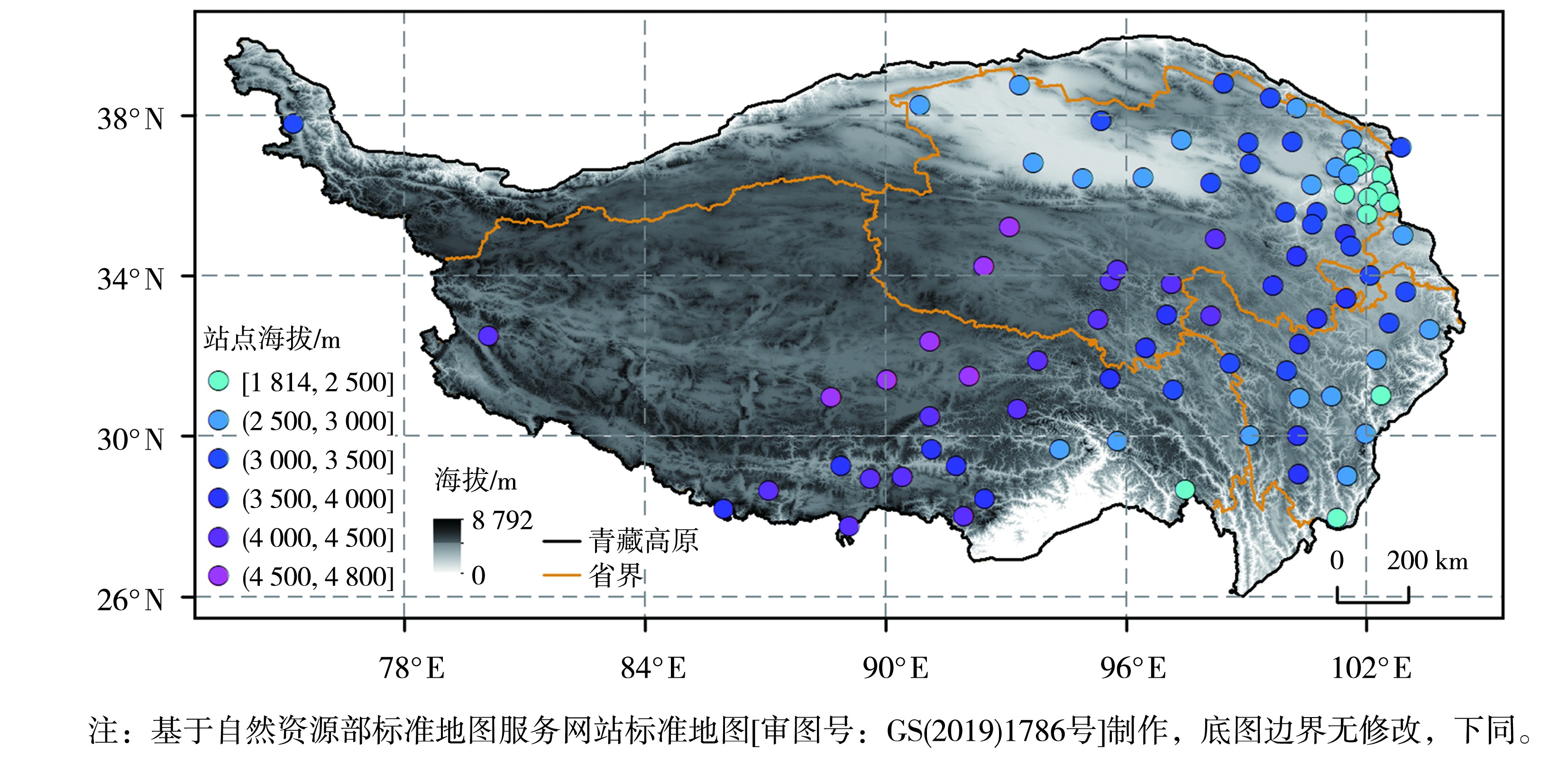
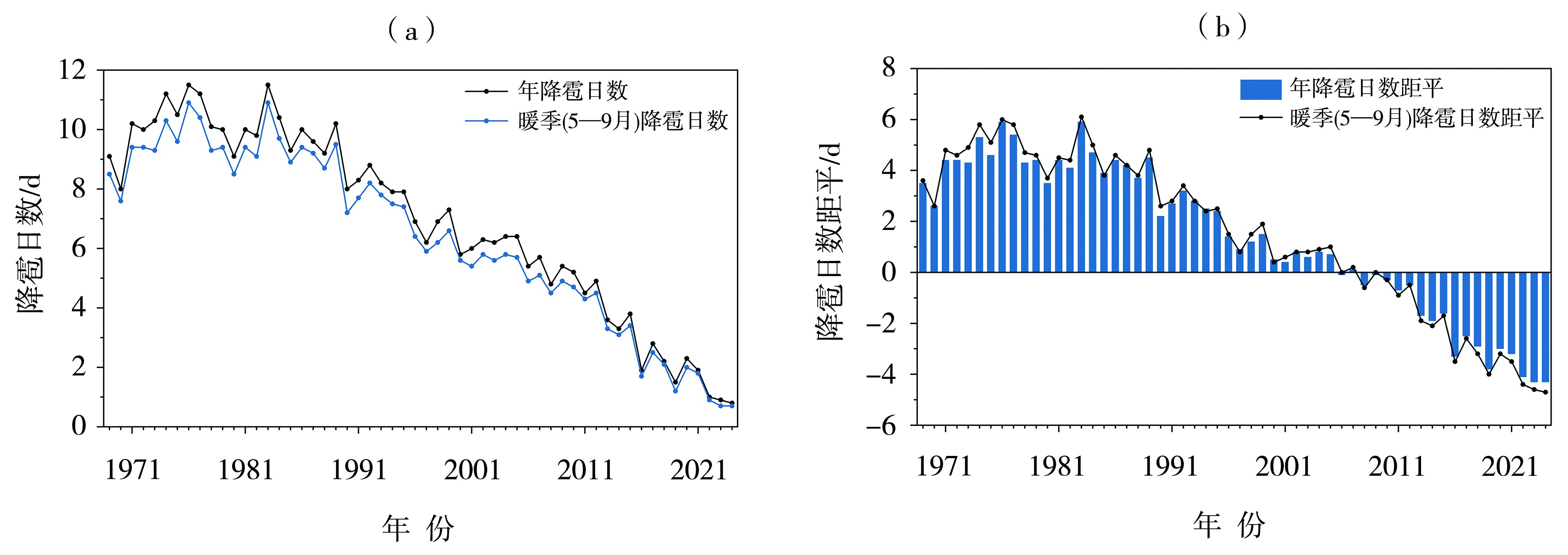
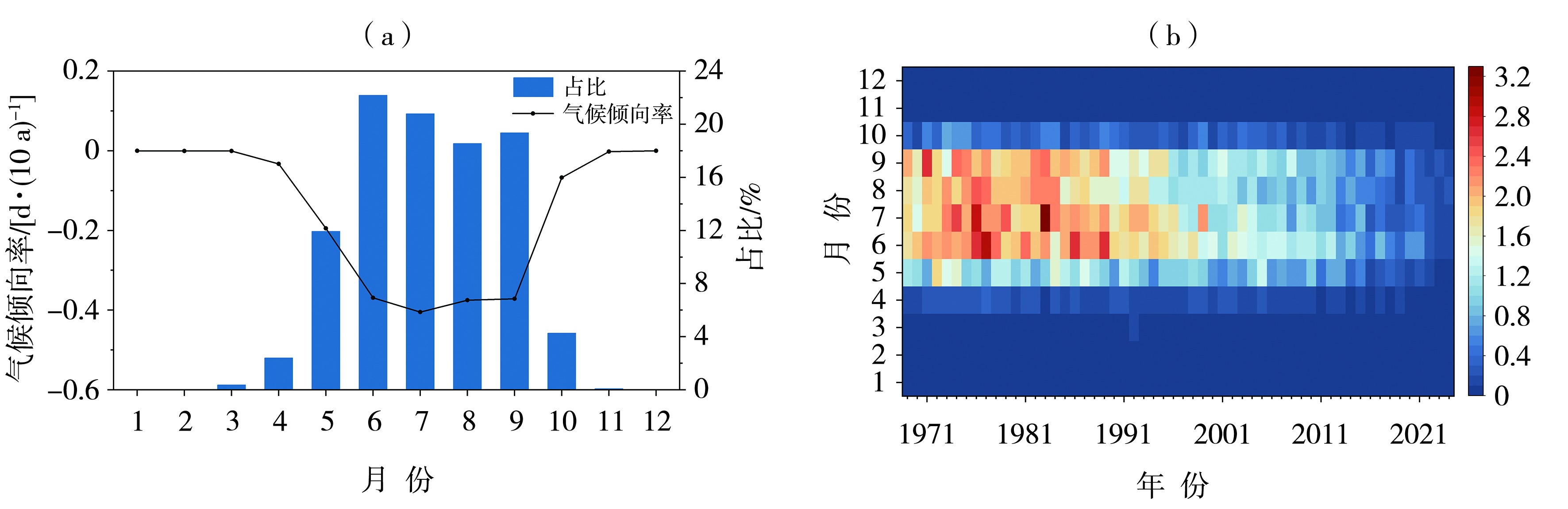
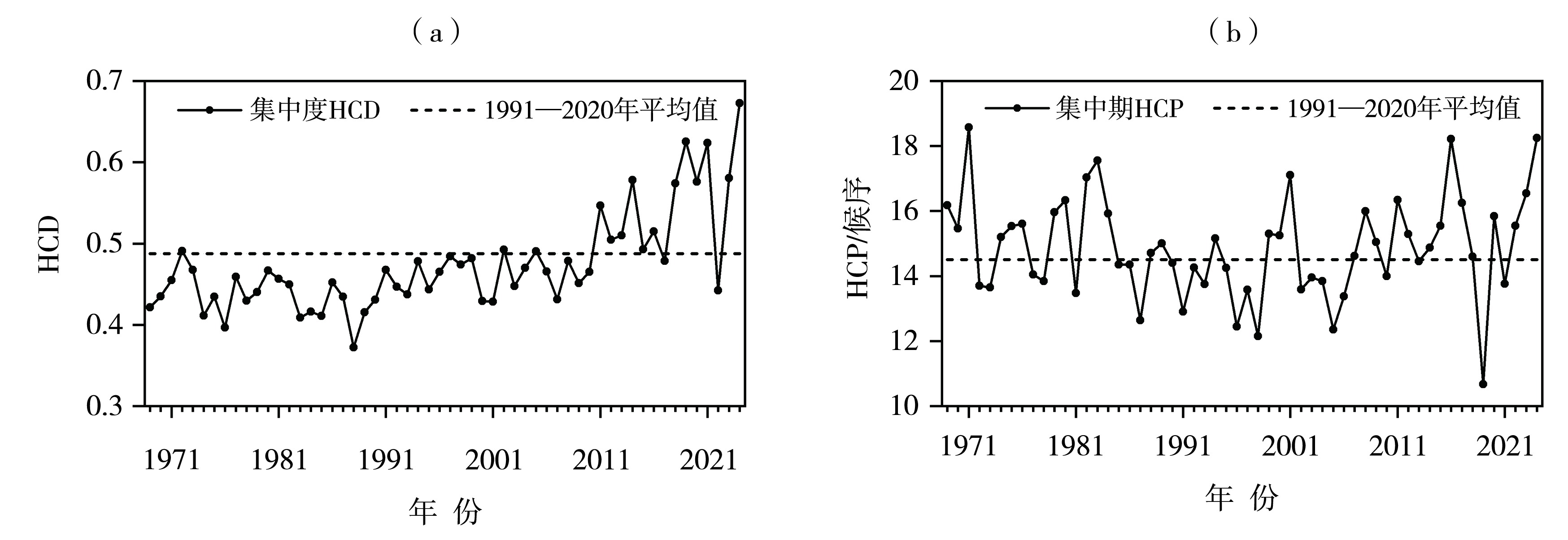
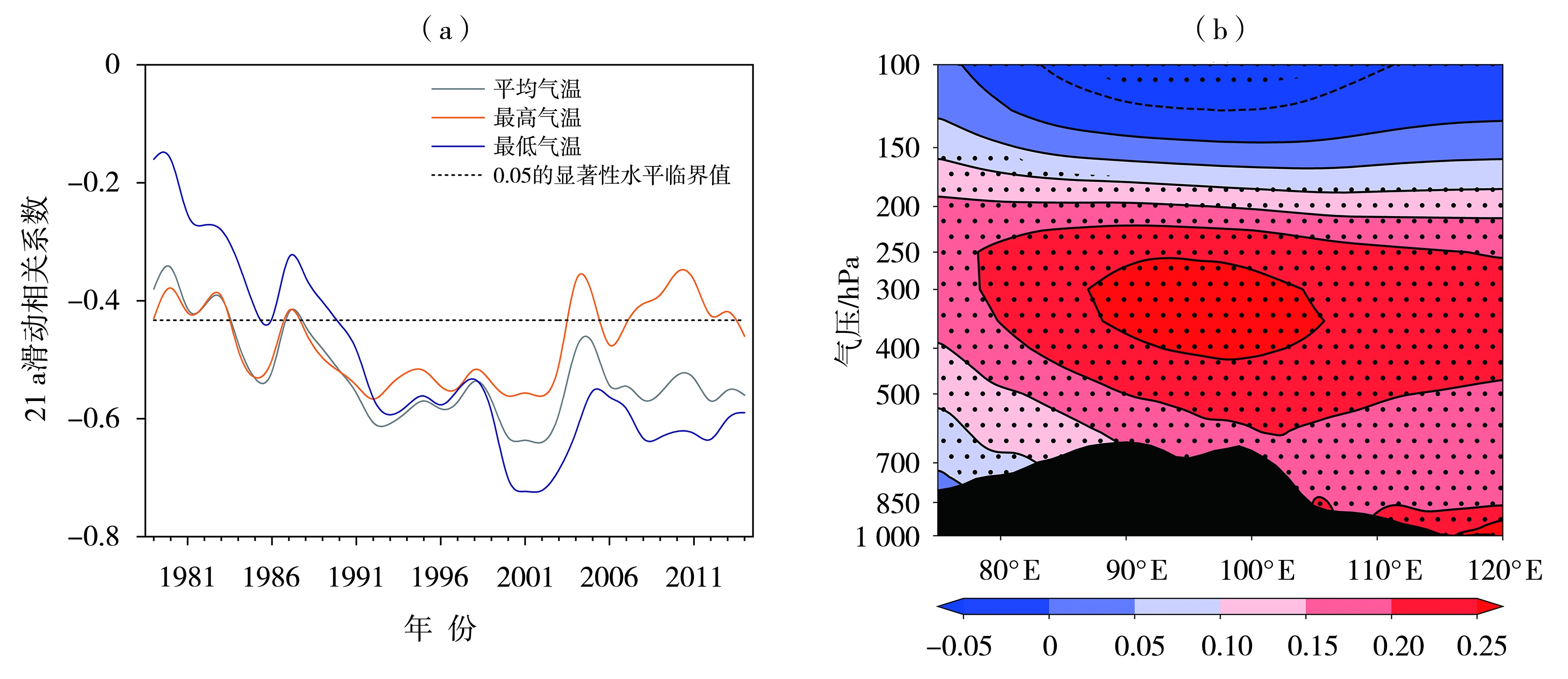
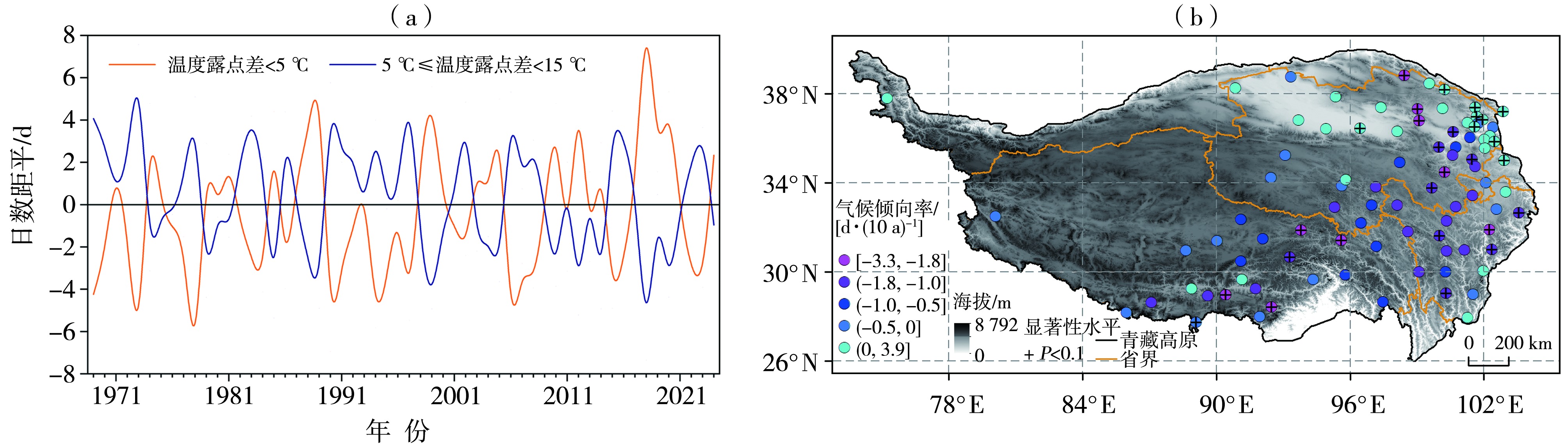
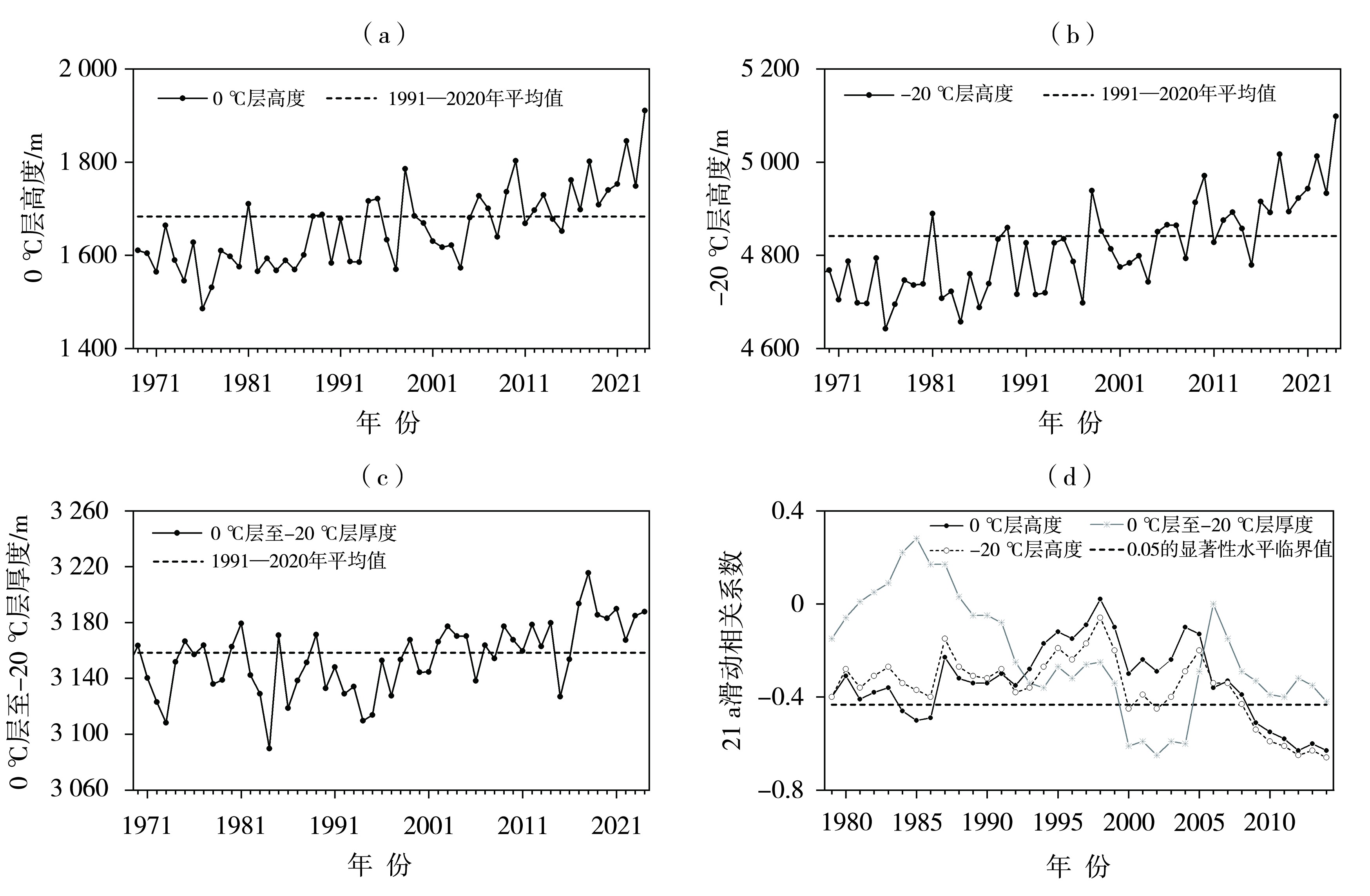
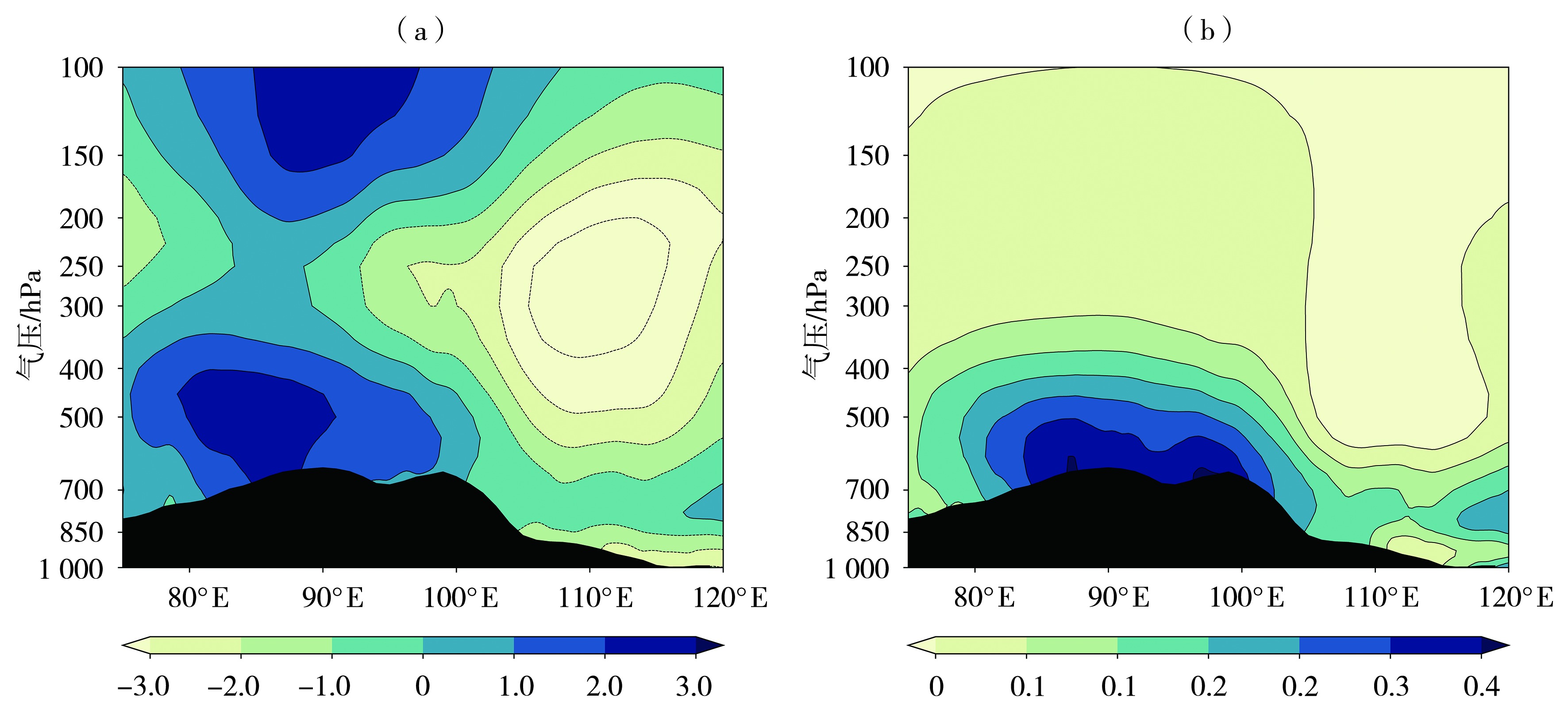
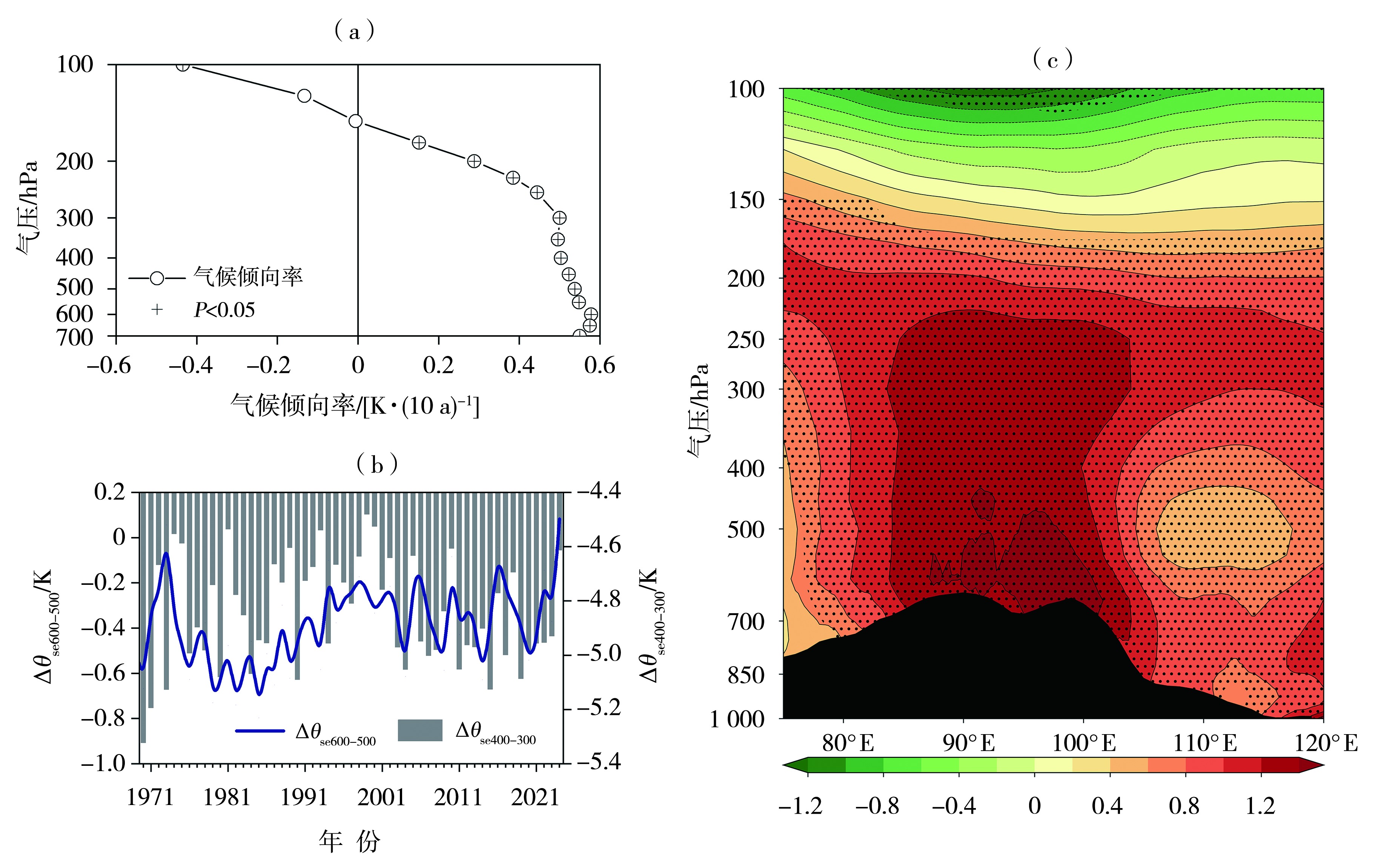
研究青藏高原降雹日数变化对冰雹灾害防御和应对策略制定具有重要现实意义。基于1969—2024年暖季(5—9月)青藏高原89个地面气象观测站资料和欧洲中期天气预报中心ERA5再分析数据,采用线性倾向估计、集中度与集中期、相关性分析等方法,揭示高原降雹日数的时空变化特征以及降雹日数减少成因。结果表明:1969—2024年,青藏高原降雹日数以1.7 d·(10 a)-1的速率显著减少,2008年以来持续偏少。降雹高发区位于高原中部的高海拔地区,低值区分散在柴达木盆地、河湟谷地及高原边坡地带,降雹日数减少速率随海拔升高而加快。高原降雹事件呈现“集中度增强、集中期推迟”特征,低海拔地区降雹更集中,高海拔地区集中期偏晚,21世纪以来集中期显著延后且年际变率增大。气候变暖背景下,对流层大气增暖且中高层升温更快,促使0 ℃层和-20 ℃层高度显著抬升,压缩了冰雹生长空间并增强融化效应。同时,近地层最低气温显著上升、日温差减小,导致能量积累减弱。地面温度露点差在5~15 ℃的日数减少,是进一步抑制降雹发生的地面条件。21世纪以来,高原大气呈“低层增湿显著、高层增湿微弱”的特征,对流层中低层假相当位温显著增加,最大增幅集中在冰雹冻结层(600~500 hPa)附近,而冰雹生长层(400~300 hPa)的大气趋于稳定,共同抑制雹暴发展。综合表明,高原降雹减少是气候变暖过程中大气热力、稳定度及湿度条件协同变化的结果。

关键词: 青藏高原, 降雹日数, 集中度和集中期, 气候变暖

Abstract:

The study of hail days over the Qinghai-Xizang Plateau plays a crucial role in regional hail disaster mitigation and response strategy formulation. Based on observational data from 89 meteorological stations over the Qinghai-Xizang Plateau and ERA5 reanalysis datasets from the European Centre for Medium-Range Weather Forecasts (ECMWF) in the warm season (May-September) from 1969 to 2024, this study examined the spatiotemporal variation of hail days and the causes of the reduction of hail days using methods such as linear trend estimation, concentration degree and concentration period analysis, and correlation analysis. The results show that the number of hail days has decreased significantly at a rate of 1.7 d·(10 a)-1 in the warm season over the Qinghai-Xizang Plateau from 1969 to 2024, and has remained consistently below average, especially since 2008. Hail events are frequent in the high-altitude regions of the central Qinghai-Xizang Plateau, while low-frequency areas are scattered across the Qaidam Basin, the Hehuang Valley, and the plateau margins. Moreover, the rate of decrease of hail days accelerates with increasing altitude. Over the past 56 years, hail concentration degree has increased, and the concentration period has been delayed over the Qinghai-Xizang Plateau. Especially since the beginning of the 21st century, the concentration period has been significantly delayed further, and interannual variability has increased. Hail events have become more concentrated in low-altitude areas, whereas the concentration period occurs later in high-altitude regions. Under climate warming, enhanced mid-to-upper tropospheric warming has significantly elevated the 0 °C and -20 °C isotherms. With the -20 °C isotherm rising more rapidly, the upward shift of these critical levels has compressed the vertical growth space of hail embryos and has intensified hail melting during their descent. Concurrently, the marked rise in near-surface minimum temperature and the reduction in diurnal temperature ranges have impaired the atmospheric energy accumulation process. The number of days with moderate dew point depression (5-15 °C) has decreased, thereby further suppressing the favorable surface conditions required for hail occurrence. Since the 21st century, the atmospheric profile over the Qinghai-Xizang Plateau has shown strong low-level moistening but weak upper-level moistening. In the mid-lower troposphere, the pseudo-equivalent potential temperature has increased significantly, with the greatest amplification in the lower layers near the hail-freezing layer (600-500 hPa). In contrast, the atmospheric stability in the hail growth layer (400-300 hPa) has tended to increase. These combined factors have suppressed hailstorm development. Overall, the reduction in warm-season hail over the Qinghai-Xizang Plateau results from the coordinated changes in atmospheric thermal structure, stability, and moisture conditions under climate warming.

Key words: Qinghai-Xizang Plateau, hail days, concentration degree and concentration period, climate warming

中图分类号: