干旱气象 ›› 2026, Vol. 44 ›› Issue (3): 512-523.DOI: 10.11755/j.issn.1006-7639-2026-03-0512
• 技术报告 • 上一篇
天津城区冬季三种道路路面温度异质性与预报模型研究
李倩惠1( ), 谷皓东1, 王雪娇1, 潘迪1, 侯天宇2, 李甜3, 王志新3, 孙玫玲1()
- 1
天津市海洋气象重点实验室 ,天津市气象服务中心 天津 300074
2天津市突发公共事件预警信息发布中心 天津 300074
3天津高速公路集团有限公司 天津 300384
-
收稿日期:2025-11-12修回日期:2026-04-20出版日期:2026-06-30发布日期:2026-07-16 -
通讯作者:孙玫玲(1970—),女,辽宁沈阳人,硕士,正高级工程师,主要从事城市气象服务研究。E-mail: 308366124@qq.com。
-
作者简介:李倩惠(1995—),女,山东威海人,博士,工程师,主要从事交通气象服务技术研究。E-mail: liqianhui@pku.edu.cn。 -
基金资助:国家自然基金项目(42405089);国家自然基金项目(42375185);天津市气象局科研项目(202535ybxm24);中国工程咨询协会气象专业委员会开放基金项目(QZ202519);中国工程咨询协会气象专业委员会开放基金项目(QZ202601)
Heterogeneity and prediction models of asphalt pavement temperature for three road types in Tianjin urban area in winter
LI Qianhui1(), GU Haodong1, WANG Xuejiao1, PAN Di1, HOU Tianyu2, LI Tian3, WANG Zhixin3, SUN Meiling1()
- 1
Tianjin Key Laboratory for Oceanic Meteorology ,Tianjin Meteorological Service Center Tianjin 300074, China
2Tianjin Public Emergency Warning Information Release Center Tianjin 300074, China
3Tianjin Expressway Group Limited Liability Company Tianjin 300384, China
-
Received:2025-11-12Revised:2026-04-20Online:2026-06-30Published:2026-07-16

摘要:
为揭示城市复杂道路环境下的路面温度变化规律,针对天津城区立交桥、主干道、跨河桥三种典型道路6个代表性路段,开展冬季(2024年11月至2025年2月)路面温度观测,厘清了三种道路路面温度异质性特征与形成机理,基于增强特征集构建了Lasso、多项式和支持向量机路面温度预报模型。结果表明:受下垫面热力性质和局地微环境条件影响,立交桥、主干道、跨河桥路面温度特征差异显著,跨河桥因低热容结构及强通风散热条件,呈现最大的温度日较差、温度变率,温度极端性最强;立交桥结构热惯性大,温度变化最平缓;主干道受土壤路基储热与人为热的共同调节,夜间最低温度高于桥梁路面。模型构建结果显示,相比仅采用原始气象特征,融合周期特征与时滞特征可显著提升模型预报精度,采用增强特征的Lasso模型RMSE平均降低约18%,RMSE为1.04~1.61 ℃,MAE为0.74~1.33 ℃。Lasso、多项式和支持向量机模型均能有效刻画路面温度演变规律,而Lasso模型在保持预报精度的同时,兼具更优的可解释性与计算效率,应用价值更为突出。误差分析表明,Lasso模型白天预报误差高于夜间,表明模型对短波辐射驱动下的温度高频突变过程刻画能力不足;跨河桥温度极值预报误差相对更大,存在明显的“削峰填谷”现象,其成因与桥体热力特性以及模型以全局误差最小化为目标的训练机制有关。本研究明确了复杂城市道路路面温度的异质性规律及其物理成因,可为城市道路结冰风险的差异化预警与精准化管控提供科学依据。
中图分类号:
引用本文
李倩惠, 谷皓东, 王雪娇, 潘迪, 侯天宇, 李甜, 王志新, 孙玫玲. 天津城区冬季三种道路路面温度异质性与预报模型研究[J]. 干旱气象, 2026, 44(3): 512-523.
LI Qianhui, GU Haodong, WANG Xuejiao, PAN Di, HOU Tianyu, LI Tian, WANG Zhixin, SUN Meiling. Heterogeneity and prediction models of asphalt pavement temperature for three road types in Tianjin urban area in winter[J]. Journal of Arid Meteorology, 2026, 44(3): 512-523.
表1 天津城区路温站和邻近气象站地理位置
Tab.1 Location of asphalt pavement temperature observation stations and adjacent meteorological stations in the urban area of Tianjin
| 路温站 | 经纬度 | 邻近气象站 | 经纬度 | 直线距离/km |
|---|---|---|---|---|
| 中石油桥 | 39.0714°N,117.1909°E | 54517 | 39.0747°N,117.2061°E | 1.36 |
| 八里台桥 | 39.1017°N,117.1796°E | A3581 | 39.0931°N,117.1789°E | 0.96 |
| 南京路 | 39.1195°N,117.1946°E | A3585 | 39.1131°N,117.1886°E | 0.88 |
| 南门外大街 | 39.1274°N,117.1802°E | A3502 | 39.1189°N,117.1831°E | 0.98 |
| 大光明桥 | 39.1192°N,117.2198°E | A3501 | 39.1114°N,117.2189°E | 0.87 |
| 盐坨桥 | 39.1755°N,117.2107°E | A3504 | 39.1783°N,117.2058°E | 0.52 |
表1 天津城区路温站和邻近气象站地理位置
Tab.1 Location of asphalt pavement temperature observation stations and adjacent meteorological stations in the urban area of Tianjin
| 路温站 | 经纬度 | 邻近气象站 | 经纬度 | 直线距离/km |
|---|---|---|---|---|
| 中石油桥 | 39.0714°N,117.1909°E | 54517 | 39.0747°N,117.2061°E | 1.36 |
| 八里台桥 | 39.1017°N,117.1796°E | A3581 | 39.0931°N,117.1789°E | 0.96 |
| 南京路 | 39.1195°N,117.1946°E | A3585 | 39.1131°N,117.1886°E | 0.88 |
| 南门外大街 | 39.1274°N,117.1802°E | A3502 | 39.1189°N,117.1831°E | 0.98 |
| 大光明桥 | 39.1192°N,117.2198°E | A3501 | 39.1114°N,117.2189°E | 0.87 |
| 盐坨桥 | 39.1755°N,117.2107°E | A3504 | 39.1783°N,117.2058°E | 0.52 |
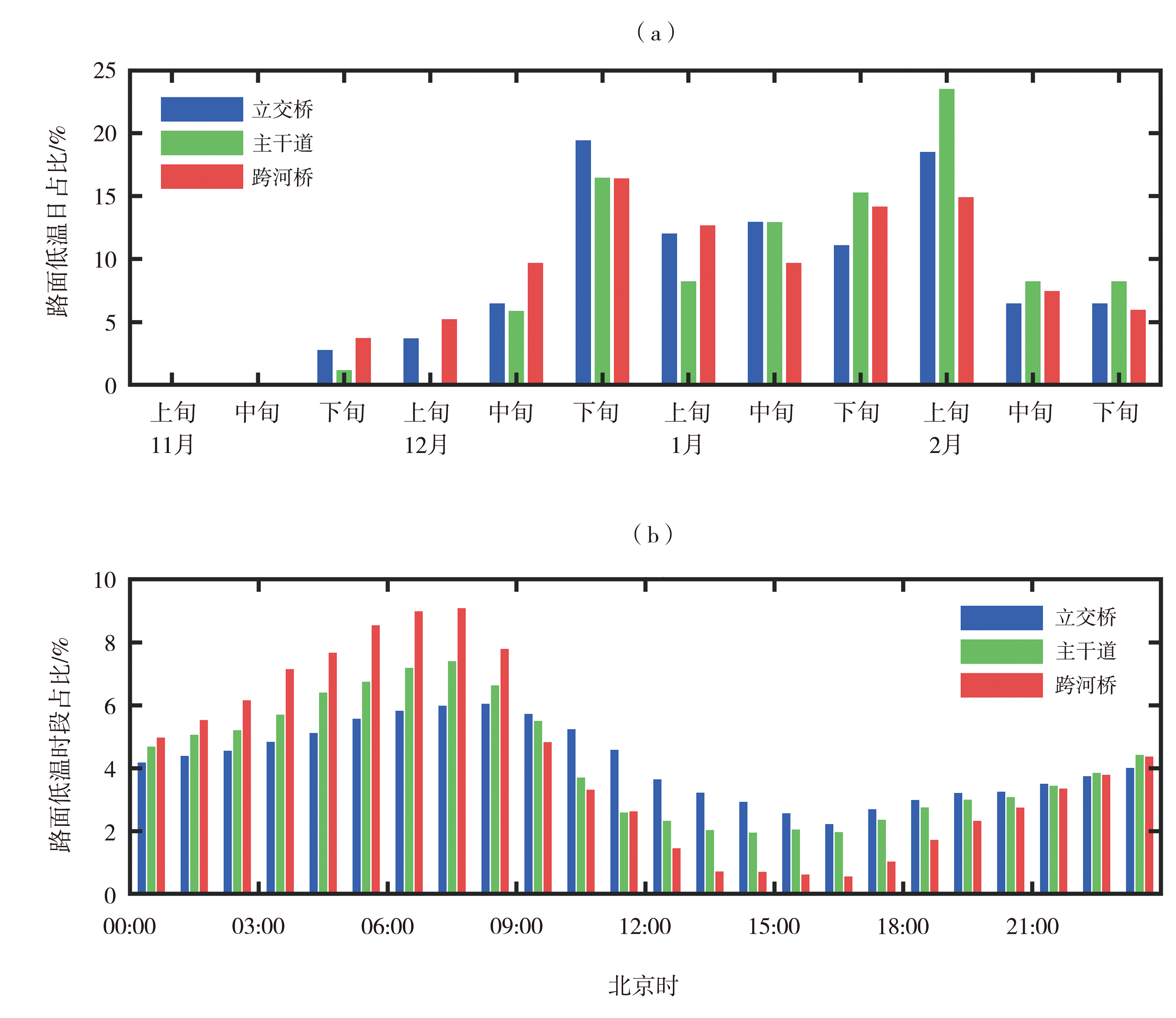
图1 2024年11月至2025年2月天津城区三种道路路面逐旬低温日占其总低温日比例(a)及逐时低温时段占比(b)
Fig.1 Proportion of ten-day low-temperature days to total low-temperature days (a) and hourly low-temperature periods (b) for three asphalt pavements in the urban area of Tianjin from November 2024 to February 2025
图1 2024年11月至2025年2月天津城区三种道路路面逐旬低温日占其总低温日比例(a)及逐时低温时段占比(b)
Fig.1 Proportion of ten-day low-temperature days to total low-temperature days (a) and hourly low-temperature periods (b) for three asphalt pavements in the urban area of Tianjin from November 2024 to February 2025

图2 2024年11月至2025年2月天津城区三种道路路面温度平均日变化(a),路面温度极值及其日较差(b) (误差棒表示标准差,下同)
Fig.2 The mean diurnal variations of three asphalt pavement temperatures (a), and extreme pavement temperatures along with their diurnal ranges (b) in the urban area of Tianjin from November 2024 to February 2025 (Error bars indicate standard deviation, the same as below)
图2 2024年11月至2025年2月天津城区三种道路路面温度平均日变化(a),路面温度极值及其日较差(b) (误差棒表示标准差,下同)
Fig.2 The mean diurnal variations of three asphalt pavement temperatures (a), and extreme pavement temperatures along with their diurnal ranges (b) in the urban area of Tianjin from November 2024 to February 2025 (Error bars indicate standard deviation, the same as below)
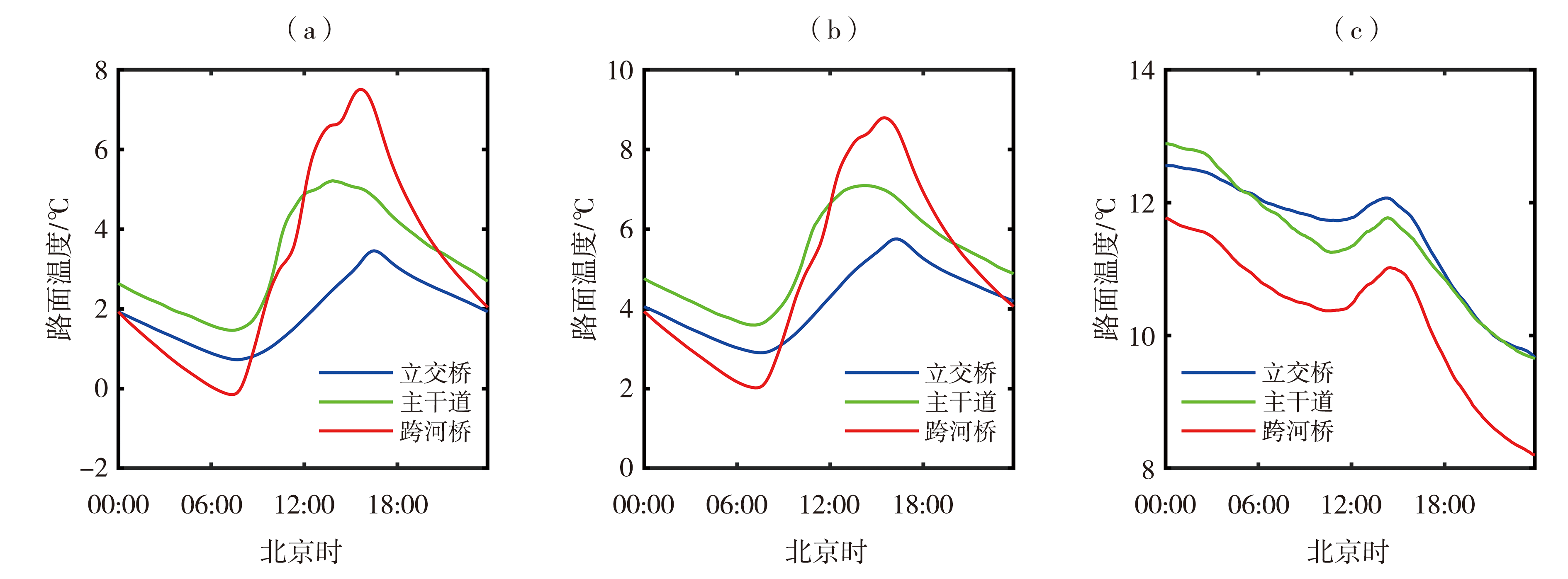
图3 2024年11月至2025年2月不同天气下天津城区三种道路路面温度平均日变化 (a)晴天,(b)多云到阴,(c)降雨
Fig.3 The mean diurnal variation of three asphalt pavement temperatures under different weather conditions in the urban area of Tianjin from November 2024 to February 2025 (a) sunny, (b) cloudy to overcast, (c) rainy
图3 2024年11月至2025年2月不同天气下天津城区三种道路路面温度平均日变化 (a)晴天,(b)多云到阴,(c)降雨
Fig.3 The mean diurnal variation of three asphalt pavement temperatures under different weather conditions in the urban area of Tianjin from November 2024 to February 2025 (a) sunny, (b) cloudy to overcast, (c) rainy
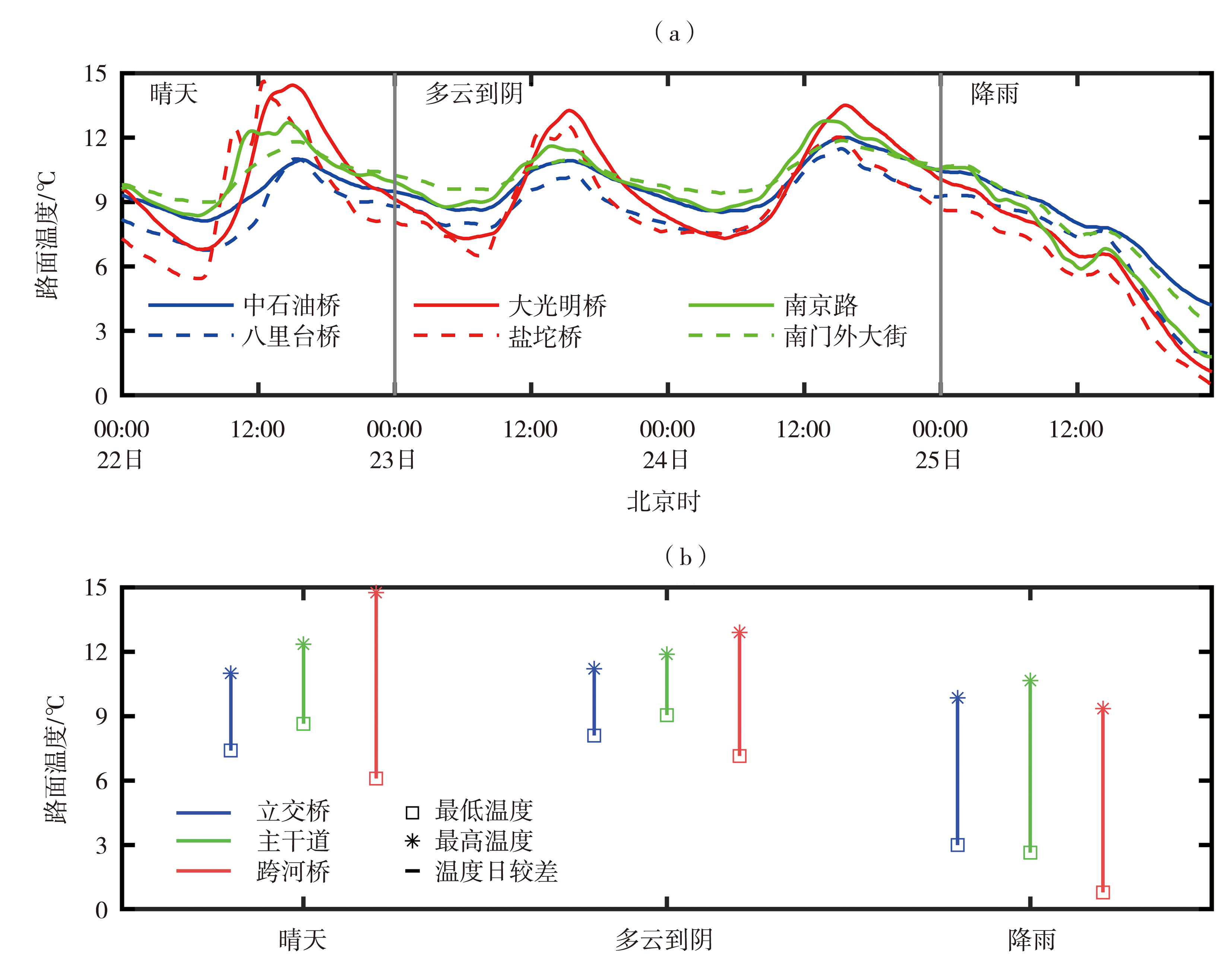
图4 2024年11月22—25日不同天气条件下天津城区三种道路路面温度时间变化(a),路面温度极值及其日较差(b)
Fig.4 Temporal variations of three asphalt pavement temperatures (a), and extreme pavement temperatures together with their diurnal ranges (b) under different weather conditions in the urban area of Tianjin from November 22 to 25, 2024
图4 2024年11月22—25日不同天气条件下天津城区三种道路路面温度时间变化(a),路面温度极值及其日较差(b)
Fig.4 Temporal variations of three asphalt pavement temperatures (a), and extreme pavement temperatures together with their diurnal ranges (b) under different weather conditions in the urban area of Tianjin from November 22 to 25, 2024
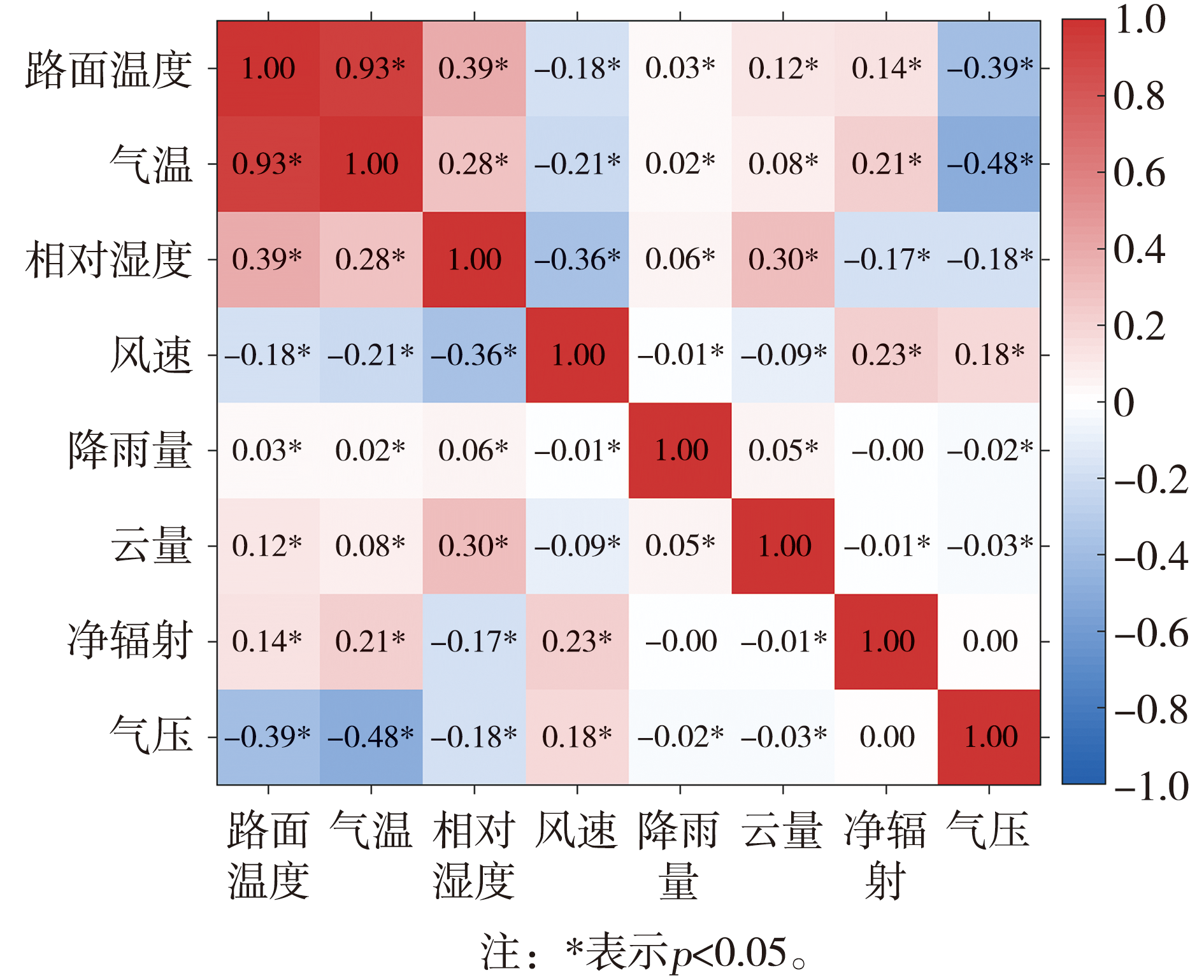
图5 2024年11月至2025年2月天津城区三种道路路面温度与各气象要素的皮尔逊相关系数
Fig.5 Pearson correlation coefficients between three asphalt pavement temperatures and various meteorological elements in the urban area of Tianjin from November 2024 to February 2025
图5 2024年11月至2025年2月天津城区三种道路路面温度与各气象要素的皮尔逊相关系数
Fig.5 Pearson correlation coefficients between three asphalt pavement temperatures and various meteorological elements in the urban area of Tianjin from November 2024 to February 2025
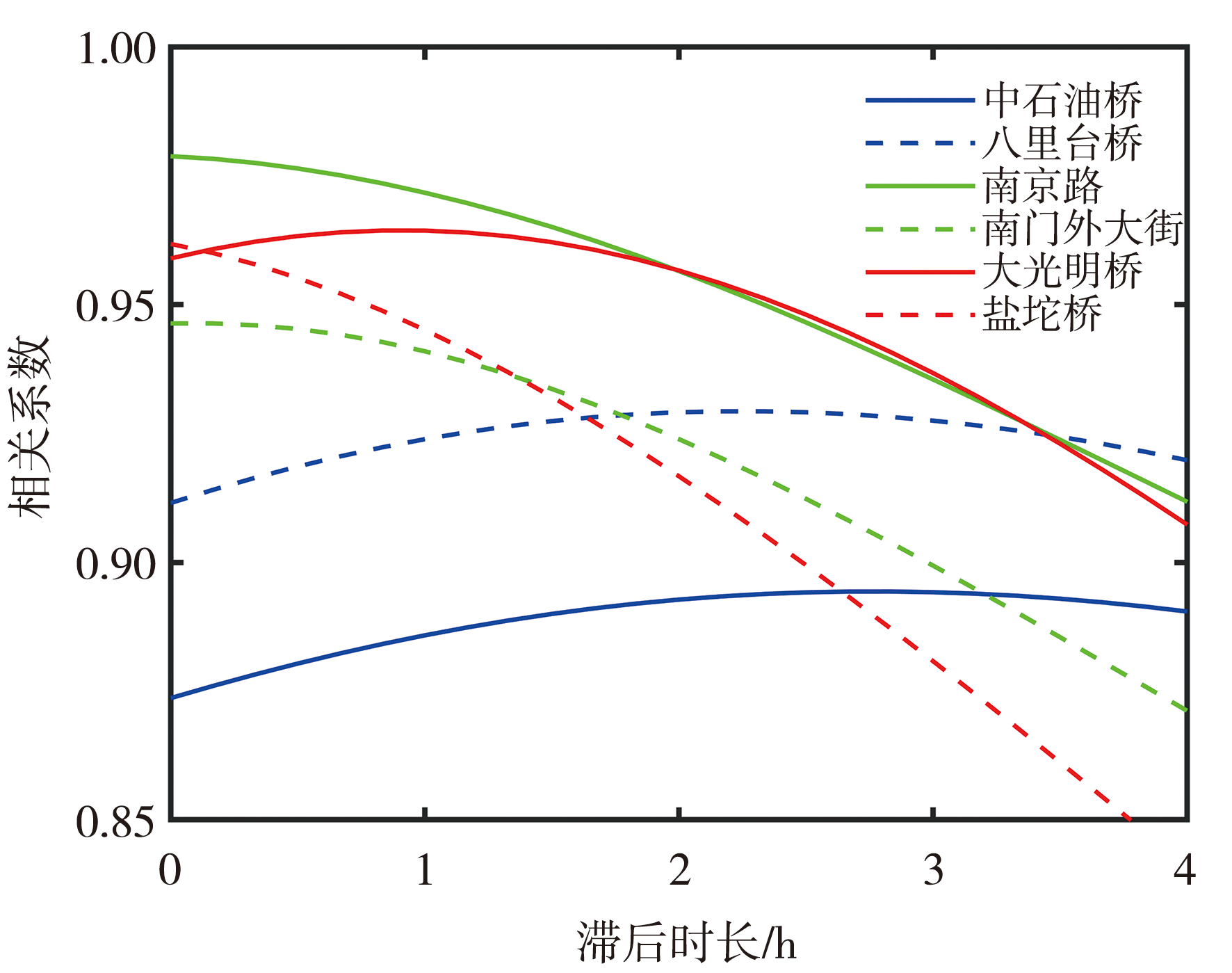
图6 2024年11月至2025年2月天津城区三种道路路面温度相对气温的滞后响应皮尔逊相关系数
Fig.6 Pearson correlation coefficients for lagged responses of three asphalt pavement temperatures relative to air temperature in the urban area of Tianjin from November 2024 to February 2025
图6 2024年11月至2025年2月天津城区三种道路路面温度相对气温的滞后响应皮尔逊相关系数
Fig.6 Pearson correlation coefficients for lagged responses of three asphalt pavement temperatures relative to air temperature in the urban area of Tianjin from November 2024 to February 2025
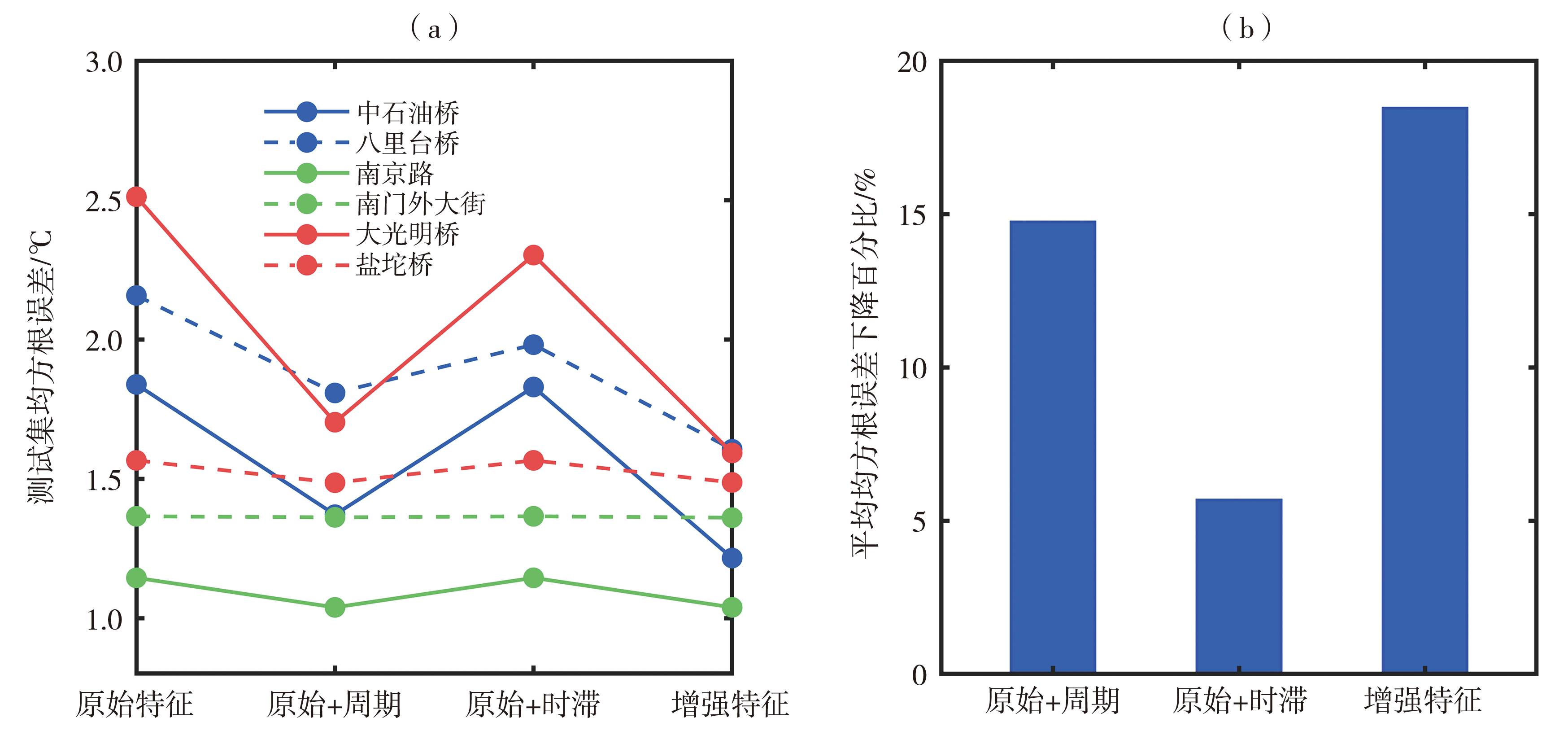
图7 天津城区三种道路基于不同特征类型Lasso回归模型测试集的路面温度均方根误差(a)及平均均方根误差降低百分比(b)
Fig.7 Test-set root mean square error (RMSE) (a) and percentage reduction of average RMSE (b) for three asphalt pavement temperatures using Lasso regression models with different feature types in the urban area of Tianjin
图7 天津城区三种道路基于不同特征类型Lasso回归模型测试集的路面温度均方根误差(a)及平均均方根误差降低百分比(b)
Fig.7 Test-set root mean square error (RMSE) (a) and percentage reduction of average RMSE (b) for three asphalt pavement temperatures using Lasso regression models with different feature types in the urban area of Tianjin
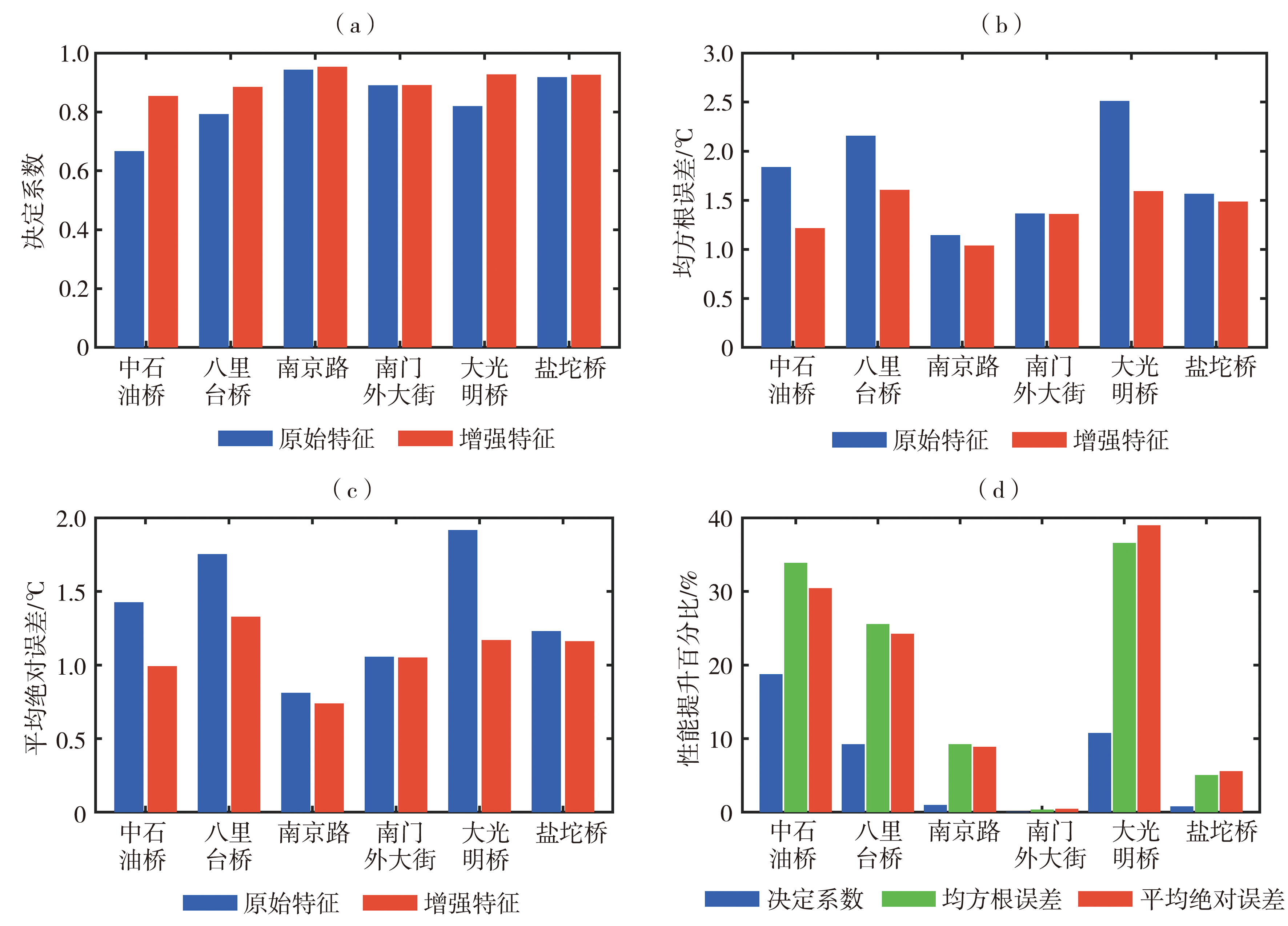
图8 天津城区三种道路基于原始特征和增强特征的Lasso回归模型测试集路面温度的决定系数(a)、均方根误差(b)和平均绝对误差(c)及增强特征模型性能提升百分比(d)
Fig.8 Test-set determination coefficient (R2) (a), RMSE (b), and mean absolute error (MAE) (c) for three asphalt pavement temperatures in Tianjin urban area of Lasso regression models based on original and enhanced features, as well as the performance improvement percentage of the enhanced feature model (d)
图8 天津城区三种道路基于原始特征和增强特征的Lasso回归模型测试集路面温度的决定系数(a)、均方根误差(b)和平均绝对误差(c)及增强特征模型性能提升百分比(d)
Fig.8 Test-set determination coefficient (R2) (a), RMSE (b), and mean absolute error (MAE) (c) for three asphalt pavement temperatures in Tianjin urban area of Lasso regression models based on original and enhanced features, as well as the performance improvement percentage of the enhanced feature model (d)
表2 基于增强特征的Lasso、多项式与支持向量机回归路面温度预报模型性能对比
Tab.2 Performance comparison of Lasso, polynomial, and support vector machine regression models for asphalt pavement temperature prediction with enhanced features
| 模型类别 | 道路类型 | 训练集R2 | 测试集R2 | 测试集RMSE/℃ | 测试集MAE/℃ |
|---|---|---|---|---|---|
| Lasso回归 | 中石油桥 | 0.96 | 0.86 | 1.22 | 0.99 |
| 八里台桥 | 0.95 | 0.89 | 1.61 | 1.33 | |
| 南京路 | 0.98 | 0.95 | 1.04 | 0.74 | |
| 南门外大街 | 0.96 | 0.89 | 1.36 | 1.05 | |
| 大光明桥 | 0.97 | 0.93 | 1.59 | 1.17 | |
| 盐坨桥 | 0.96 | 0.93 | 1.49 | 1.16 | |
| 多项式回归 | 中石油桥 | 0.97 | 0.83 | 1.33 | 1.06 |
| 八里台桥 | 0.96 | 0.85 | 1.89 | 1.54 | |
| 南京路 | 0.98 | 0.95 | 1.07 | 0.77 | |
| 南门外大街 | 0.98 | 0.86 | 1.54 | 1.14 | |
| 大光明桥 | 0.98 | 0.91 | 1.79 | 1.30 | |
| 盐坨桥 | 0.97 | 0.90 | 1.70 | 1.35 | |
| 支持向量机回归 | 中石油桥 | 0.97 | 0.87 | 1.17 | 0.94 |
| 八里台桥 | 0.95 | 0.85 | 1.84 | 1.51 | |
| 南京路 | 0.98 | 0.95 | 1.06 | 0.76 | |
| 南门外大街 | 0.97 | 0.87 | 1.48 | 1.12 | |
| 大光明桥 | 0.98 | 0.94 | 1.45 | 1.05 | |
| 盐坨桥 | 0.97 | 0.91 | 1.64 | 1.29 |
表2 基于增强特征的Lasso、多项式与支持向量机回归路面温度预报模型性能对比
Tab.2 Performance comparison of Lasso, polynomial, and support vector machine regression models for asphalt pavement temperature prediction with enhanced features
| 模型类别 | 道路类型 | 训练集R2 | 测试集R2 | 测试集RMSE/℃ | 测试集MAE/℃ |
|---|---|---|---|---|---|
| Lasso回归 | 中石油桥 | 0.96 | 0.86 | 1.22 | 0.99 |
| 八里台桥 | 0.95 | 0.89 | 1.61 | 1.33 | |
| 南京路 | 0.98 | 0.95 | 1.04 | 0.74 | |
| 南门外大街 | 0.96 | 0.89 | 1.36 | 1.05 | |
| 大光明桥 | 0.97 | 0.93 | 1.59 | 1.17 | |
| 盐坨桥 | 0.96 | 0.93 | 1.49 | 1.16 | |
| 多项式回归 | 中石油桥 | 0.97 | 0.83 | 1.33 | 1.06 |
| 八里台桥 | 0.96 | 0.85 | 1.89 | 1.54 | |
| 南京路 | 0.98 | 0.95 | 1.07 | 0.77 | |
| 南门外大街 | 0.98 | 0.86 | 1.54 | 1.14 | |
| 大光明桥 | 0.98 | 0.91 | 1.79 | 1.30 | |
| 盐坨桥 | 0.97 | 0.90 | 1.70 | 1.35 | |
| 支持向量机回归 | 中石油桥 | 0.97 | 0.87 | 1.17 | 0.94 |
| 八里台桥 | 0.95 | 0.85 | 1.84 | 1.51 | |
| 南京路 | 0.98 | 0.95 | 1.06 | 0.76 | |
| 南门外大街 | 0.97 | 0.87 | 1.48 | 1.12 | |
| 大光明桥 | 0.98 | 0.94 | 1.45 | 1.05 | |
| 盐坨桥 | 0.97 | 0.91 | 1.64 | 1.29 |
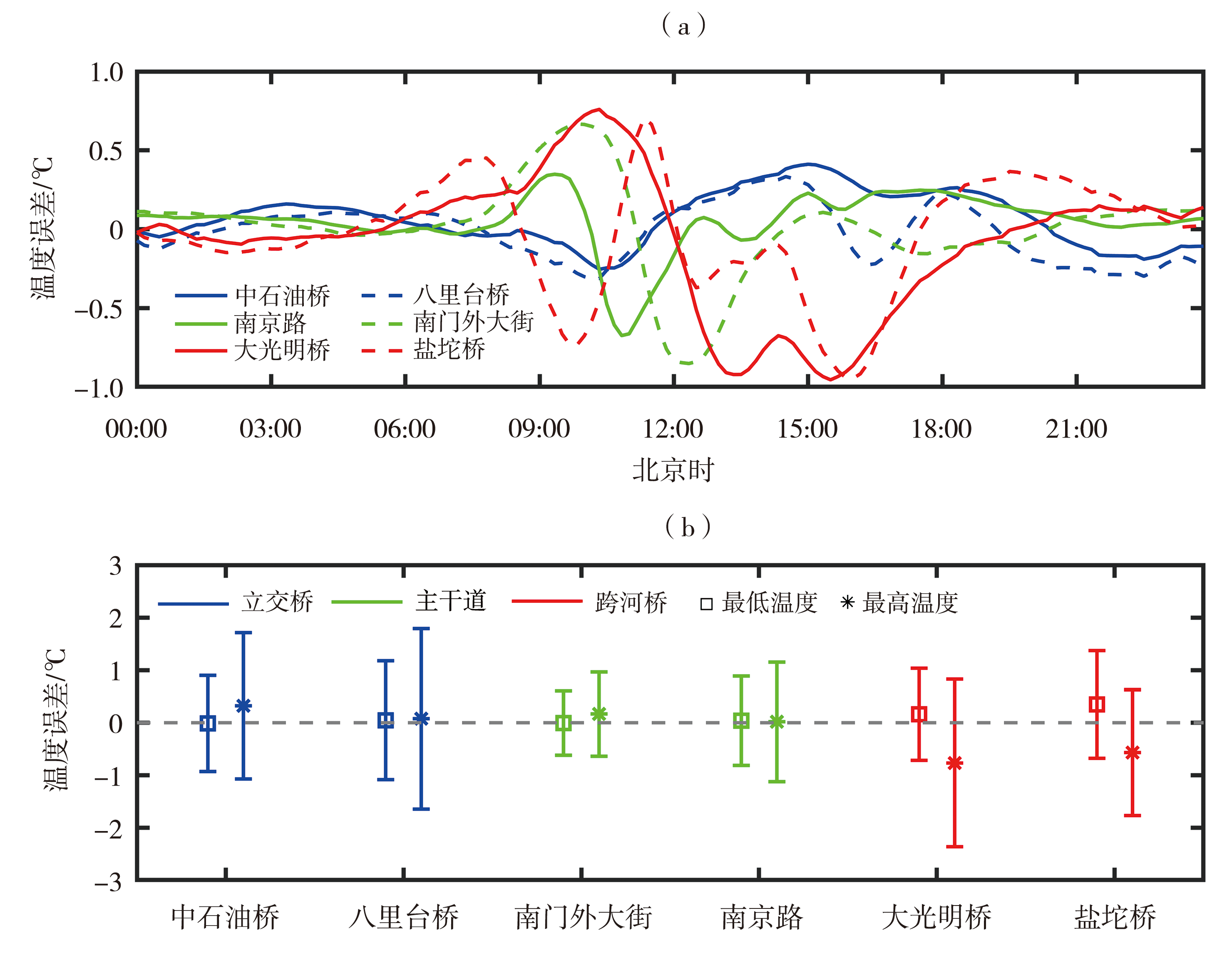
图9 基于Lasso回归模型的天津城区三种道路路面温度预报误差日变化(a)及极值预报误差(b)
Fig.9 Diurnal variations of prediction error (a) and extreme-value prediction error (b) for three asphalt pavement temperatures in urban Tianjin based on Lasso regression models
图9 基于Lasso回归模型的天津城区三种道路路面温度预报误差日变化(a)及极值预报误差(b)
Fig.9 Diurnal variations of prediction error (a) and extreme-value prediction error (b) for three asphalt pavement temperatures in urban Tianjin based on Lasso regression models
| [1] | 敖翔宇, 谈建国, 刘冬韡, 等, 2017. 一种城市地表能量平衡模式在上海的模拟评估[J]. 气象, 43(8): 973-986. |
| [2] | 鲍丽丽, 程鹏, 王小勇, 等, 2024. 基于Logistic回归和神经网络的甘肃省道路结冰预警模型研究[J]. 干旱气象, 42(1): 137-145. |
| [3] | 陈英英, 朱承瑛, 贺莉微, 等, 2025. 武汉天兴洲长江大桥桥面结冰50米级监测预警技术研究[J]. 气象水文海洋仪器, 42(6): 70-73. |
| [4] | 戴秉佑, 杨文臣, 戢晓峰, 等, 2023. 冬季高速公路逐时路表温度LSTM预测模型[J]. 中国安全科学学报, 33(1): 136-144. |
| [5] | 董天翔, 包云轩, 袁成松, 等, 2018. 三种统计预报模型在江苏省道路低温预警中的应用[J]. 气象科技, 46(4): 773-784. |
| [6] | 冯蕾, 袁晓玉, 赵瑞, 等, 2025. 基于多源资料的路面温度实况模型构建[J]. 气象, 51(1): 97-109. |
| [7] | 贺莉微, 陈英英, 翟红楠, 等, 2024. 冬季武汉天兴洲大桥桥面温度特征及其预报模型研究[J]. 干旱气象, 42(6): 987-993. |
| [8] | 胡继超, 林子静, 成添, 2020. 道路结冰的温度预报方法研究进展[J]. 科学技术与工程, 20(1): 1-6. |
| [9] | 胡万亭, 郭建英, 2025. 山东半岛2023年12月暴雪水汽来源与水汽条件分析[J]. 海洋预报, 42(1): 98-106. |
| [10] | 黄佳威, 王永前, 吴小娟, 2024. 顾及地形差异的高速公路结冰预报模型研究[J]. 大气科学, 48(4): 1 499-1 510. |
| [11] | 贾晓红, 李琦, 2023. 京藏高速呼集段道路结冰期CLDAS气温适用性及其在交通风险预警中的应用[J]. 气象与环境学报, 39(6): 96-104. |
| [12] | 贾晓红, 石岚, 郝玉珠, 2025. 基于全连接神经网络方法的冬季公路路面温度预报及检验[J]. 气象与环境学报, 41(1): 104-112. |
| [13] | 李蕊, 牛生杰, 汪玲玲, 等, 2011. 三种下垫面温度对比观测及结冰气象条件分析[J]. 气象, 37(3): 325-333. |
| [14] | 李迅, 尹志聪, 丁德平, 等, 2012. 北京地区高速公路道面结冰特征及气象条件[J]. 应用气象学报, 23(5): 578-584. |
| [15] | 吕晶晶, 牛生杰, 周悦, 等, 2013. 冬季高速公路路桥温度变化规律及能量平衡分析[J]. 大气科学学报, 36(5): 546-553. |
| [16] | 孟春雷, 张朝林, 2012. 路面气象数值预报模型及性能检验[J]. 应用气象学报, 23(4): 451-458. |
| [17] | 牛生杰, 王天舒, 吕晶晶, 等, 2021. 电线积冰及路面温度研究的新进展[J]. 大气科学学报, 44(4): 485-495. |
| [18] | 曲晓黎, 武辉芹, 张彦恒, 等, 2010. 京石高速路面温度特征及预报模型[J]. 干旱气象, 28(3): 352-357. |
| [19] | 宋萍, 车军辉, 国婷婷, 等, 2023. 环胶州湾高速路面低温气候特征和SVM预报模型[J]. 海洋气象学报, 43(3): 80-87. |
| [20] | 苏宇, 李京阳, 熊昌安, 等, 2024. 基于SHAP-RF模型的不同路面状态下山区高速公路路表面温度实时估计[J]. 西安理工大学学报, 40(4): 545-553. |
| [21] | 王佳, 郭春燕, 谷新波, 2021. 包头市不同路面温度变化特征及预报模型研究[J]. 沙漠与绿洲气象, 15(1): 91-96. |
| [22] | 王婧, 朱承瑛, 袁成松, 等, 2018. 冬季扬溧高速路桥面的低温差异性特征研究[J]. 热带气象学报, 34(2): 279-288. |
| [23] | 王可心, 包云轩, 朱承瑛, 等, 2021. 随机森林回归法在冬季路面温度预报中的应用[J]. 气象, 47(1): 82-93. |
| [24] | 王涛, 王乙舒, 赵春雨, 等, 2022. 基于机器学习方法的辽宁省初霜冻日期预测模型研究[J]. 气象与环境学报, 38(4): 47-56. |
| [25] | 武玮辰, 魏凤英, 王亚强, 等, 2023. 基于机器学习的中国冬季气温影响因子分析及模型估算[J]. 气象学报, 81(1): 163-174. |
| [26] | 熊国玉, 祖繁, 包云轩, 等, 2024. 基于LSTM和先验知识的高速公路路面温度预报[J]. 应用气象学报, 35(1): 68-79. |
| [27] | 闫昕旸, 王小勇, 达选芳, 等, 2018. 甘肃高速公路山区段路面温度特征及其预报模型[J]. 干旱气象, 36(5): 864-872. |
| [28] | 杨文臣, 李立, 胡澄宇, 等, 2019. 不利天气对公路交通安全及交通流的影响研究综述[J]. 武汉理工大学学报: 交通科学与工程版, 43(5): 843-849. |
| [29] | 张希帆, 任丽媛, 谷皓东, 2025. 基于长短期记忆网络的天津市高速公路路面温度预报方法研究[J]. 气象, 51(12): 1 635-1 644. |
| [30] | 张曦, 浩宇, 梁佳, 等, 2019. 陕西省高速公路路面温度特征及预报模型[J]. 干旱气象, 37(6): 1 028-1 034. |
| [31] | 郑斌, 2019. 路面结冰影响因素研究及预测模型的构建[D]. 哈尔滨: 哈尔滨工业大学. |
| [32] | 资葵, 2016. 高速公路结冰监测预警与抑冰材料应用研究[D]. 长沙: 长沙理工大学. |
| [33] | ADWAN I, MILAD A, MEMON Z A, et al, 2021. Asphalt pavement temperature prediction models: A review[J]. Applied Sciences, 11(9): 3794. DOI:10.3390/app11093794. |
| [34] | BAI S M, DAI B Y, YANG Z, et al, 2024. Enhancing road surface temperature prediction: A novel approach integrating transfer learning with long short-term memory neural networks[J]. Journal of Transportation Engineering, Part B: Pavements, 151(1): 04024063. DOI: 10.1061/JPEODX.PVENG-1616. |
| [35] | CHEN J Q, WANG H, XIE P Y, 2019. Pavement temperature prediction: Theoretical models and critical affecting factors[J]. Applied Thermal Engineering, 158: 113755. DOI: 10.1016/j.applthermaleng.2019.113755. |
| [36] | KRŠMANC R, SLAK A Š, DEMŠAR J, 2013. Statistical approach for forecasting road surface temperature[J]. Meteorological Applications, 20(4): 439-446. |
| [37] | LEKEA A, STEYN W J V, 2023. Performance of pavement temperature prediction models[J]. Applied Sciences, 13(7): 4164. DOI: 10.3390/app13074164. |
| [1] | 贺莉微, 陈英英, 翟红楠, 王雅新, 鲁静. 冬季武汉天兴洲大桥桥面温度特征及其预报模型研究[J]. 干旱气象, 2024, 42(6): 987-993. |
| [2] | 李琛, 吴进, 郭文利, 金晨曦, 齐晨. 北京小海陀山区雪面温度预报模型研究[J]. 干旱气象, 2021, 39(4): 687-696. |
| [3] | 曲晓黎, 齐宇超, 尤琦, 王跃峰, 吴丹, 李美琪. 基于METRo模型的冬奥高速公路示范站路面温度临近预报方法[J]. 干旱气象, 2020, 38(03): 497-503. |
| [4] | 张曦, 浩宇, 梁佳, 潘留杰, 沈姣姣, 卢珊. 陕西省高速公路路面温度特征及预报模型[J]. 干旱气象, 2019, 37(6): 1028-1034. |
| [5] | 杨晓君, 张楠, 陈宏, 从靖, 徐威. 基于人工神经网络算法的渤海海风预报方法研究[J]. 干旱气象, 2019, 37(1): 146-152. |
| [6] | 闫昕旸,王小勇,达选芳,赵福年,牛喜梅. 甘肃高速公路山区段路面温度特征及其预报模型[J]. 干旱气象, 2018, 36(5): 864-872. |
| [7] | 胡春丽1,李荣平1,王婷1,李菲2,李琳琳1. 辽宁水稻年景预报模型研究[J]. 干旱气象, 2018, 36(3): 501-. |
| [8] | 史纬恒,王磊,韩飞,于文杰,孔凡龙,宋海清. 基于物理量参数的山东聊城地区冬季降水相态预报模型研究[J]. 干旱气象, 2017, 35(5): 822-829. |
| [9] | 李登科1,权文婷1,谢飞舟2. 陕西省小麦条锈病气象预报模型[J]. 干旱气象, 2017, 35(1): 128-133. |
| [10] | 宁贵财,康彩燕,陈东辉,孙广林,刘君,王式功,尚可政,马敏劲. 2005—2014年我国不利天气条件下交通事故特征分析[J]. 干旱气象, 2016, 34(5): 753-762. |
| [11] | 白 慧1,2,吴战平1,李忠燕1,周 涛1. DERF产品在贵州降水主分量逐步回归预报模型中的释用[J]. 干旱气象, 2015, 33(2): 344-348. |
| [12] | 武辉芹,马翠平,杨荣芳,张金满. 河北省高速公路路面温度变化特征及预报模型[J]. 干旱气象, 2014, 32(4): 665-670. |
| [13] | 马筛艳,马金仁,孙卫武,纪晓玲,缑晓辉. 银川市路面温度预报与爆胎指数预报方法研究[J]. 干旱气象, 2013, 31(4): 825-830. |
| [14] | 吴爱敏,王建. 甘肃庆阳极端气温气候特征及预报[J]. J4, 2011, 29(1): 116-120. |
| [15] | 慕彩芸, 车罡, 道然·加帕依, 朱晓华. 新疆东疆棉蚜发生发展气象等级预报模型[J]. J4, 2010, 28(4): 489-493. |
| 阅读次数 | ||||||
|
全文 |
|
|||||
|
摘要 |
|
|||||
