中国干旱区太阳辐射变化特征分析
Analysis of solar radiation variation characteristics in arid region of China
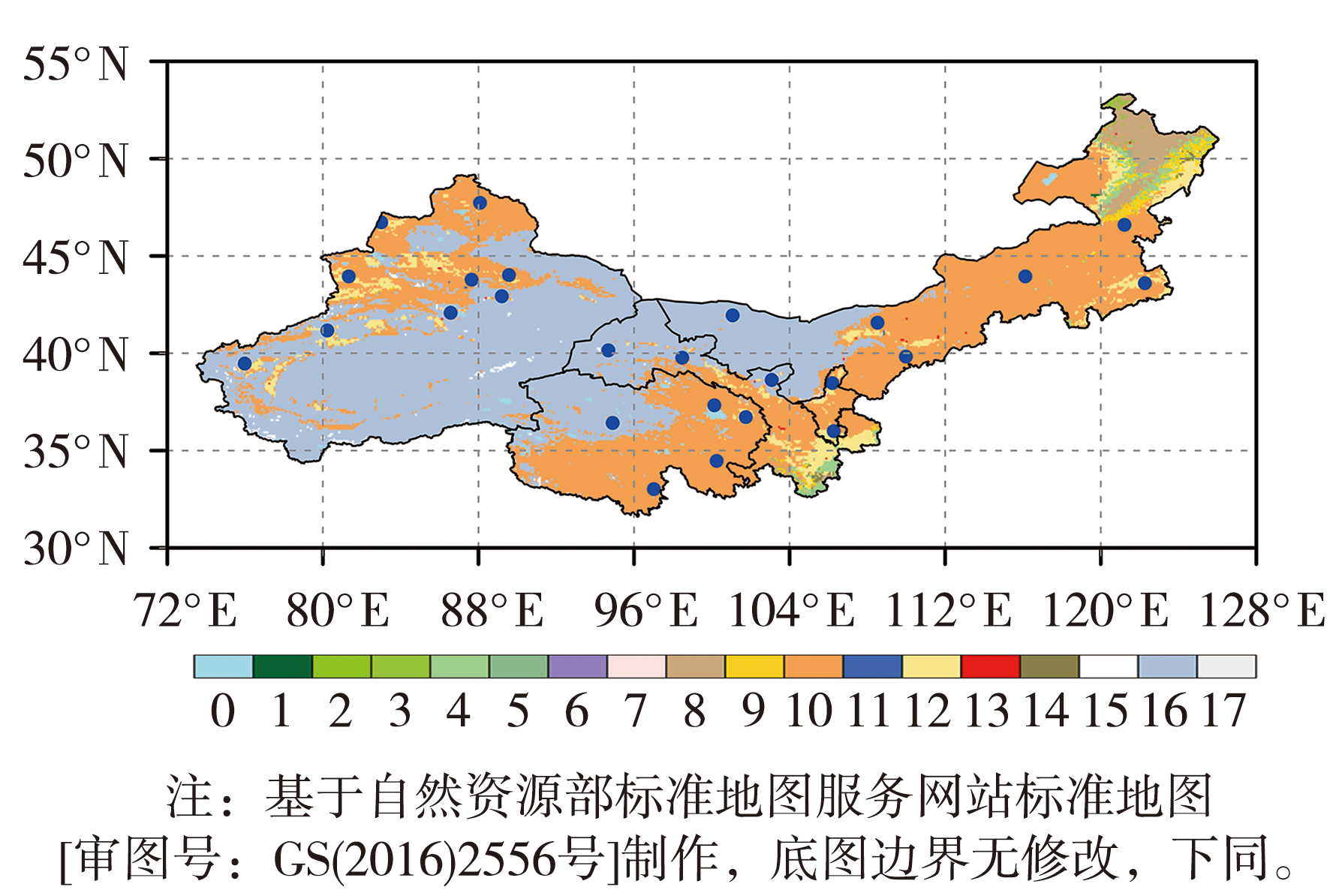
(色标条中数字表示IGBP下垫面覆盖类型,0~17分别代表水、常绿针叶林、常绿阔叶林、落叶针叶林、落叶阔叶林、混交林、封闭灌丛、开阔灌丛、木本稀树草原、稀树草原、草原、永久湿地、农田、城市和建筑物、作物或自然植被镶嵌体、冰雪、贫瘠或稀疏植被覆盖地、未分类区)
(The numbers on the color bar denote IGBP land cover types, with values ranging from 0 to 17 corresponding to water, evergreen needleleaf forest, evergreen broadleaf forest, deciduous needleleaf forest, deciduous broadleaf forest, mixed forest, closed shrubland, open shrubland, woody savanna, savanna, grassland, permanent wetland, cropland, urban and built-up land, cropland or natural vegetation mosaic, snow and ice, barren or sparsely vegetated and unclassified)